Cantharellus infundibuliformis
(Scop.) Fr.
Winter Chanterelle, Yellowfoot chantarelle
iNaturalist· cc-by-nc
(c) Abigayle Natalia Balanda, some rights reserved (CC BY-NC)
iNaturalist· cc-by-nc
(c) Abigayle Natalia Balanda, some rights reserved (CC BY-NC)
iNaturalist· cc-by-nc
(c) Abigayle Natalia Balanda, some rights reserved (CC BY-NC)
Description
A temperate mushroom in the family Cantharellaceae, with a funnel-shaped fruiting body. The cap disintegrates quickly during cooking while the stalk retains its shape.
Edible Uses
The fruiting bodies are eaten fresh, dried, or frozen, though they are not suitable for canning.
Traditional Uses
The fruiting bodies are eaten. They are not suitable for canning. They can be dried and freeze well. The cap disintegrates quickly on cooking. The stalk retains its shape.
Distribution
It is a temperate plant.
Where It Grows
Asia, Britain, Canada, China, Europe, Finland, North America, Scandinavia,
Dangerous Lookalikes
This plant can be confused with the following toxic species. Always verify identification carefully before consuming any wild plant.
Jack-O'-Lantern Mushroom
Omphalotus olearius
Antonio Abbatiello
Winter Chanterelle
Cantharellus infundibuliformis
(c) Abigayle Natalia Balanda, some rights reserved (CC BY-NC)
Jack-O'-Lantern Mushroom: True knife-like gills, grows in clusters on wood/stumps, glows in the dark, orange throughout.
Winter Chanterelle: Blunt forked ridges (not true gills), grows singly from soil, apricot/fruity smell, solid flesh.
Synonyms
Also Known As
Funnel-shaped chantarelle, Loudou jiyoujun
References (5)
- Boa, E. R., 2004, Wild edible fungi and their importance to people. FAO Non Wood Forest Products Booklet 17
- Facciola, S., 1998, Cornucopia 2: a Source Book of Edible Plants. Kampong Publications, p 251
- Jordan, P., 2000, The Mushroom Guide and Identifier, Hermes House, p 48
- Mabey, R., 1973, Food for Free. A Guide to the edible wild plants of Britain, Collins. p 42
- www.plantnames.unimelb.edu.au
More from Cantharellaceae
Cantharellus aff. cinnabarinus var. australiensis
Cantharellus afrocibarius
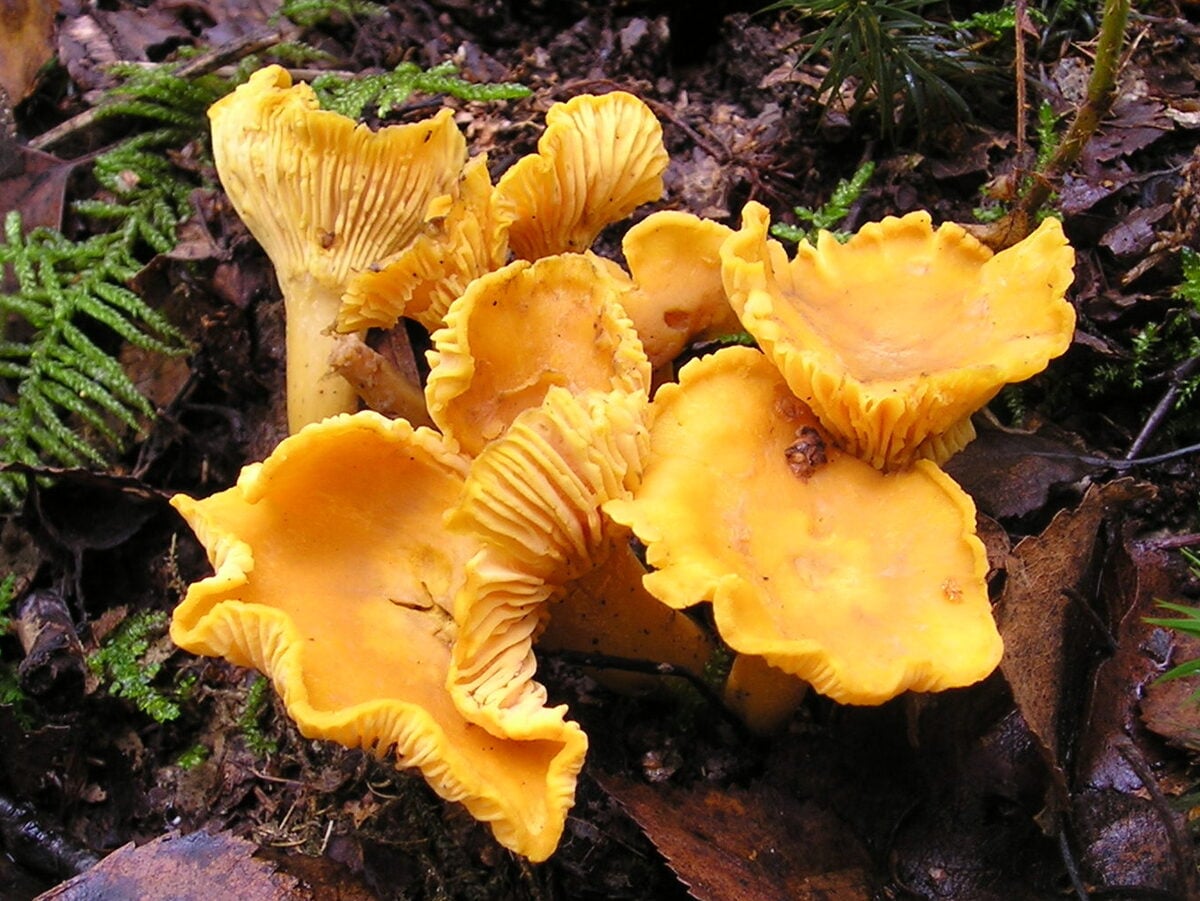
Cantharellus cibarius
Chanterelle, Golden chanterelle
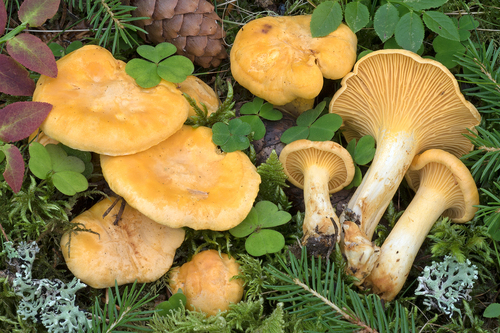
Cantharellus cibarius var. amethysteus
Amethyst Chanterelle
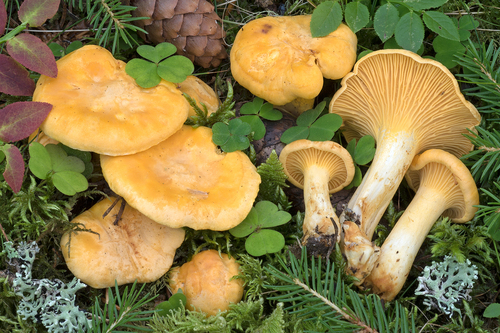
Cantharellus cibarius var. defibulatus
Amethyst Chanterelle
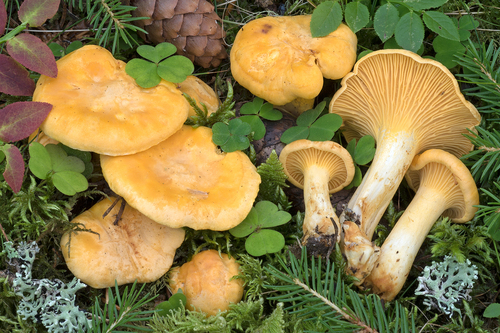
Cantharellus cibarius var. latifolius
Amethyst Chanterelle