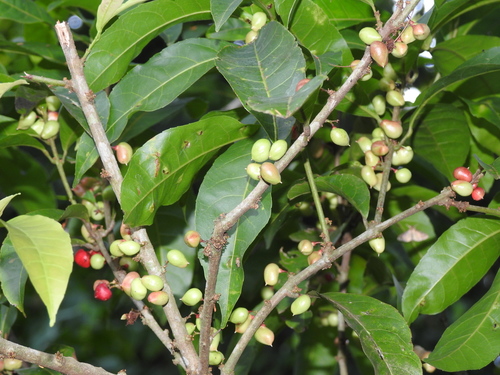
Canarium megalanthum
Merr.
Kedondong keruing
iNaturalist· cc-by-nc
(c) Akmal Idham, some rights reserved (CC BY-NC), uploaded by Akmal Idham
iNaturalist· cc-by-nc
(c) Akmal Idham, some rights reserved (CC BY-NC)
Summary
Source: WikipediaCanarium megalanthum is a tree in the family Burseraceae. The specific epithet megalanthum is from the Greek meaning 'large flower'.
Description
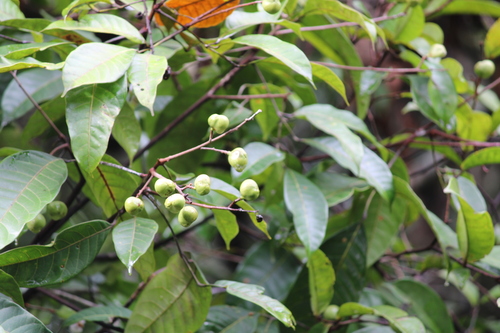
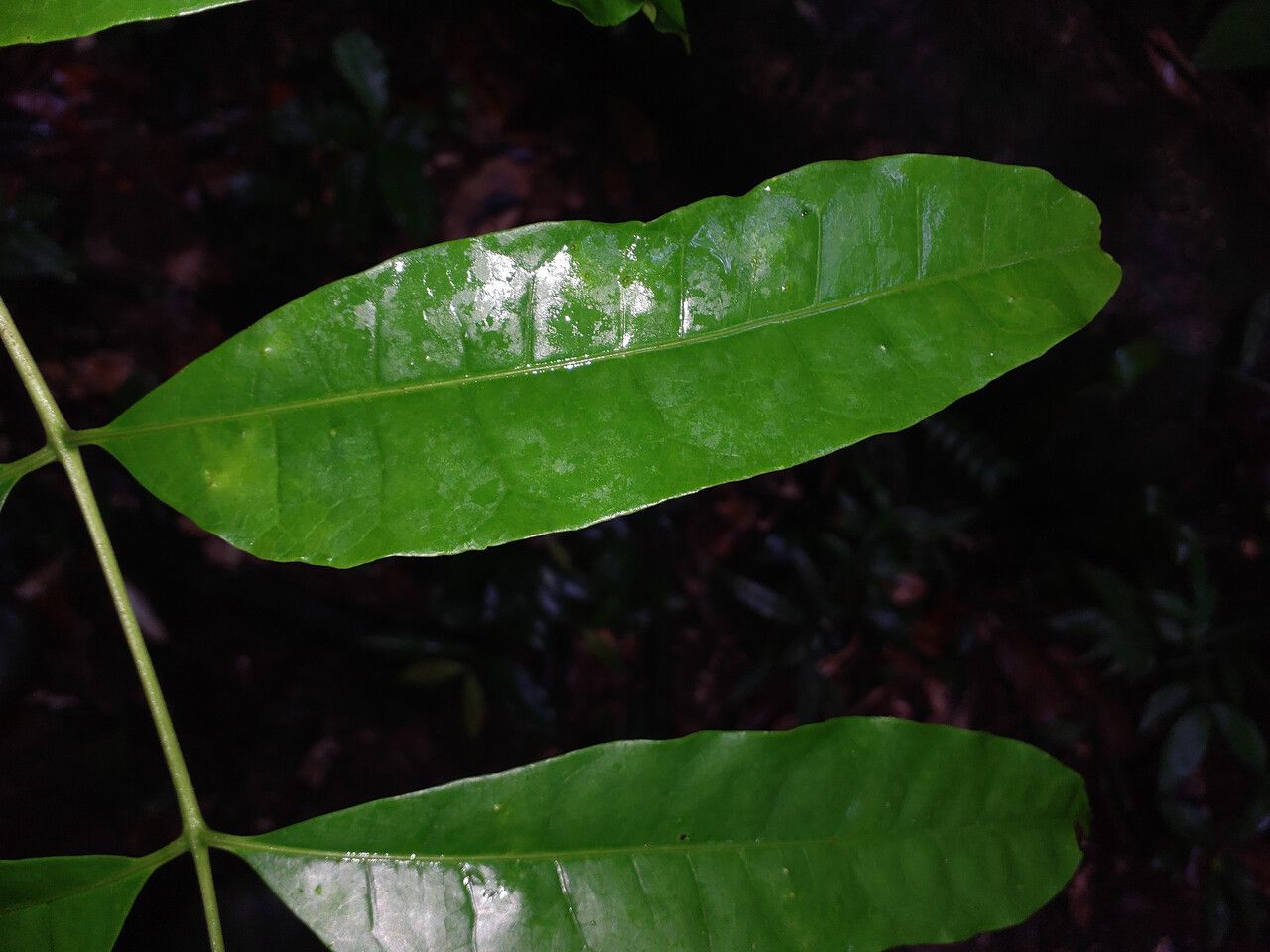
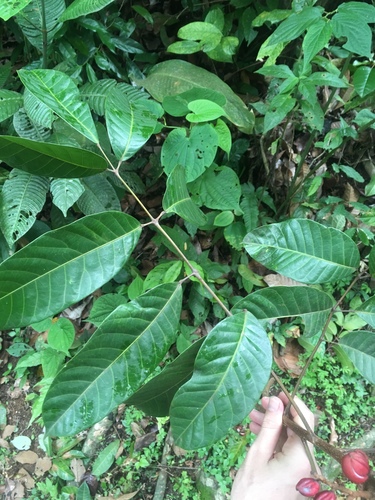
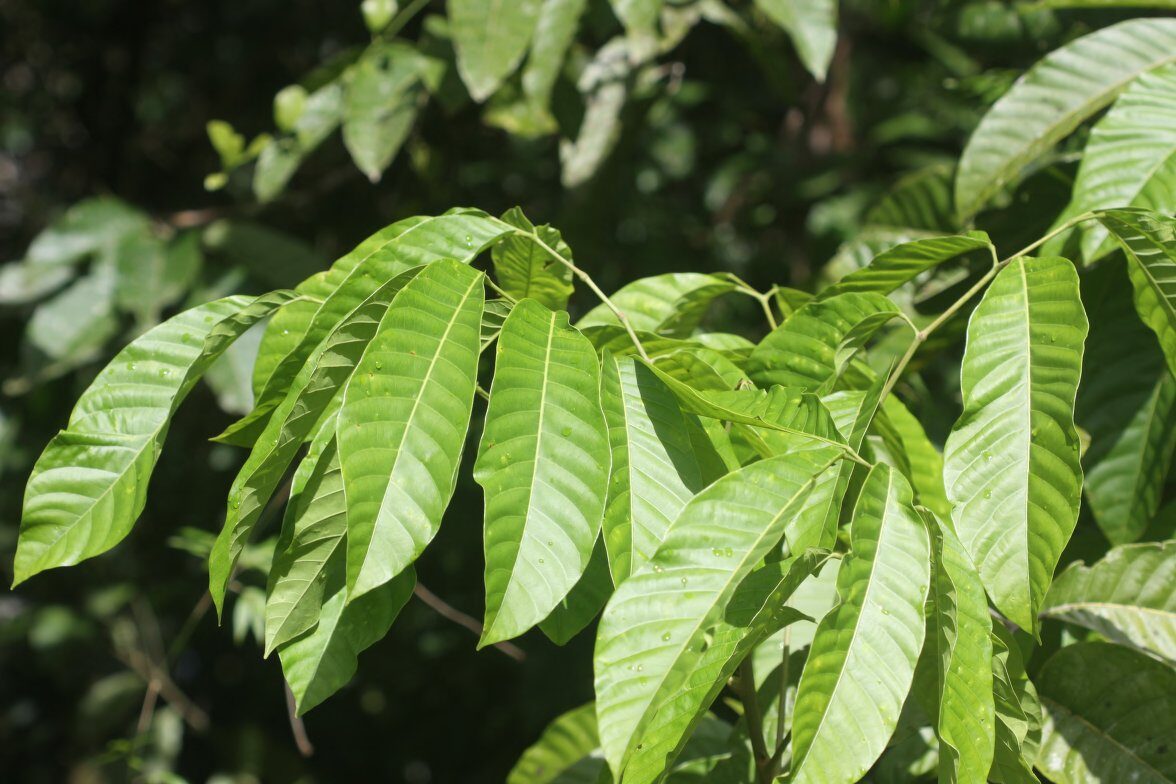
A large tree up to 40 m high. The trunk can be 60-70 cm across. It does not have buttresses. The small branches are 0.5-1 cm thick. They have rusty hairs. The leafy structures (stipules) on the leaf stalks are 0.5 cm from the base and deeply 3-4 lobed. The leaves have 4-5 pairs of leaflets. The leaflets are oval or long and 9-20 cm long by 4-8 cm wide. They are leathery and the base is wedge shaped while the tip tapers to a point. There are 13-19 pairs of faint slightly curved veins. The flower clusters are near the ends of branches. These are 25 cm long for female clusters and 25-30 cm long for male flower clusters. Male clusters have about 10 flowers while female clusters have few flowers. The fruit clusters are 25 cm long and with 4-5 fruit. The fruit are oval and triangular in cross section. The fruit can be 5 cm long. The seed are thin and long. They are 1.5 cm wide.
Edible Uses
The seeds and nuts are eaten.
Traditional Uses
The seeds or nuts are eaten.
This uses section is brief — help expand it
Distribution
A tropical plant. It occurs in rainforests from sea level to 360 m altitude.
Where It Grows
Asia, Brunei, Indonesia, Malaysia, SE Asia,
Cultivation
Plants are grown from seeds.
Propagation
Seed - we have no specific information for this species but seeds of this genus generally have a hard seed coat and germinate erratically. Filing away some of the seed coat to allow moisture to enter more readily, without damaging the seed, will encourage a faster and more even germination.
Other Uses
A resin is produced abundantly. The wood is said to be hard. The wood of most species in the genus Canarium is usually soft to moderately hard and probably not very durable in exposed positions. It is not, therefore of any great commercial value and is only used locally or not at all.
Production
Flowers have been recorded in March and August and fruit from May to July.
Other Information
It is a cultivated crop in Brunei.
Notes
Related to Canarium denticulatum and possibly the same as Canarium karoense. There are 80-95 Canarium species.
Also Known As
Baab, Kamatoa, Mantus, Meritus, Muruitun, Ngaling, Ngela, Rarawa damar
References (5)
- Kebler, P. J. A., & Kidiyasa, 1994, Trees of the Balikpapan-Samarinda area of East Kalimantan, Indonesia. The Tropenbos Foundation, Wageningen, The Netherlands. p 65
- Leenhouts, P.W., 1955, Burseraceae in Flora Malesiana 5(1) p 274
- Saw, L.G., LaFrankie, J. V. Kochummen, K. M., Yap S. K., 1991, Fruit Trees in a Malaysian Rain Forest. Economic Botany, Vol. 45, No. 1, pp. 120-136
- Slik, F., www.asianplant.net
- Soepadmo, E. & Wong, K. M., (Eds.), 1995, Tree Flora of Sabah and Sarawak. Volume One. ITTO, Govt. Malaysia. p 57