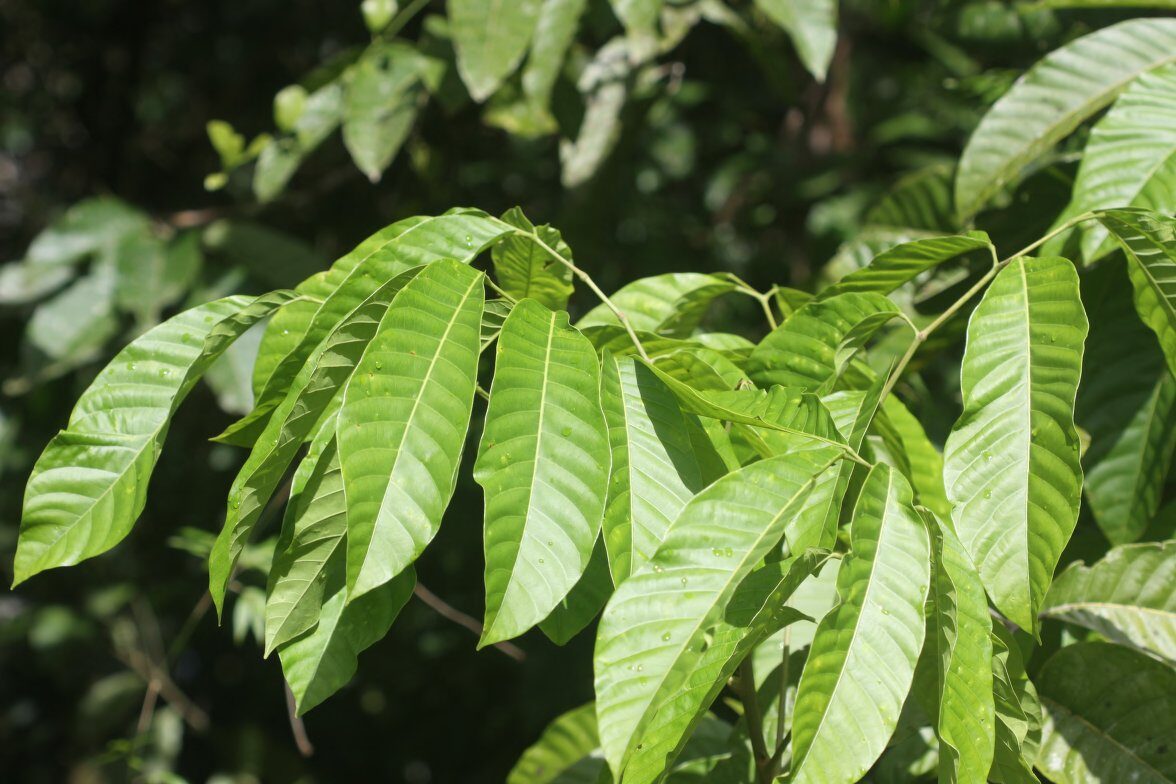
Canarium australasicum
(Bailey) Leenh.
Mango barked Carrot wood
iNaturalist· cc-by-sa
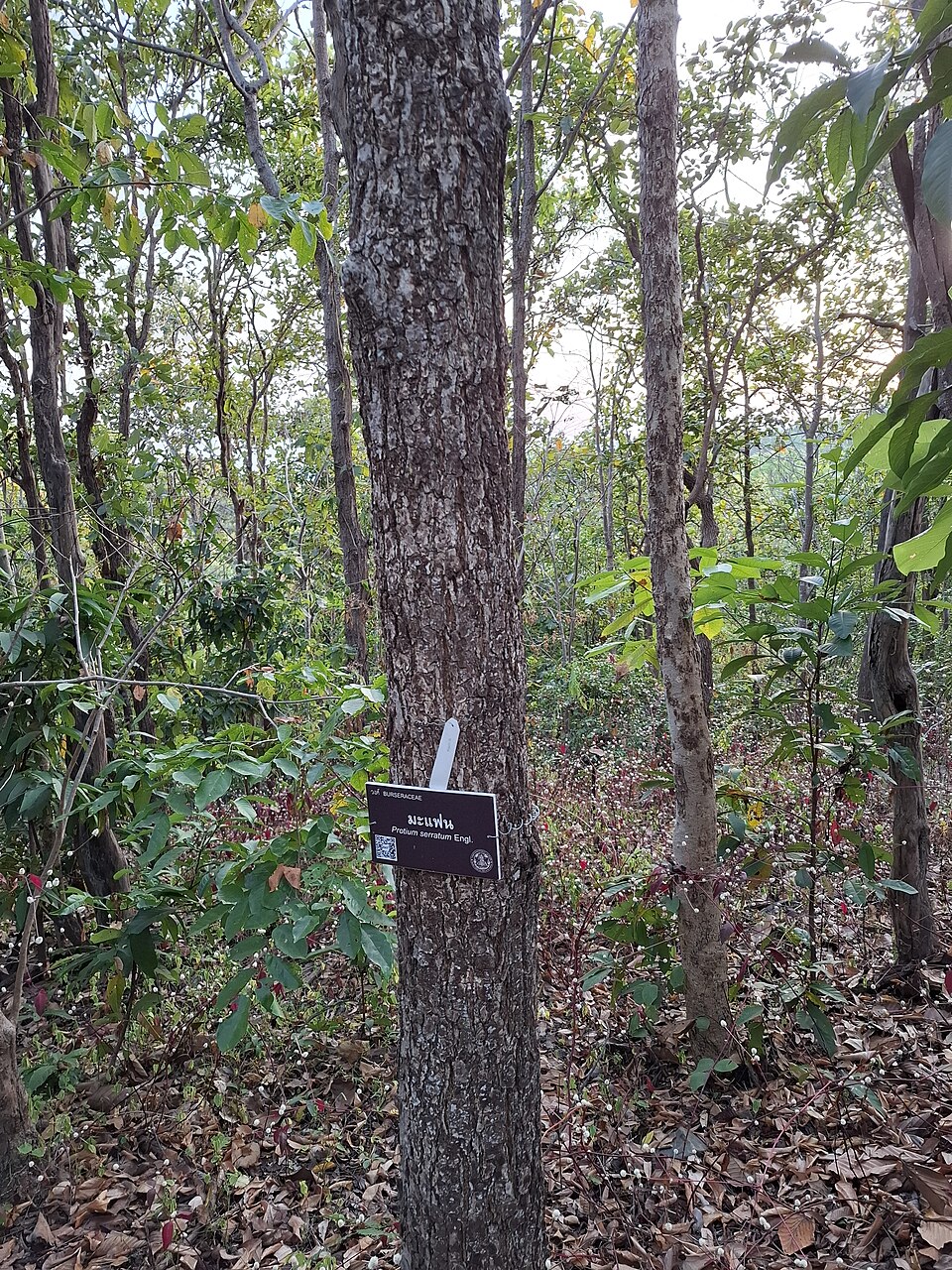
(c) Greg Tasney, some rights reserved (CC BY-SA), uploaded by Greg Tasney
iNaturalist· cc-by-nc
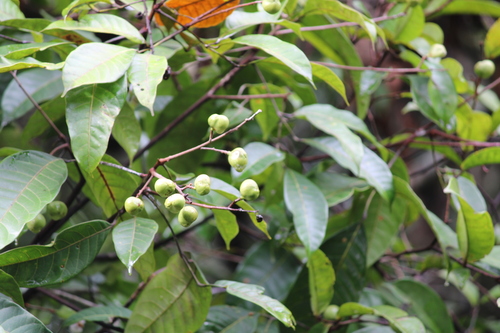
(c) Darren Fielder, some rights reserved (CC BY-NC)
iNaturalist· cc-by-nc
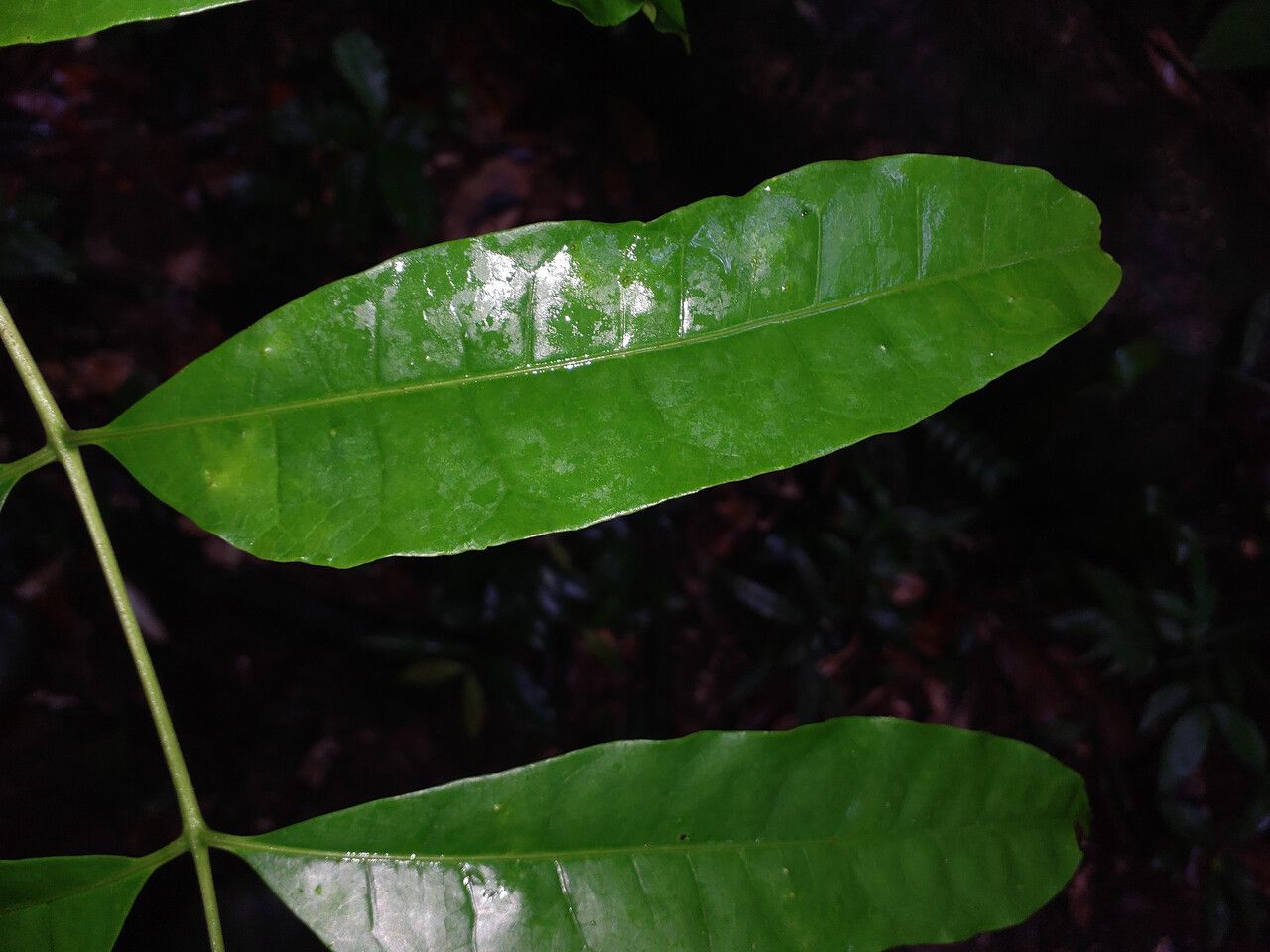
(c) Darren Fielder, some rights reserved (CC BY-NC)
Summary
Source: WikipediaCanarium australasicum, commonly named mango bark, brown cudgerie or parsnip wood, is a species of rainforest trees, of the plant family Burseraceae. They are endemic to Australia, in eastern Queensland and far northeastern New South Wales. These trees earliest formally published species name was Bursera australasica in 1892 by Frederick M. Bailey, Queensland colonial botanist from 1881 to 1915. In 1913 Bailey subsequently recognised them as the genus and species name Canarium australasicum, in his publication Comprehensive Catalogue of Queensland Plants, which recorded a precious selection of proper Aboriginal language names for this and many more species names, but missed formally publishing this new name combination. In 1952 this name combination was formally published by Pieter W. Leenhouts.
Description
A medium to tall tree growing 20-30 m high with a 10-15 m spread, native to Australia and nearby regions. The grey bark is marked by lumps and depressions and has a mango-like scent. It has compound leaves divided into 3-7 bright green, shiny leaflets (7-15 cm long), and produces deep red flowers followed by small blue or purple fruits with a hard stone.
Edible Uses
The kernel is roasted and eaten.
Traditional Uses
The kernel is roasted and eaten.
This uses section is brief — help expand it
Distribution
Australia - New South Wales, Queensland.
Where It Grows
Seeds kernel, Nuts,
Cultivation
Plants are grown from seed. Seed should be sown while fresh. Germination can be improved by filing the seed coat. It is probable they can be grown by aerial layering.
Propagation
Seed - we have no specific information for this species but seeds of this genus generally have a hard seed coat and germinate erratically. Filing away some of the seed coat to allow moisture to enter more readily, without damaging the seed, will encourage a faster and more even germination.
Other Uses
The wood is grey, becoming darker towards the centre. It works easily but is not very durable. A useful, general purpose timber, it can be used for the lining-boards of houses. The timber of this species resembles that of the very durable and highly prized Gmelina fasciculiflora, which was used extensively as window sills in North Queensland. There have been cases where enterprising (but rather short-sighted) sawmillers have used the timber of Canarium australianum as a substitute material for the manufacture of window sills.
Production
Trees flower in November and December.
Other Information
Burseraceae
Notes
A medium to tall tree. It grows up to 20-30 m high and spreads 10-15 m across. The bark is grey and is marked both by lumps and depressions. The inner bark has a mango like smell. The young shoots are smooth without hairs. The leaves are divided into 3-7 leaflets. The leaflets are 7-15 cm long by 3-5 cm wide. They are oval and bright green and shiny on both surfaces. The flower clusters are borne near the ends of branches. The flowers are 0.5 cm across. They are deep red. The fruit is 1-1.5 cm long and has a hard stone. The fruit is blue or purple.
Synonyms
Also Known As
Brown Cudgerie, Carrot Wood, Mango-bark
References (16)
- Beasley, J., 2011, Plants of Tropical North Queensland - the compact guide. Footloose publications. p 56 (As Canarium australianum)
- Calvert, G., 2010, The Burdekin Delta Tree Guide. Lower Burdekin Landcare Association., Inc., Ayr p 41 (As Canarium australianum)
- Cherikoff V. & Isaacs, J., The Bush Food Handbook. How to gather, grow, process and cook Australian Wild Foods. Ti Tree Press, Australia p 198
- Cooper, W. and Cooper, W., 2004, Fruits of the Australian Tropical Rainforest. Nokomis Editions, Victoria, Australia. p 95
- Cribb, A.B. & J.W., 1976, Wild Food in Australia, Fontana. p 103
Show all 16 references Hide references
- Cundall, P., (ed.), 2004, Gardening Australia: flora: the gardener's bible. ABC Books. p 323
- Elliot, W.R., & Jones, D.L., 1982, Encyclopedia of Australian Plants suitable for cultivation. Vol 2. Lothian. p 456
- Hibbert, M., 2002, The Aussie Plant Finder 2002, Florilegium. p 59
- Jones D, L, 1986, Ornamental Rainforest Plants in Australia, Reed Books, p 203
- Lazarides, M. & Hince, B., 1993, Handbook of Economic Plants of Australia, CSIRO. p 46
- Melzer, R. & Plumb, J., 2011, Plants of Capricornia. Belgamba, Rockhampton. p 81
- Morley, B.D., & Toelken, H.R., (Eds), 1983, Flowering Plants in Australia. Rigby. p 192
- Townsend, K., 1994, Across the Top. Gardening with Australian Plants in the tropics. Society for Growing Australian Plants, Townsville Branch Inc. p 118
- Williams, J.B., Harden, G.J., and McDonald, W.J.F., 1984, Trees and shrubs in rainforests of New South Wales and Southern Queensland. Univ. of New England, Armidale. p 41
- Williams, K.A.W., 1999, Native Plants of Queensland Volume 4. Keith A.W. Williams North Ipswich, Australia. p 92
- www.pngplants.org