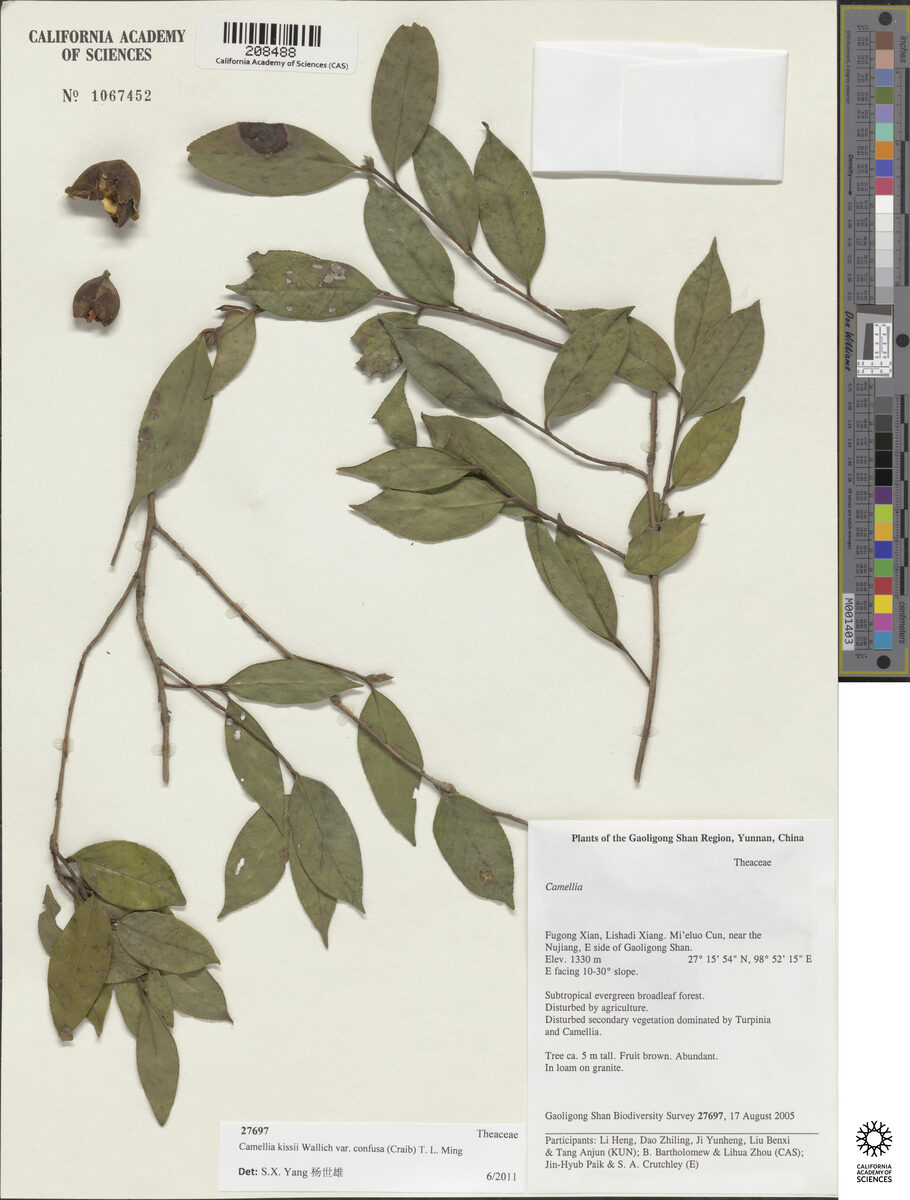
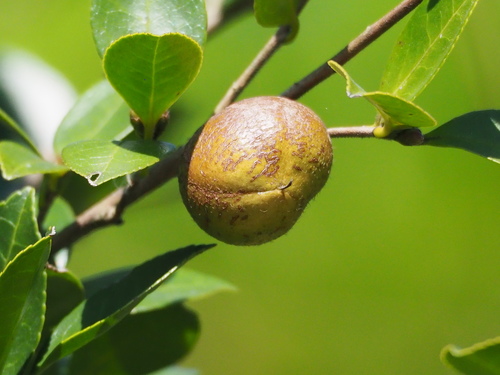
Camellia sasanqua
Thunb. ex Murray
Tea-seed oil, Sasanqua tea
iNaturalist· cc-by-nc
(c) macstap, some rights reserved (CC BY-NC)
iNaturalist· cc-by
(c) Marco Mussita, some rights reserved (CC BY), uploaded by Marco Mussita
iNaturalist· cc-by
(c) Marco Mussita, some rights reserved (CC BY), uploaded by Marco Mussita
Summary
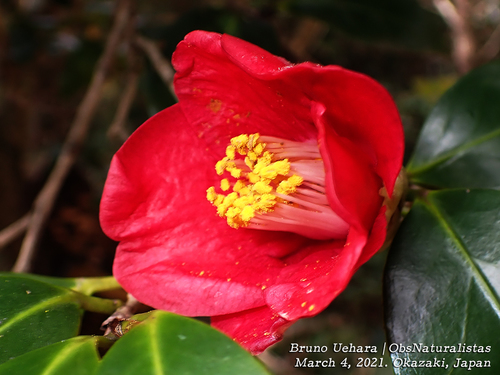
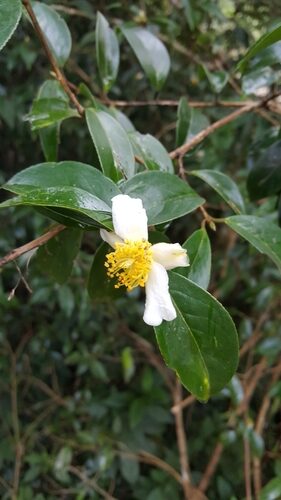
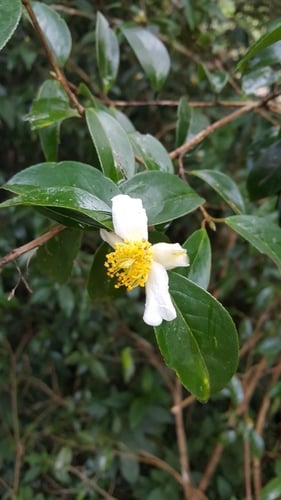
Source: WikipediaCamellia sasanqua, with common name sasanqua camellia, is a species of Camellia native to southern Japan (Kyushu, Ryukyu Islands and Shikoku). It is usually found growing up to an altitude of 900 m (3,000 ft). Growing to 5 m (16 ft) tall, this evergreen shrub has leaves that are broad and elliptic, 3–7 centimetres (1.2–2.8 in) long and 1.2–3 centimetres (0.5–1.2 in) broad, with finely serrated margins. The flowers are 5–7 centimetres (2.0–2.8 in) in diameter, with 5 to 8 white to dark pink petals.
Description
A shrub. It grows 3-6 m tall and spreads 3-4.5 m wide. The leaves are small. They are very shiny. The flowers are small and have a sweet scent. The flowers are white but coloured varieties with large flowers have been bred.
Edible Uses
Edible Parts: Oil Oil Edible Uses: Oil Oil Tea The oil obtained from the seed is edible if it is refined. It is said to be equal in quality to olive oil. The leaves are mixed with tea to give it a pleasant aroma.
Traditional Uses
The oil needs to be refined before being used in food. The leaves are added to tea to give an aroma.
This uses section is brief — help expand it
Medicinal Uses
Demulcent Expectorant Demulcent, expectorant.
Distribution
It is a subtropical plant. It is frost hardy but the flowers can be damaged by frost. They need moisture but benefit from good warm sun. It suits hardiness zones 9-11. Arboretum Tasmania.
Where It Grows
Asia, Australia, Britain, China, Europe, Hawaii, India, Indochina, Indonesia, Japan, Korea, Laos, Pacific, SE Asia, Tasmania, USA, Vietnam,
Cultivation
Prefers a woodland soil but thrives in a warm open well-drained loam if leafmould is added. A calcifuge plant, preferring a pH between 5 and 7. Dislikes cold winds. Prefers the partial shade of a light woodland, growing well in a woodland clearing. Many cultivars tolerate full sun, in fact one report says that the species flowers better in a sunny position and another that the plant prefers a hot sunny position. Plants are hardy to about -10°c. Another report says that this species is very cold hardy if it is sheltered from cold winds. Prefers a wet summer and a cool but not very frosty dry winter. Another report says that the plant requires hot summers if it is to do well. Plants are not very self-compatible, self-fertilized flowers produce few seeds and these are of low viability. A very ornamental plant, it is closely allied to C. oleifera. The cultivar 'Narumi-gata' (which is sometimes mistakenly called C. oleifera) is a very reliable shrub in Britain. Plants resent root disturbance and are best planted out into their final positions whilst still young. This species is cultivated in Asia for the oil in its seed, there are many named varieties mostly developed for their ornamental value. The flowers have a delicate sweet perfume.
Propagation
Seed - can be sown as soon as it is ripe in a greenhouse. Stored seed should be pre-soaked for 24 hours in warm water and the hard covering around the micropyle should be filed down to leave a thin covering. It usually germinates in 1 - 3 months at 23°c. Prick out the seedlings into individual pots when they are large enough to handle and grow them on in light shade in the greenhouse for at least their first winter. Plant them out into their permanent positions when they are more than 15cm tall and give them some protection from winter cold for their first year or three outdoors. Cuttings of almost ripe wood, 10 - 15cm with a heel, August/September in a shaded frame. A high percentage take, but they are slow to root. Cuttings of firm wood, 7 - 10cm with a heel, end of June in a frame. Keep in a cool greenhouse for the first year. Leaf-bud cuttings, July/August in a frame.
Other Uses
Dye Hedge Hedge Oil Oil Soap A non-drying oil is obtained from the seed - used as a hair-dressing and textile oil. A green dye is obtained from the pink or red petals. A decoction of the plant (could this refer to the oil in the seed??) is used as a soap substitute for washing oily clothes. Plants can be used as a hedge. The cultivar 'Onigoromo' has been especially mentioned for this purpose. Special Uses Espalier Hedge Hedge Scented Plants
Other Information
It is a cultivated food plant.
Notes
There are about 250-300 Camellia species. Camellia sasanqua has hundreds of cultivated varieties.
Synonyms
Also Known As
Cha hua, Chamei, Kamelia sasangkua, Mei camellia, Perdu teh sasangkua, Sazanka, Shan cha, So, Tra-mai
References (19)
- Ambasta S.P. (Ed.), 2000, The Useful Plants of India. CSIR India. p 99
- Bircher, A. G. & Bircher, W. H., 2000, Encyclopedia of Fruit Trees and Edible Flowering Plants in Egypt and the Subtropics. AUC Press. p 76
- Bodkin, F., 1991, Encyclopedia Botanica. Cornstalk publishing, p 207
- Brouk, B., 1975, Plants Consumed by Man. Academic Press, London. p 230
- Brown, D., 2002, The Royal Horticultural Society encyclopedia of Herbs and their uses. DK Books. p 151
Show all 19 references Hide references
- Cundall, P., (ed.), 2004, Gardening Australia: flora: the gardener's bible. ABC Books. p 310
- Etherington, K., & Imwold, D., (Eds), 2001, Botanica's Trees & Shrubs. The illustrated A-Z of over 8500 trees and shrubs. Random House, Australia. p 174
- Facciola, S., 1998, Cornucopia 2: a Source Book of Edible Plants. Kampong Publications, p 69
- Fl. jap. 273, t. 30. 1784
- Hedrick, U.P., 1919, (Ed.), Sturtevant's edible plants of the world. p 146
- Heywood, V.H., Brummitt, R.K., Culham, A., and Seberg, O. 2007, Flowering Plant Families of the World. Royal Botanical Gardens, Kew. p 318
- Joyce, D., 1998, The Garden Plant Selector. Ryland, Peters and Small. p 129
- Lord, E.E., & Willis, J.H., 1999, Shrubs and Trees for Australian gardens. Lothian. p 210
- PROSEA handbook Volume 13 Spices. p 275
- Smith, N., Mori, S.A., et al, 2004, Flowering Plants of the Neotropics. Princeton. p 370
- Staples, G.W. and Herbst, D.R., 2005, A tropical Garden Flora. Bishop Museum Press, Honolulu, Hawaii. p 546
- Sukarya, D. G., (Ed.) 2013, 3,500 Plant Species of the Botanic Gardens of Indonesia. LIPI p 603
- Valder, P., 1999, The Garden Plants of China. Florilegium. p 148
- Young, J., (Ed.), 2001, Botanica's Pocket Trees and Shrubs. Random House. p 187