Mastocarpus stellatus
(Stackhouse) Guiry
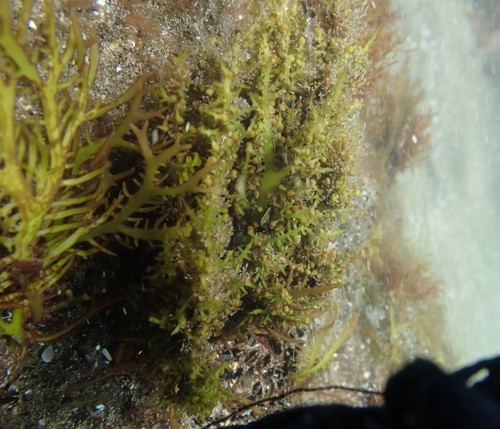
iNaturalist· cc-by-nc
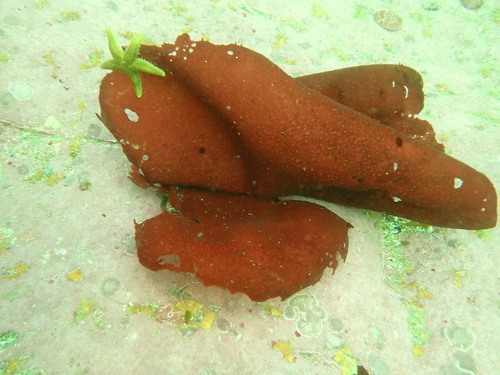
(c) zaca, some rights reserved (CC BY-NC), uploaded by zaca
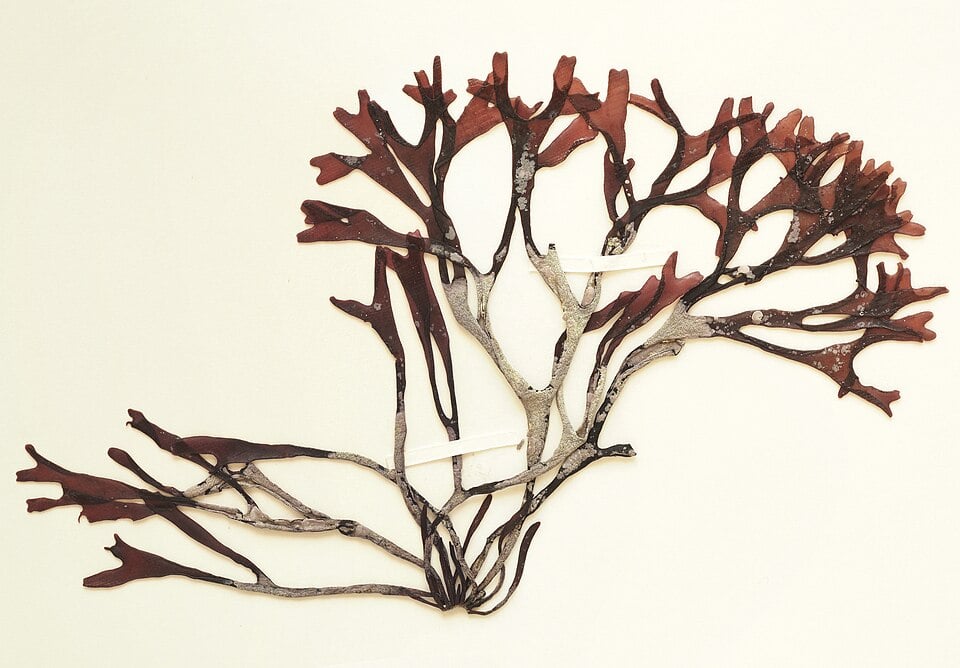
iNaturalist· cc-by
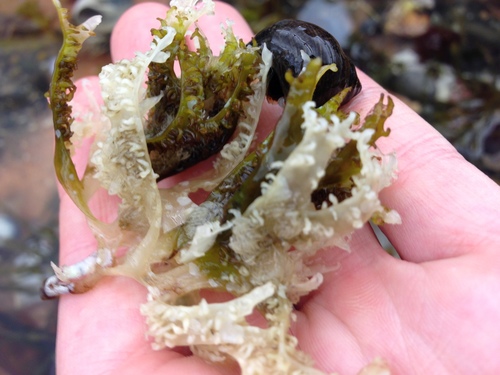
(c) Ian Manning, some rights reserved (CC BY), uploaded by Ian Manning
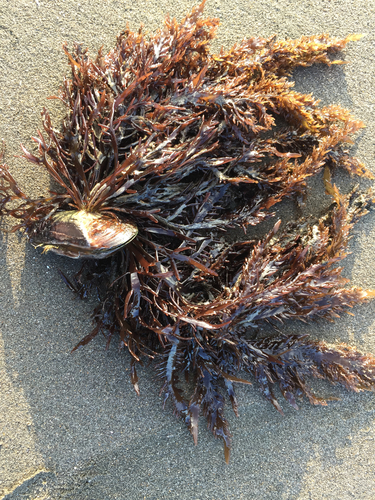
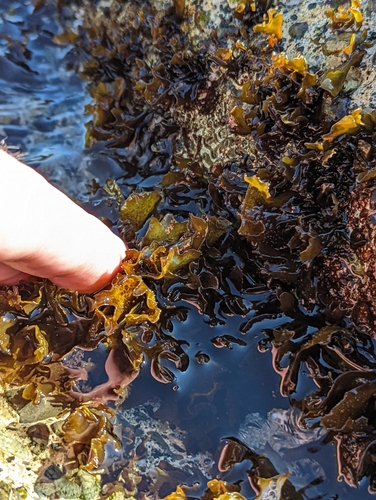
iNaturalist· cc-by-nc
(c) Susan J. Hewitt, some rights reserved (CC BY-NC), uploaded by Susan J. Hewitt
Summary
Source: WikipediaMastocarpus stellatus, commonly known as carrageenan moss or false Irish moss, is a species in the Rhodophyceae division, a red algae seaweed division, and the Phyllophoracea family. M. stellatus is closely related to Irish Moss (Chondrus crispus). It grows in the intertidal zone. It is most collected in North Atlantic regions such as Ireland and Scotland, together with Irish moss, dried, and sold for cooking and as the basis for a drink reputed to ward off colds and flu. Marine biologists have completed studies on the medicinal reputation of M. stellatus to discover the full potential of its pharmaceutical benefits. Additionally, marine biologists have conducted research on its potential to serve as an alternative to plastic. The application of M. stellatus in these different industries is correlated with the seaweed's adaptations which developed in response to the environmental stressors present around its location on the rocky intertidal.
Description
A red seaweed in the Gigartinaceae family found in temperate waters.
This description is brief — help expand it
Edible Uses
The algae/seaweed is edible.
Medicinal Uses
Carrageenan, or phycocolloids are sulfated linear polysaccharides composed of carrageenan and carrageenan precursors. In order for carrageenan compounds to be useful, the kappa and/or iota carrageenan need to be isolated from its mu-carrageenan or nu-carrageenan precursors. Lower molecular weight and higher amounts of sulfate results in higher antioxidant properties. Heavier molecular weight and higher amounts of sulfate result in anticoagulant properties. The relationships between antioxidant and anticoagulant mechanisms suggest that inflammation and coagulation are interconnected and interdependent processes in M. stellatus. M. stellatus has been used in home remedies to treat coughs, colds, and sore throats by mixing it with C. crispus and other herbs, spices, and sweeteners.
Distribution
It is a temperate plant.
Where It Grows
Britain, Europe, Ireland, Mediterranean, Portugal, Spain,
Nutrition
| Part | Moisture | kJ | kcal | Protein | Vit A | Vit C | Iron | Zinc |
|---|---|---|---|---|---|---|---|---|
| Seaweed | — | — | 25.4 | — | — | — | — | — |
References (5)
- Cherry, P., et al, 2019, Risks and benefits of consuming edible seaweeds. Nutrition ReviewsVR Vol. 77(5):307–329
- Gomez-Ordonez. E., 2010, Dietary fibre and physicochemical properties of several edible seaweeds from the northwestern Spanish coast. Food Research International 43(2010) 2289-2294
- http://www.seavegetables.com
- Marsham, S., et al, 2007, Comparison of nutritive chemistry of a range of temperate seaweeds. Food Chemistry 100: 1331-1336
- Zemke-White, W. L. & Ohno, M., 1999, World seaweed utilisation: An end-of-century summary. Journal of Applied Phycology 11: 369-376