Philenoptera laxiflora
(Guill. & Perr.) Roberty
Senegal lilac
iNaturalist· cc-by-nc
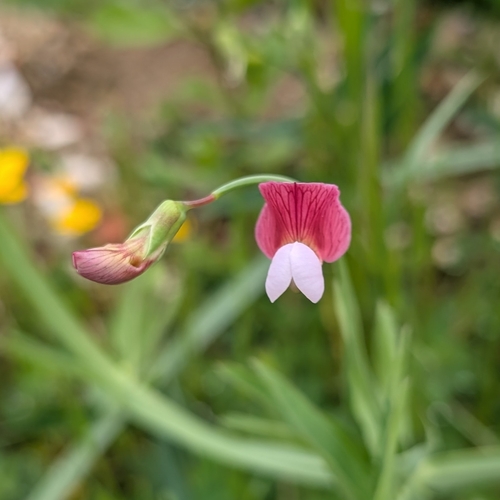
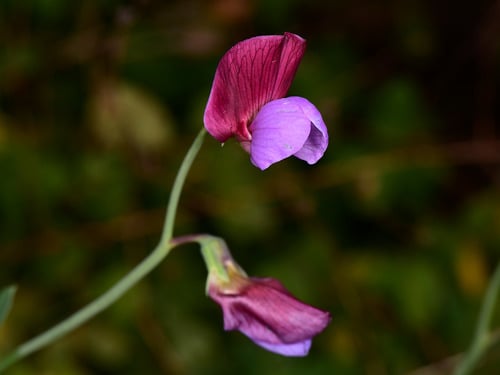
(c) thierry_aebischer_chinko, some rights reserved (CC BY-NC), uploaded by thierry_aebischer_chinko
iNaturalist· cc-by-nc
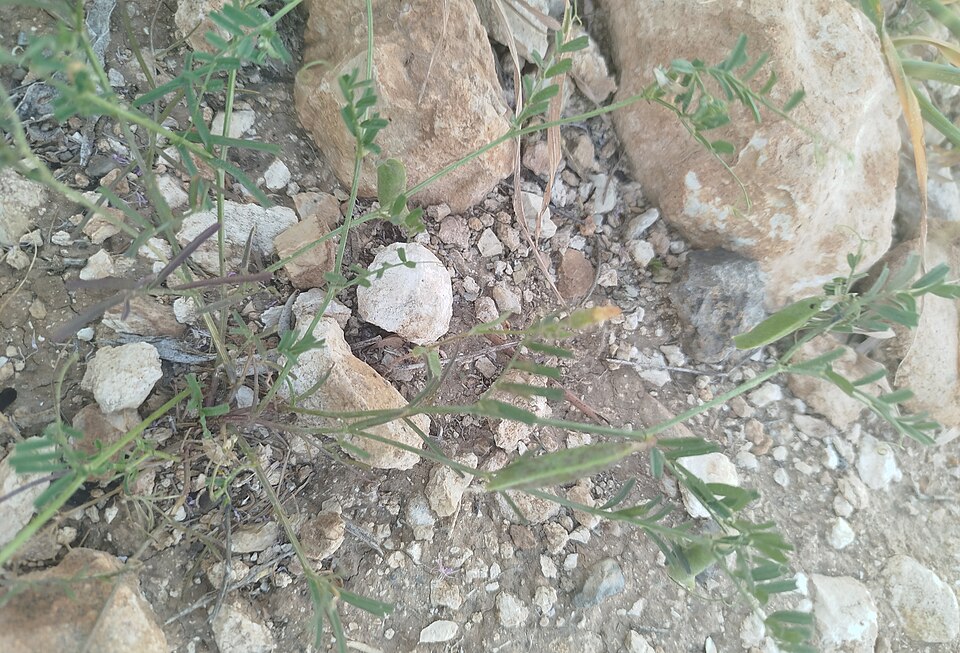
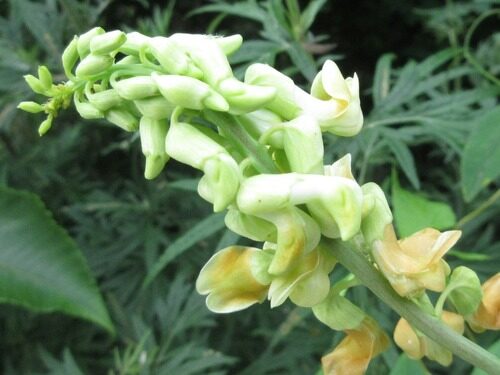
(c) ONG OeBenin, some rights reserved (CC BY-NC), uploaded by ONG OeBenin
iNaturalist· cc-by-nc
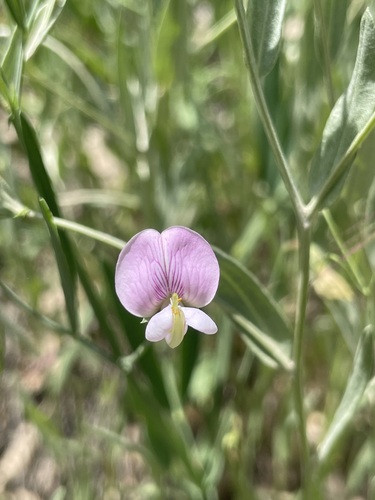
(c) thierry_aebischer_chinko, some rights reserved (CC BY-NC), uploaded by thierry_aebischer_chinko
Summary
Source: WikipediaPhilenoptera laxiflora, synonym Lonchocarpus laxiflorus, is a species of legume in the family Fabaceae. The tree grows to 4–8 meters in height, has grey or yellowish bark and compound leaves. New leaves are accompanied by purple flowers on multi-branched panicles. The fruit is a glabrous papery pod, usually containing one seed. Ph. laxiflorus is widely distributed in West Africa, Central Africa, the African Great Lakes, and Northeast Africa. It is found in savanna woodlands and dry forested areas, particularly fringing forest near water courses.
Description
A tropical shrub or small tree 5-6 m high with a trunk 25 cm across, found in dry savannah woodland in West Africa. The young leaves, young fruit, flowers, and bark are edible, with bark used as a flavouring.
Edible Uses
The young leaves and young fruit are eaten. The bark is used as a flavouring. Flowers are also edible.
Traditional Uses
The young leaves and young fruit are used.
This uses section is brief — help expand it
Medicinal Uses
The roots and bark are used as a tonic and to treat jaundice. The root is used externally as a treatment against stomach-ache. A decoction of the young leaves is used in the treatment of liver troubles The leaves are applied as a poultice on ulcers. The leaves and bark are used externally as an anti-parasitic for treating scabies and ringworm.
Known Hazards
Ph. laxiflorus has been little studied, though many species in the related genus Lonchocarpus contain rotenoids, tannins, flavonoids, and isoflavonoids. One study extracted several new compounds from the bark: two isoflavanes (lonchocarpane and laxiflorane) and two pterocarpanes (philonopterane and 9-O-methyl derivative). Nothing specific is known about the toxicology of Ph. laxiflorus.
Distribution
It is a tropical plant. It grows in the dry savannah woodland in West Africa.
Where It Grows
Africa, Benin, Burkina Faso, Cameroon, Central Africa*, Central African Republic, CAR, Chad, Congo DR, East Africa, Eritrea, Ethiopia, Gambia, Ghana, Guinea, Guinée, Guinea-Bissau, Ivory Coast, Kenya, Mali, Niger, Nigeria, Senegal, Sudan, Togo, Uganda, West Africa*,
Cultivation
Found in the wild mainly on moist, well-drained soils. This species has a symbiotic relationship with certain soil bacteria; these bacteria form nodules on the roots and fix atmospheric nitrogen. Some of this nitrogen is utilized by the growing plant but some can also be used by other plants growing nearby.
Other Uses
The leaves are the source of an indigo dye, used in the same manner as the leaves of Philenoptera cyanescens, and providing the same range of blue colours that can be obtained from that plant and also from Indigofera arrecta. The dye has been much used in Gambia to make the famous 'bara siti' cloth in which decorative patterns are made by crumpling and binding parts of the tissue during the dye process. The leaves are bruised to a pulp and made up into balls 10 - 12cm in diameter. These balls are dried in the sun and can be sold in local markets. To dye cloth into various shades of blue, the dye-vat is prepared by soaking the crushed balls in hot water, the number depending on the desired intensity of the blue colour. The necessary alkalinity is obtained by adding lye from wood-ash. The solution is then left to ferment for 6 - 8 days usually, and the dye bath is then ready for the cloth to be steeped into it. Young leaves of Morinda lucida are mixed with the leaves of this species to give a greenish dye that is used to dye mats. The leaves and bark are used as an insecticide. The pale yellow wood is hard and heavy. It is used for pole timber. The wood is used for fuel and to make charcoal.
Synonyms
Also Known As
Dafim
References (3)
- Burkill, H. M., 1985, The useful plants of west tropical Africa, Vol. 5. Kew. (As Lonchocarpus laxiflorus)
- Hahn, K., et al, 2018, The Use of Wild Plants for Food: a National Scale Analysis for Burkina Faso (West Africa) Flora et Vegetatio Sudano-Sambesica 21, 25-33
- Kew Plants of the World Online