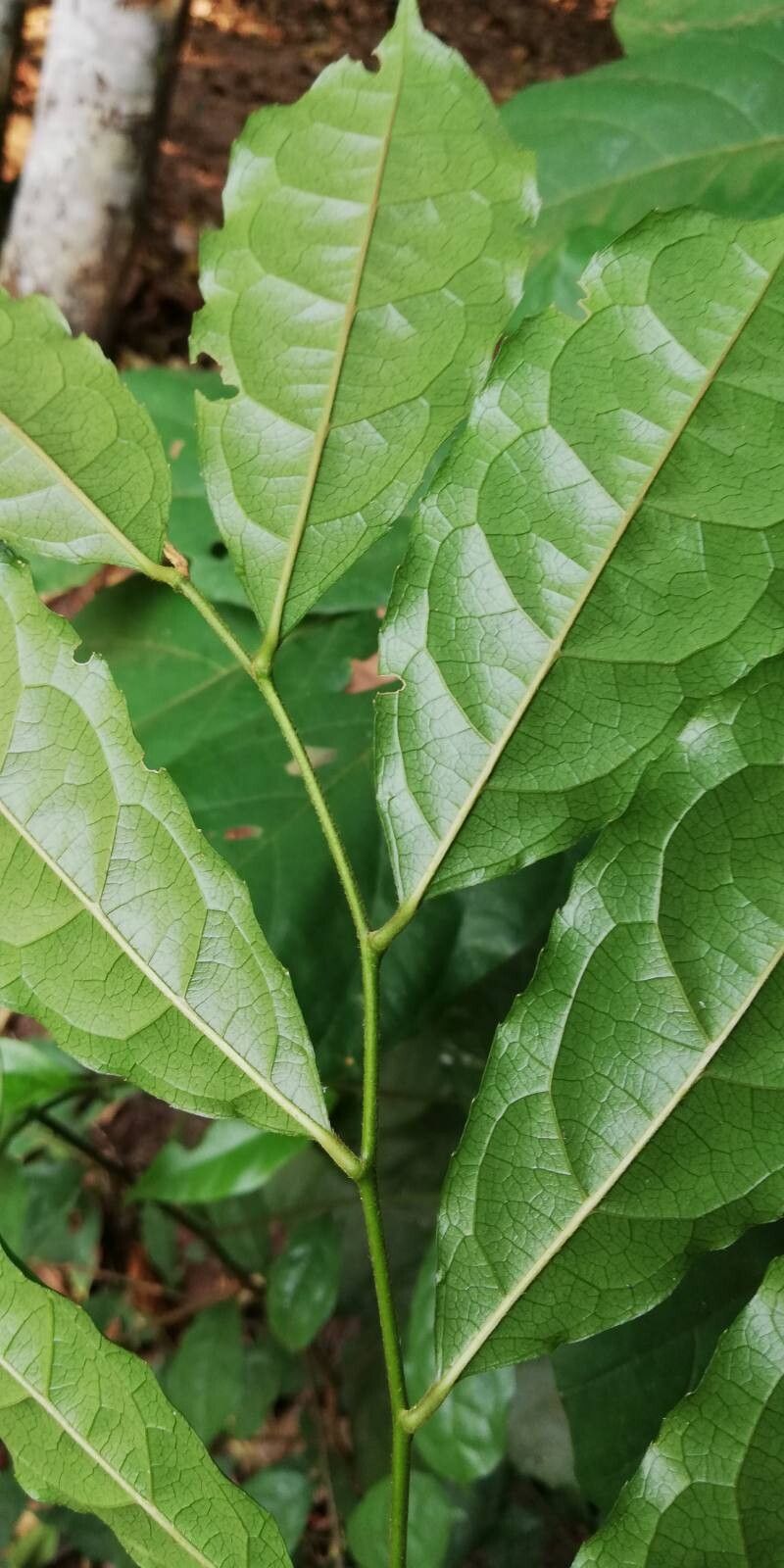
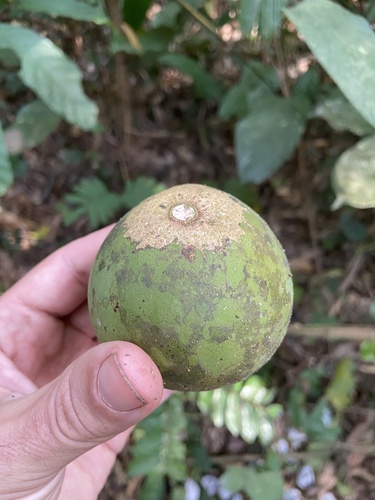
Microdesmis keayana
J. Leonard
iNaturalist· cc-by-nc
(c) Erik Simons, some rights reserved (CC BY-NC), uploaded by Erik Simons
iNaturalist· cc-by-nc
(c) Erik Simons, some rights reserved (CC BY-NC)
Description
A shrub or small tree in the Pandaceae family that can reach 16 m tall, growing in thickets and scrub of damp secondary forests in West Africa.
This description is brief — help expand it
Edible Uses
The flowers are eaten.
Medicinal Uses
A popular traditional medicine in Africa, the stem bark, leaves and roots have numerous medicinal uses throughout the distribution area of this plant - these uses are very similar to those of the closely related Microdesmis puberula. The aqueous and methanolic root extracts have shown hypotensive and vasorelaxing properties in tests. Both extracts have also shown strong anti-oxidant activity. A dichloromethane extract from the leaves has shown significant antiplasmodial activity in vitro against a chloroquine-resistant strain of Plasmodium falciparum. Different plant extracts did not show significant antitrypanosomal or anthelmintic activities in vitro. The leaves, cooked with chicken, are given to treat palpitations. A leaf infusion is taken to induce menstruation and to act as an abortifacient. The leaf sap, sometimes combined with the twig sap, is commonly taken orally or applied as an enema to treat diarrhoea. The leaves are an ingredient of poison antidotes. The powdered leaves, sometimes combined with Capsicum fruits, are rubbed on the abdomen or taken orally in order to treat colic, chest complaints, fatigue, pain in the side, kidney pain and feverish stiffness - a leaf decoction can be used for the same purposes. A paste made from pounded leaves, combined with those of Desmodium adscendens, is mixed with white clay and applied to scabies. The crushed leaves, combined with those of Mareya micrantha, are used as a local massage to treat general body pain, painful kidneys or ribs, or overall fatigue. The leafy twigs are a major component of a medicinal wash used for the daily care of newborn babies in order to prevent dermatological and intestinal affections and excessive weight loss. A decoction made from the leaves or leafy twigs or ground young leaves is used as a steam bath or wash to treat rheumatism or migraine. The leaf sap is applied as nose drops to treat epilepsy and convulsions. Mental disorders are treated with a decoction of the leaves and roots, combined with the leaves and roots of Newbouldia laevis - this is taken orally and is also used as a wash. The leaf sap; or crushed and burnt twigs; or the roots; are applied to snakebites or to wounds in order to stop bleeding and to heal them. A decoction of the whole plant is taken as an emmenagogue and to treat dysentery. The leaf and bark pulp are applied to sprains and burns. The powdered twig bark is rubbed on the body, whilst a macerate of leafy twigs and roots is applied in the form of an enema, to act as an aphrodisiac. Root bark scrapings, combined with the leaves of Piper guineense and water, are applied to the breasts to treat mastitis. A root infusion, or a decoction of the whole plant, is taken orally as an aphrodisiac. A root decoction is drunk to treat venereal diseases. The fruit is chewed to prevent ulcers. Boiled fruits are applied as a poultice to tumours.
Distribution
It is a tropical plant. It grows 16 m high. It grows in thickets and scrub of damp secondary forests in West Africa.
Where It Grows
Africa, Nigeria, Senegal, Sierra Leone, West Africa,
Cultivation
The plant recovers well from bush fires. A dioecious species, both male and female forms need to be grown if fruit and seed are required.
Other Uses
The twigs are used as chew sticks in order to maintain gum health and dental hygeine. The thin flexible branches are used as ties for fastening roof thatch. The stems are used to make fishing gear and spring traps because of their strength and resilience, and the wood is used to make handles and implements.
References (2)
- Burkill, H. M., 1985, The useful plants of west tropical Africa, Vol. 4. Kew.
- World Checklist of Useful Plant Species 2020. Royal Botanic Gardens, Kew