Acanthospermum hispidum
DC.
Bristly star-bur
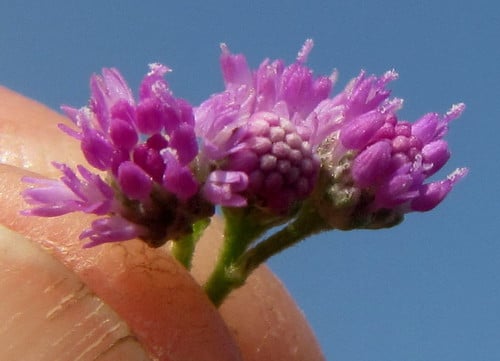
iNaturalist· cc-by-nc
(c) Troos van der Merwe, some rights reserved (CC BY-NC), uploaded by Troos van der Merwe
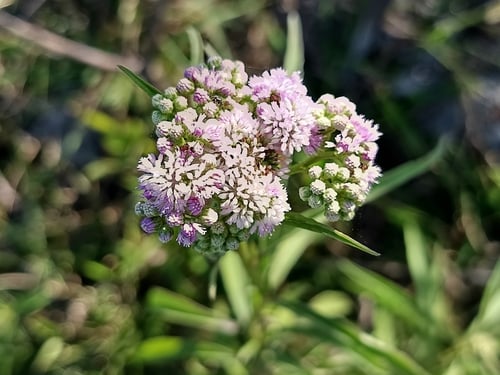
iNaturalist· cc0
no rights reserved, uploaded by S.MORE
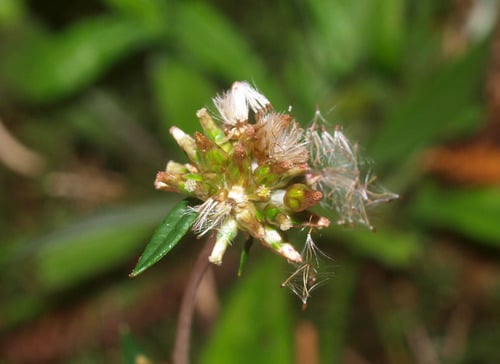
iNaturalist· cc-by-nc
(c) Russell Cumming, some rights reserved (CC BY-NC), uploaded by Russell Cumming
Summary
Source: WikipediaAcanthospermum hispidum (bristly starbur, goat's head, hispid starburr, starbur) is an annual plant in the family Asteraceae, which is native to Central and South America. This plant is cited as a weed in cotton culture in Brazil, and it is also used as a medicinal plant. It is also naturalized in many scattered places in Eurasia, Africa, and North America It is naturalized in Australia and is a declared weed in Western Australia.
Description
A shrub or small tree. It grows 5 m tall. There are prickles along the stem. The leaves are twice divided and there are 8-18 pairs of pinnae. There are up to 50 pairs of pinnules on each pinnae. The flowers are yellow. They are in large clusters at the ends of branches. The pods are flattened.
Edible Uses
The sap squeezed from the leaves is used in sauces, as a spice, and in flavourings.
Traditional Uses
The sap from the leaves is squeezed out are used in sauces and as a spice and in flavourings. Caution: It can probably induce abortions.
This uses section is brief — help expand it
Medicinal Uses
The plant is bitter and aromatic. It is used in some parts of S. America as a diuretic and sudorific.
Known Hazards
Can probably induce abortions.
Distribution
It is a tropical plant. It grows in flooded rice fields and other disturbed areas. In Yunnan.
Where It Grows
Africa, Australia, America, Argentina, Asia, Botswana, Brazil, Burkina Faso, Caribbean, Central Africa, China, Congo DR, Dominica, Dominican Republic, East Africa, Guiana, Guianas, Guinea, Guinée, Guinea-Bissau, Guyana, Hawaii, India, Marquesas, Mozambique, Pacific, Sao Tome and Principe, Senegal, Sierra Leone, South America*, Suriname, Venezuela, West Africa, West Indies, Zambia, Zimbabwe,
Cultivation
Succeeds in a wide range of climates from the temperate to the tropical zones. Succeeds in a wide range of soils, preferring light soils but even succeeding in heavy clays. The plant has become a weed in many areas of the tropics and subtropics. Both the seeds and the leaves contain phenolic acids that are allelopathic to other plants. It is known to invade pastures and out-compete more desirable native species, it is also a weed of crops and a serious contaminant of wool. A prolific seeder, the hooked hairs of the fruit attach easily to the coats of animals, and the fruit is widely distributed by this means. The seeds also float and can be spread by floodwaters. It is classified as a 'Noxious Weed' in some areas.
Notes
It has become an aggressive weed in some places. It has antibacterial properties.
Also Known As
Are-saque, Berentam-o, Bouli oli, Buchigado, Bule-n-baba, Madiata nzau, Manguera-gore, Misquito, Nhara-sequedo, Nhara-sequem, Nhareseque, Nhari-seque, Singuir, Umbaba, Um-nhare-saque
References (5)
- Burkill, H. M., 1985, The useful plants of west tropical Africa, Vol. 1. Kew.
- Fowler, D. G., 2007, Zambian Plants: Their Vernacular Names and Uses. Kew. p 12
- Latham, P. & Mbuta, A. K., 2017, Plants of Kongo Central Province, Democratic Republic of Congo. 3rd ed p 16
- Pickering, H., & Roe, E., 2009, Wild Flowers of the Victoria Falls Area. Helen Pickering, London. p 32
- World Checklist of Useful Plant Species 2020. Royal Botanic Gardens, Kew