Ipomoea purpurea
(Linn.) Roth
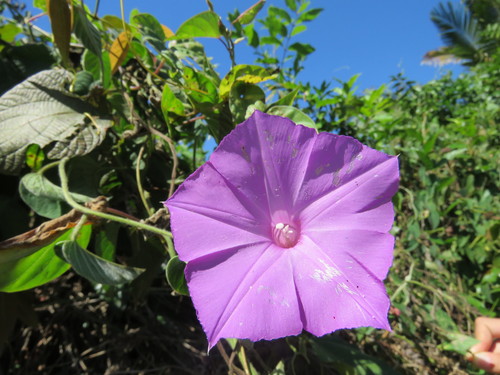
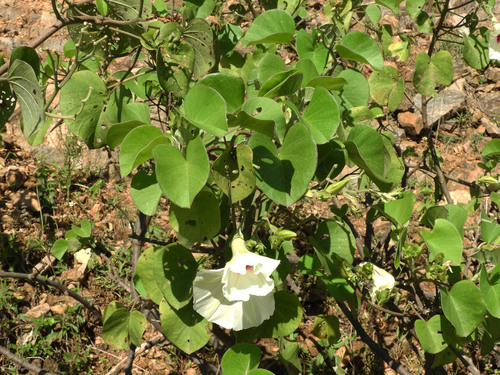
Common morning glory, Tall morning glory
iNaturalist· cc-by-nc
(c) jaguarundi_2025, some rights reserved (CC BY-NC)
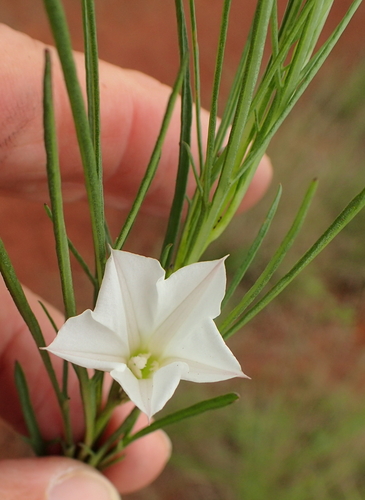
iNaturalist· cc-by-nc
(c) Dan Beckman, some rights reserved (CC BY-NC), uploaded by Dan Beckman
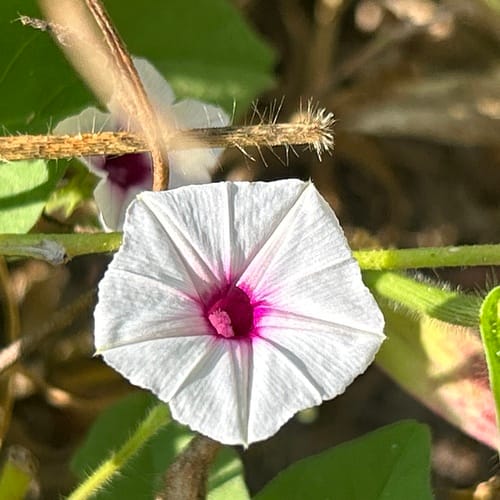
iNaturalist· cc-by-nc
(c) Angel Rios Oviedo, some rights reserved (CC BY-NC), uploaded by Angel Rios Oviedo
Summary
Source: WikipediaIpomoea purpurea, the common morning-glory, tall morning-glory, or purple morning glory, is a species in the genus Ipomoea, native to Mexico and Central America.
Description
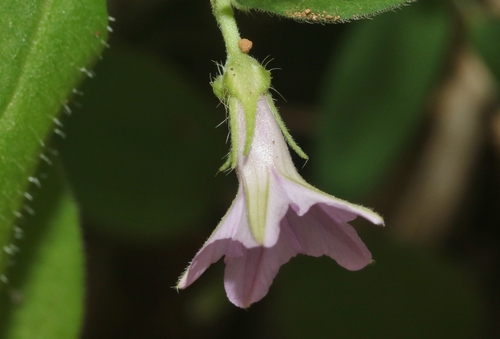
A twining herb. It can lie along the ground or climb to 2.5 m high. The leaves are oval and can have 3 lobes. They are 4-16 cm long by 3-15 cm wide. The flowers are white pink or red. They are funnel shaped.
Edible Uses
No edible uses are known for this plant.
Traditional Uses
Caution: The leaves are purgative. The leaves are cooked as a vegetable.
This uses section is brief — help expand it
Medicinal Uses
The seed is anthelmintic, diuretic, and laxative, and is used in the treatment of oedema, oliguria, ascariasis, and constipation. The seed contains small quantities of the hallucinogen LSD, which has been used medicinally in the treatment of various mental disorders.
Known Hazards
Commercial morning glory seeds are commonly treated with toxic methylmercury, which serves as a preservative and a cumulative neurotoxic poison that is considered useful by some to discourage their recreational use. The US has no legal requirement to disclose to buyers that seeds have been treated with a toxic heavy metal compound. According to the book Substances of Abuse, in addition to methylmercury, the seeds are commonly coated with a chemical that cannot be removed with washing that is designed to cause unpleasant physical symptoms, such as nausea and abdominal pain. The book states that this chemical is also toxic.
Distribution
It is a tropical plant. It grows in hot arid places often with a marked dry season. It grows between 650-1,680 m above sea level. It can grow in arid places. In Argentina it grows from sea level to 2,000 m above sea level.
Where It Grows
Africa, America*, Argentina, Australia, Asia, Brazil, Central Asia, Chile, China, East Africa, Eswatini, Europe, Himalayas, Indonesia, Kenya, Korea, Lesotho, Madagascar, Malaysia, Mexico, Middle East, Mozambique, Myanmar, Namibia, Nepal, New Zealand, North America, Pakistan, Philippines, Puerto Rico, SE Asia, Slovenia, South Africa, South America, Southern Africa, Sri Lanka, Swaziland, Tajikistan, Tanzania, Uganda, Uruguay, West Africa, West Indies, Yemen, Zambia, Zimbabwe,
Propagation
Pre-soak seed for 12 hours in warm water or scarify it, then sow in individual pots in a greenhouse in early spring. Germination usually occurs within 1–3 weeks at 22°C. Plants are extremely resentful of root disturbance even when small, so should be potted up almost as soon as they germinate. Grow them on quickly in the greenhouse and plant out into permanent positions after the last expected frosts, considering cloche protection until they are growing away actively.
Other Uses
No other uses are known for this plant.
Other Information
It is a famine food.
Synonyms
Also Known As
Bejuco, Bom-dia, Campanilla, Corriola, Ijalapha, Ijalmu, Pan-kazun-nwe, Ravimbomangan'alika, škrlatni lepi slak, Suspiros, Ubhoqo
References (11)
- Burkill, H. M., 1985, The useful plants of west tropical Africa, Vol. 1. Kew.
- Diaz-Betancourt, M., et al, 1999, Weeds as a future source for human consumption. Rev. Biol. Trop. 47(3):329-338
- Fowler, D. G., 2007, Zambian Plants: Their Vernacular Names and Uses. Kew. p 79
- Fox, F. W. & Young, M. E. N., 1982, Food from the Veld. Delta Books. p 162
- Grubben, G. J. H. and Denton, O. A. (eds), 2004, Plant Resources of Tropical Africa 2. Vegetables. PROTA, Wageningen, Netherlands. p 562
Show all 11 references Hide references
- Malezas Comestibles del Cono Sur, INTA, 2009, Buernos Aires
- Razanameharizaka, J., et al, 2022, Catalogue Legumes Traditionnels de Madagascar. Université d’Antananarivo, Antananarivo (101), Madagascar. Vol. 1. p 31
- Royal Botanic Gardens, Kew (1999). Survey of Economic Plants for Arid and Semi-Arid Lands (SEPASAL) database. Published on the Internet; http://www.rbgkew.org.uk/ceb/sepasal/internet [Accessed 15th April 2011]
- Ruiters-Welcome, A. K., 2019, Food plants of southern Africa. Ph.D. thesis. Univ. of Johannesburg p 46
- Welcome, A. K. & Van Wyk, B.-E., 2019, An inventory and analysis of the food plants of southern Africa. South African Journal of Botany 122 (2019) 136–179
- World Checklist of Useful Plant Species 2020. Royal Botanic Gardens, Kew