Ipomoea pileata
Roxb.
Grassland ipomoea
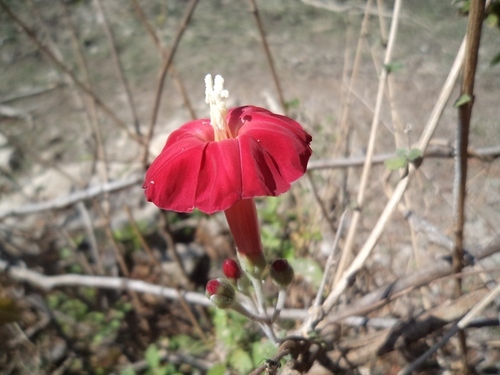
iNaturalist· cc-by-nc
(c) Bart Wursten, some rights reserved (CC BY-NC), uploaded by Bart Wursten
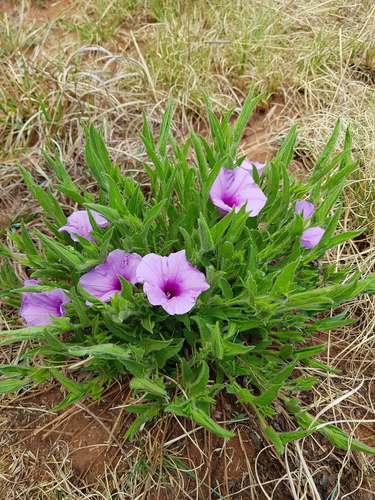
iNaturalist· cc-by-nc
(c) Bart Wursten, some rights reserved (CC BY-NC), uploaded by Bart Wursten
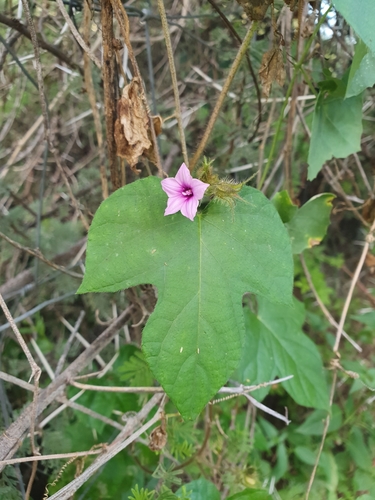
iNaturalist· cc-by-nc
(c) Bart Wursten, some rights reserved (CC BY-NC), uploaded by Bart Wursten
Description
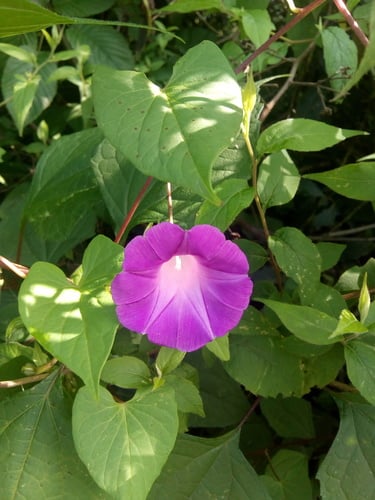
An annual herb. It can have a thick tap-root. The stems are 1-2 m long. The leaf blades are oval and 12.5 cm long by 10 cm wide. The flowers are funnel shaped and white to pink are darker in the tube. Several flowers occur in a group. The fruit is a round capsule 5 mm across.
Edible Uses
The tubers and roots are eaten, traditionally as a famine food.
Distribution
It is a tropical plant. It grows in sandy soils between 300-1,530 m above sea level. In Yunnan.
Where It Grows
Africa, Angola, Asia, Botswana, Burkina Faso, Cambodia, Central Africa, China, Congo, East Africa, Eswatini, Gambia, India, Indochina, Indonesia, Laos, Madagascar, Malawi, Malaysia, Mozambique, Myanmar, Philippines, SE Asia, South Africa, Southern Africa, Sri Lanka, Swaziland, Thailand, Vietnam, West Africa, Zambia, Zimbabwe,
Other Information
A famine food.
Synonyms
Also Known As
Chitegue, Ubhoqo
References (2)
- Long, C., 2005, Swaziland's Flora - siSwati names and Uses http://www.sntc.org.sz/flora/ (As pellita)
- World Checklist of Useful Plant Species 2020. Royal Botanic Gardens, Kew