Bulbine frutescens
(L.) Willd.
Stalked bulbine
iNaturalist· cc-by-nc
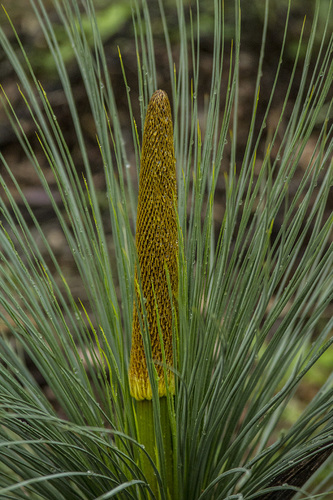
(c) l_kent, some rights reserved (CC BY-NC)
iNaturalist· cc-by-nc
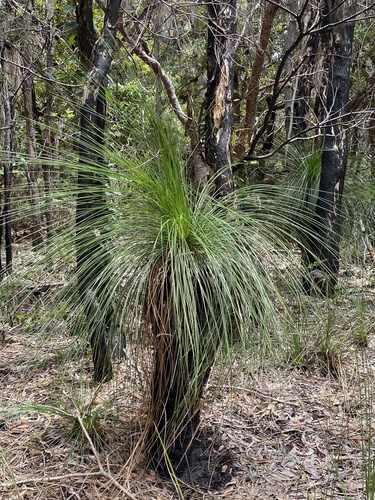
(c) Sandra Falanga, some rights reserved (CC BY-NC), uploaded by Sandra Falanga
iNaturalist· cc-by-nc
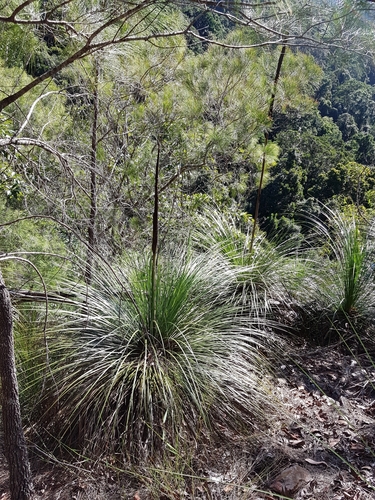
(c) garyk22, some rights reserved (CC BY-NC)
Summary
Source: WikipediaBulbine frutescens, the wild kopieva or stalked bulbine, is a species of flowering plant in the genus Bulbine, native to southern Africa (South Africa, Lesotho, Eswatini).
Description
A small succulent plant that keeps growing from year to year. It grows 60 cm high and spreads 50 cm wide. The stem is erect and branching. The leaves are green and 25 cm long. They are narrow. The flowers are bright yellow or orange. They have 3 petals and 3 sepals. They are in groups at the ends of branches. The flowers are 5 mm long. The fruit is a round, 3-chambered capsule. The seeds are black and oval.
Edible Uses
The stems and leaves are chopped and boiled for use as flavouring in sauces and with porridge. The leaves can be eaten as a vegetable, and the leaf gel is used for health drinks. The flowers are also edible.
Traditional Uses
The stems and leaves are used for flavouring and sauces. They are chopped and boiled and eaten with porridge. The leaves can be eaten as a vegetable and the leaf gel used for health drinks.
Medicinal Uses
The leaf gel is traditionally used in health drinks.
Distribution
It is a subtropical plant. It needs light to medium well-drained soils. It needs an open sunny position. It is damaged by frost. It can grow in hot arid conditions and with a marked dry season. It can grow in areas with a dry season of 6-11 months. In southern Africa it grows between 5-2,285 m above sea level. It is often on stony places. It can grow in arid places.
Where It Grows
Africa, Australia, Botswana, Eswatini, Lesotho, Malawi, Namibia, South Africa*, Southern Africa, Swaziland, Zambia,
Cultivation
Plants can be grown by division.
Notes
There are 30 Bulbine species. Also put in the family Asphodelaceae.
Synonyms
Also Known As
Balsemkopiva, Ibhucu, Intelezi, Khomo-ya-ntsukammele, Sehlare-sa-pekane, Sehlare-sa-mollo, Snake flower
References (10)
- Bodkin, F., 1991, Encyclopedia Botanica. Cornstalk publishing, p 175
- Fox, F. W. & Young, M. E. N., 1982, Food from the Veld. Delta Books. p 249
- https://growwild.co.za Edible Indigenous plants
- Long, C., 2005, Swaziland's Flora - siSwati names and Uses http://www.sntc.org.sz/flora/
- Plowes, N. J. & Taylor, F. W., 1997, The Processing of Indigenous Fruits and other Wildfoods of Southern Africa. in Smartt, L. & Haq. (Eds) Domestication, Production and Utilization of New Crops. ICUC p 187
Show all 10 references Hide references
- Royal Botanic Gardens, Kew (1999). Survey of Economic Plants for Arid and Semi-Arid Lands (SEPASAL) database. Published on the Internet; http://www.rbgkew.org.uk/ceb/sepasal/internet [Accessed 4th April 2011]
- Ruiters-Welcome, A. K., 2019, Food plants of southern Africa. Ph.D. thesis. Univ. of Johannesburg p 32
- van Wyk, B-E., 2011, The potential of South African plants in the development of new food and beverage products. South African Journal of Botany 77 (2011) 857–868
- Welcome, A. K. & Van Wyk, B.-E., 2019, An inventory and analysis of the food plants of southern Africa. South African Journal of Botany 122 (2019) 136–179
- World Checklist of Useful Plant Species 2020. Royal Botanic Gardens, Kew