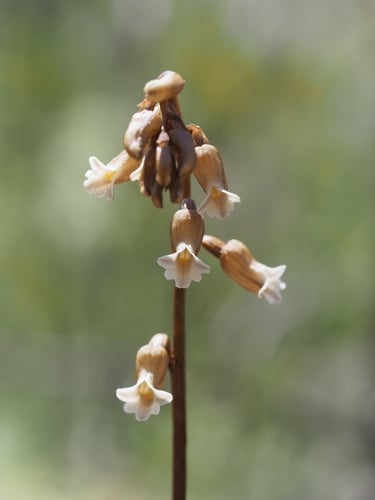
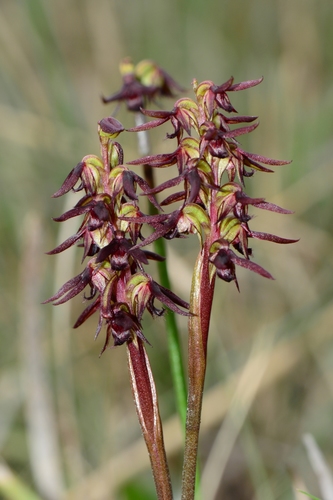
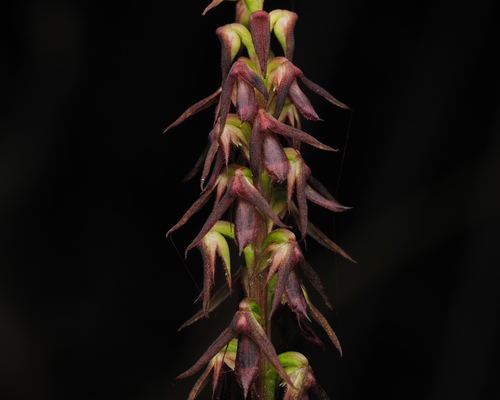
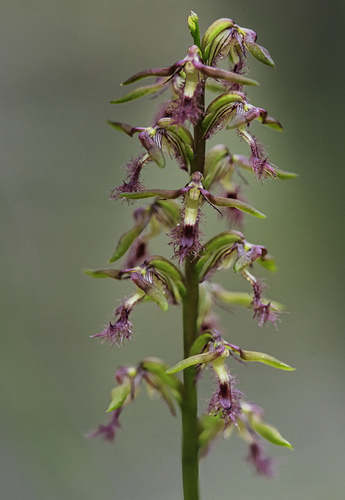
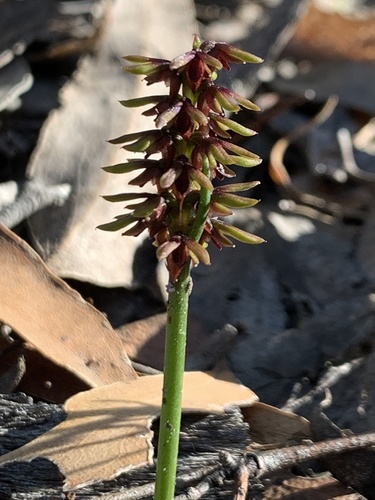
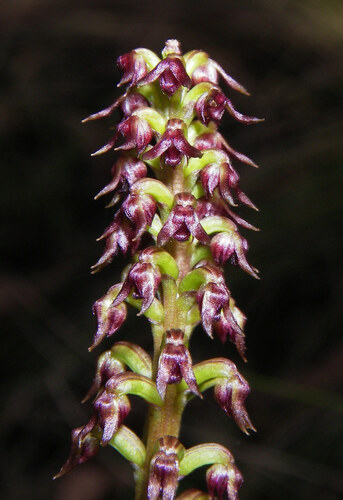
Platanthera bifolia
(L.) Rchb.
Vimenjak
iNaturalist· cc-by-nc-sa
(c) Ramunė Vakarė, some rights reserved (CC BY-NC-SA), uploaded by Ramunė Vakarė
iNaturalist· cc-by-nc
(c) bferrero, some rights reserved (CC BY-NC), uploaded by bferrero
iNaturalist· cc-by-nc
(c) odenwaelder, some rights reserved (CC BY-NC), uploaded by odenwaelder
Summary
Source: WikipediaPlatanthera bifolia, commonly known as the lesser butterfly-orchid, is a species of orchid in the genus Platanthera, having certain relations with the genus Orchis, where it was previously included and also with the genus Habenaria. It is a Palaearctic species occurring from Ireland in the west, across Europe and Asia to Korea and Japan. It is also found in North Africa. The name Platanthera is derived from Greek, meaning 'broad anthers', while the species name, bifolia, means 'two leaves'.
Description
An orchid. It grows 28-42 cm tall. The rootstock forms tubers. They are oval and taper at the base. They are 3 cm long by 1 cm wide. The stem is erect with 1 or 2 tubes shaped sheaths at the base. The leaves are at the base and spoon shaped or narrowly oval. They are 9-12 cm long by 2-4 cm wide. They contract at the base. The flowers are white or greenish white and have a scent.
Edible Uses
The tuber is eaten cooked and is the source of salep, a fine white to yellowish-white powder made by drying and grinding the tuber. Salep is a starch-like substance with a sweetish taste and a faint, somewhat unpleasant smell. It is considered highly nutritious and can be prepared as a drink or added to cereals and used in bread-making. One ounce of salep is said to be sufficient to sustain a person for a full day.
Traditional Uses
The starch of the bulb is used in dishes, porridge and bread.
This uses section is brief — help expand it
Medicinal Uses
Salep is highly nutritive and demulcent, and has been used as a food of special value for children and convalescents. It is prepared by boiling with water and flavouring, in the same way as arrowroot. Rich in mucilage, it forms a soothing, demulcent jelly used in treating irritations of the gastro-intestinal canal. One part salep to fifty parts water is sufficient to produce this jelly. The tuber from which salep is prepared should be harvested as the plant dies down after flowering and setting seed.
Distribution
It is a temperate climate plant. It grows in forests on slopes and damp meadows between 200-2,800 m above sea level. In Sichuan.
Where It Grows
Africa, Albania, Algeria, Asia, Austria, Balkans, Belarus, Belgium, Britain, Bulgaria, Bosnia, China, Czech Republic, Denmark, Estonia, Europe, Finland, France, Germany, Greece, Hungary, Iran, Ireland, Italy, Japan, Kazakhstan, Korea, Lebanon, Mongolia, Netherlands, North Africa, Norway, Poland, Portugal, Romania, Russia, Siberia, Sicily, Slovenia, Spain, Sweden, Switzerland, Syria, Tunisia, Turkey, Türkiye, Ukraine, Yugoslavia,
Propagation
Surface sow seed in a greenhouse, preferably as soon as it is ripe, and do not allow the compost to dry out. The seed is extremely simple, consisting of a minute embryo surrounded by a single layer of protective cells with very little food reserve. It depends on a symbiotic relationship with a soil-dwelling fungus whose hyphae invade the seed and embryo cells; the orchid digests this fungal tissue as a food supply until it can obtain nutrients from decaying soil material. It is best to incorporate soil from around established plants to introduce the fungus, or to sow seed around an existing plant of the same species and allow seedlings to grow on until large enough to move. Division can be done in autumn, ensuring plenty of soil is kept with each plant. Transplanting orchids after flowering but while still in leaf is also said to be possible.
Other Uses
None known.
Synonyms
Also Known As
Dvolistni vimenjak, Guguk salebi, Janese munad
References (7)
- Cerne, M., 1992, Wild Plants from Slovenia used as Vegetables. Acta Horticulturae 318.
- Ertug, F, Yenen Bitkiler. Resimli Türkiye Florası -I- Flora of Turkey - Ethnobotany supplement
- http://www.botanic-gardens-ljubljana.com/en/plants
- Kalle, R. & Soukand, R., 2012, Historical ethnobotanical review of wild edible plants of Estonia (1770s-1960s) Acta Societatis Botanicorum Poloniae 81(4):271-281
- Kew Plants of the World On line
Show all 7 references Hide references
- Redzic, S. J., 2006, Wild Edible Plants and their Traditional Use in the Human Nutrition in Bosnia-Herzegovina. Ecology of Food and Nutrition, 45:189-232
- Urgamal, M., et al, 2014, Conspectus of the Vascular Plants of Mongolia. Mongolia Academy of Sciences Institute of Botany and National University of Mongolia Department of Biology. p 43