Rhodognaphalon schumannianum
A. Robyns
Fleece-fruit, East african bombax
iNaturalist· cc-by-nc
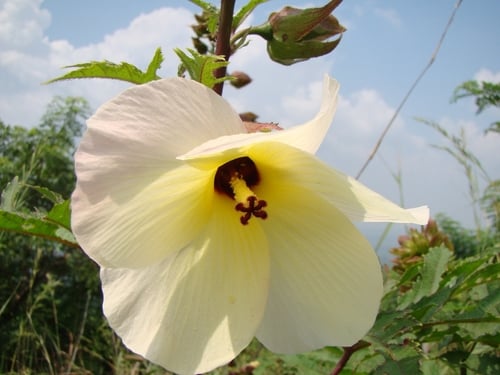
(c) Bart Wursten, some rights reserved (CC BY-NC)
iNaturalist· cc-by-nc
(c) Bart Wursten, some rights reserved (CC BY-NC)
iNaturalist· cc-by-nc
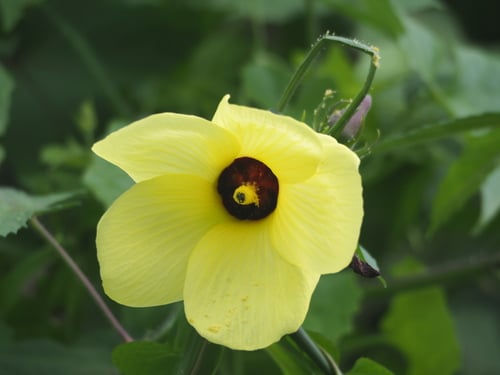
(c) Graeme White, some rights reserved (CC BY-NC)
Description
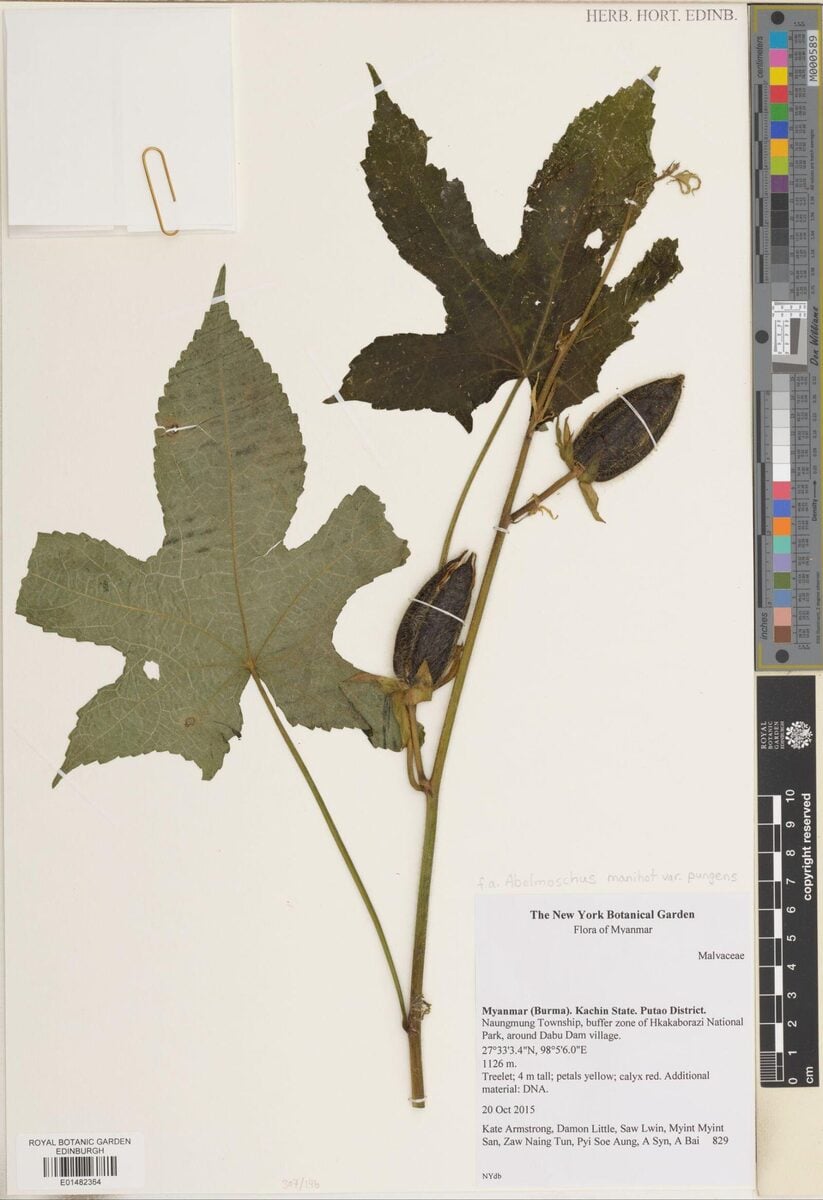
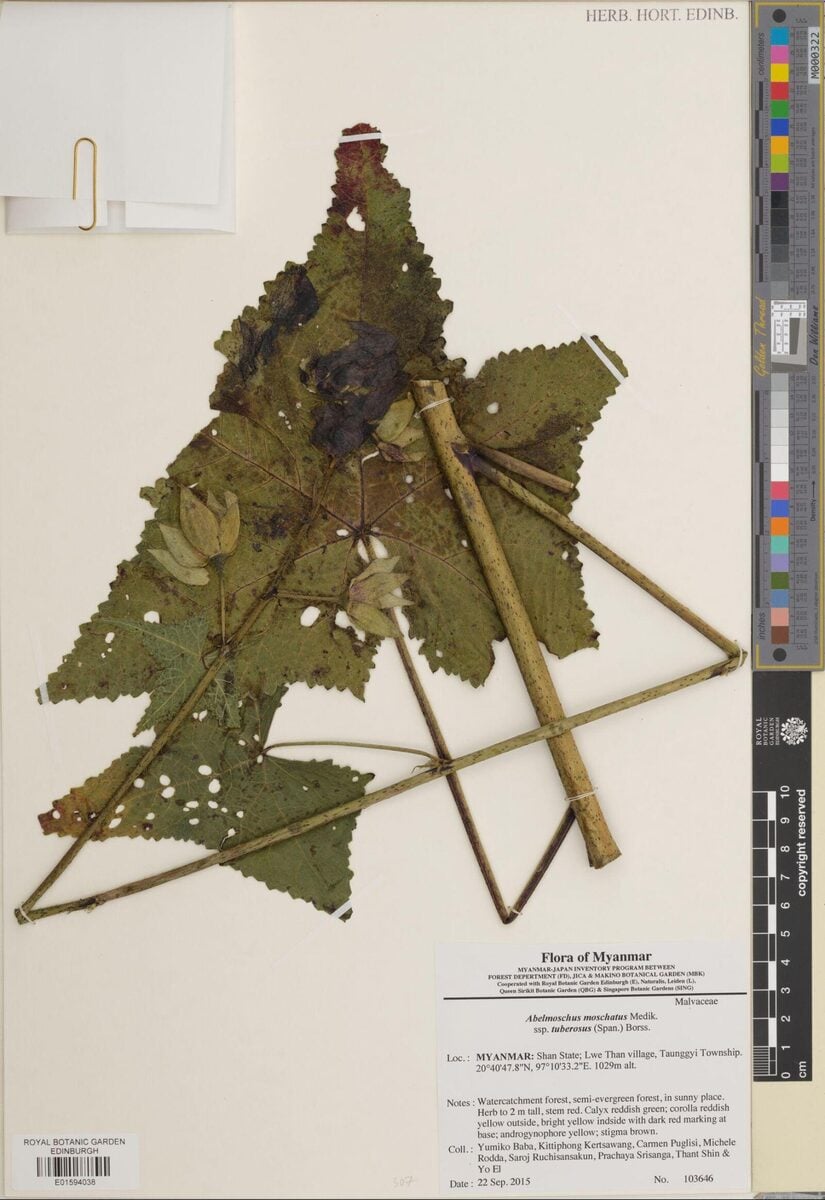
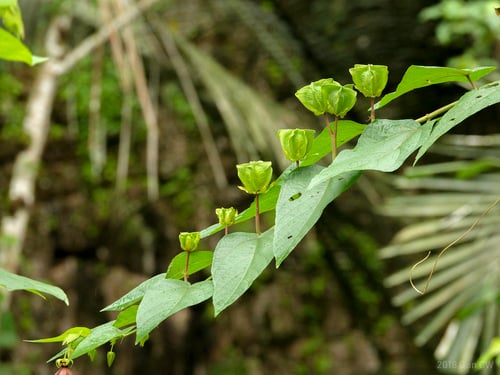
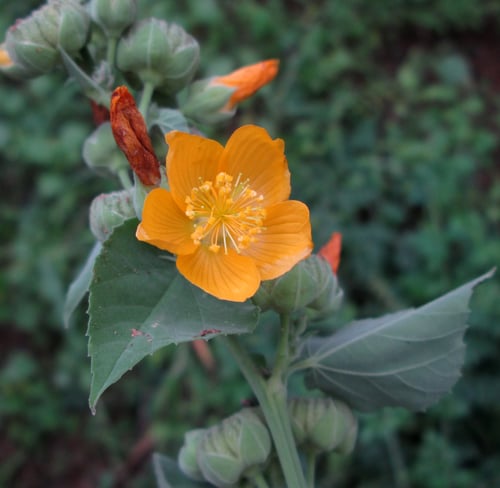
A medium to large tree. It grows 15-35 m tall. The bark is greenish-yellow and smooth. The leaves are alternate or scattered. They are arranged like fingers on a hand. There are 3-7 leaflets. These are oblong and 7 cm long by 1.8 cm wide. They have a slender tip. The leaf stalk is about 7 cm long. The flowers are striking pale yellow. They can be 18 cm across and with red stamens. They can occur either singly or in groups of 2-5 in the axils of leaves. The petals are narrow and strap like. The fruit is oval and has 5 valves. It is a woody capsule. It is about 6 cm long by 3 cm wide. It splits to release many smooth brown seeds. They are embedded in pale reddish-brown silky hairs.
Edible Uses
Seed - cooked. They can be roasted and eaten like groundnuts. The roasted seeds can be ground into a powder that is then used for cooking with vegetables or meat.
Traditional Uses
The seeds are cooked and eaten.
This uses section is brief — help expand it
Medicinal Uses
The bark is astringent. It is a traditional medicine for the treatment of diarrhoea and malaria. The roots are used to treat asthma, coughs and diarrhoea. Ethanol, petroleum ether and ethyl acetate extracts of the root bark have shown in-vitro antimalarial activity.
Distribution
A tropical plant. It grows in dry open woodland. It grows between 600-1,100 m above sea level.
Where It Grows
Africa, East Africa, Kenya, Malawi, Mozambique, Southern Africa, Tanzania, Zimbabwe,
Cultivation
A plant of the tropics, where it is found at elevations up to 1,100 metres. The average annual rainfall in its area of distribution is normally not less than 1,000mm. Initial growth is fairly fast. Three years after sowing, seedlings may be 2 - 3 metres tall. The seeds are dispersed by wind, but most seeds do not spread further than 100 metres from the tree.
Propagation
Seed - sow in a nursery seedbed in partial shade. If sown fresh, the seed normally germinates well, sprouting within 4 - 21 days. Seedlings are planted out when they are about 1 year old and 60 - 120cm tall. The seed can be stored for about four months but is susceptible to fungal and insect damage.
Other Uses
The seed floss from the fruit has been used for stuffing pillows, cushions and mattresses. The inner bark yields a fibre that is used for rope making. A red-brown dye is obtained from the bark. The heartwood is pale to dark pinkish brown with diffuse dark bands; it is indistinctly demarcated from the sapwood when freshly cut, but on drying the approximately 75mm wide band of sapwood becomes cream-coloured. The grain is straight or interlocked; the texture medium to moderately coarse; black gum ducts are sometimes present. The wood is very light to light in weight; weak; very soft to soft; of low durability and is liable to attacks by sapstain fungi, marine borers and termites. It dries rapidly with some surface checking and distortion, and occasional collapse; once dry it is stable in service. Both the green and dry wood saw easily; the wood works easily with hand and machine tools; it takes nails well, but the holding power is low; gluing is correct; it peels easily; painting, staining and lacquering properties are poor; veneers dry rapidly, with high shrinkage, and tend to be brittle. The wood is locally used for roofing, doors, panelling and cheap plywood for packing cases. The bole is traditionally used for dugout canoes. The wood is suitable for low-grade furniture, sporting goods, matches, hardboard, particle board and wood-wool. It is also suitable for pulping. The wood is used for making charcoal. The wood fibres have an average length of 1.9 mm, with a diameter of 25.4 μm. The chemical composition is: cellulose 50%, pentosans 8%, lignin 35% and ash 1%. The solubility in cold water is 1%, in hot water 2%, in alcohol-benzene 4% and in 1% NaOH 16%. Paper-making experiments in the 1950s resulted in papers with low strength.
Notes
Also put in the family Bombacaceae. In the subfamily Bombacoideae.
Synonyms
References (4)
- Ferns, K., Useful Tropical Plants.
- Palgrave, K.C., 1996, Trees of Southern Africa. Struik Publishers. p 588
- Peters, C. R., O'Brien, E. M., and Drummond, R.B., 1992, Edible Wild plants of Sub-saharan Africa. Kew. p 70
- Wickens, G.E., 1995, Edible Nuts. FAO Non-wood forest products. FAO, Rome. p 110