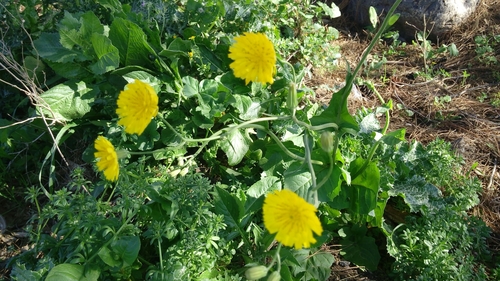
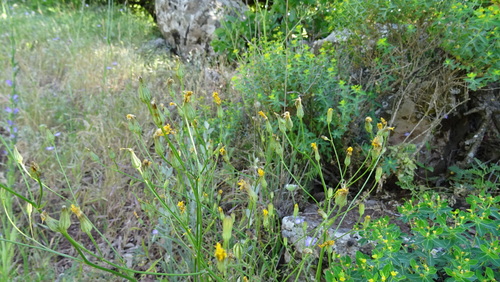
Centaurea solstitialis subsp. schouwii
(DC.) Gugler
Fiordaliso giallo
iNaturalist· cc-by-nc-nd
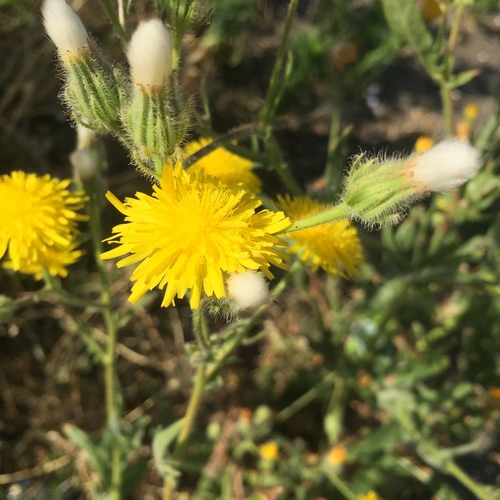
(c) Bill Bumgarner, some rights reserved (CC BY-NC-ND)
iNaturalist· cc-by-nc
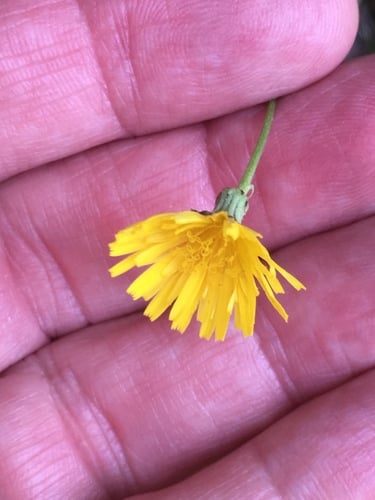
(c) Stephanie Calloway, some rights reserved (CC BY-NC)
Summary
Source: WikipediaCentaurea solstitialis, the yellow star-thistle, is a species of thorny plant in the genus Centaurea, which is part of the family Asteraceae. A winter annual, it is native to the Mediterranean Basin region and invasive in many other places. It is also known as golden starthistle, yellow cockspur and St. Barnaby's thistle (or Barnaby thistle).
Description
A Mediterranean herb with edible leaves and stems.
This description is brief — help expand it
Edible Uses
The plant is boiled and seasoned with oil, lemon and salt, or used in soups.
Traditional Uses
The plant is boiled and seasoned with oil, lemon and salt. It is also used in soups.
This uses section is brief — help expand it
Medicinal Uses
Although the spines make the plant a pain to deal with, it produces a light honey.
Known Hazards
Grazing of the plant by horses can cause nigropallidal encephalomalacia or "chewing disease", a neurological condition. The disease generally follows consumption of 60–200% of the horse's body weight over an extended period of a month or more, or 2.3–2.6 kilograms (5.1–5.7 pounds) of star-thistle per 100 kg (220 lb) body weight per day. Though star-thistle is most dangerous when it is the only plant available or is delivered as a contaminant in dried hay, horses may develop a taste for it and seek it out. Many other grazing species, including mules and burros, are not affected.
Distribution
It is a Mediterranean climate plant.
Where It Grows
Europe, Italy, Mediterranean, Sicily,
Synonyms
Also Known As
Gattaredda
References (4)
- Geraci, A., et al, 2018, The wild taxa utilized as vegetables in Sicily (Italy): a traditional component of the Mediterranean diet. Journal of Ethnobiology and Ethnomedicine (2018) 14:14
- Lentini, F. and Venza, F., 2007, Wild food plants of popular use in Sicily. J Ethnobiol Ethnomedicine. 3: 15
- Licata, M., et al, 2016, A survey of wild plant species for food use in Sicily (Italy) – results of a 3-year study in four Regional Parks. Journal of Ethnobiology and Ethnomedicine 12:12
- Pasta, S., et al, 2020, An Updated Checklist of the Sicilian Native Edible Plants: Preserving the Traditional Ecological Knowledge of Century-Old Agro-Pastoral Landscapes. Frontiers in Plant Science. Volume 11|Article 388