Carthamus lanatus
L.
Saffron thistle
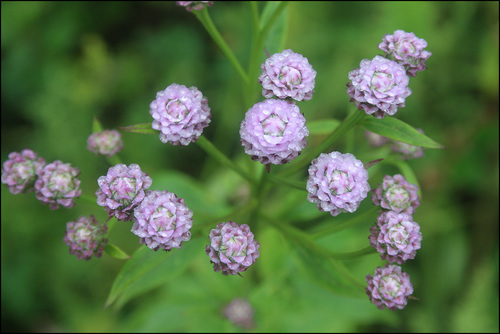
iNaturalist· cc-by-nc-sa
(c) José María Escolano, some rights reserved (CC BY-NC-SA)
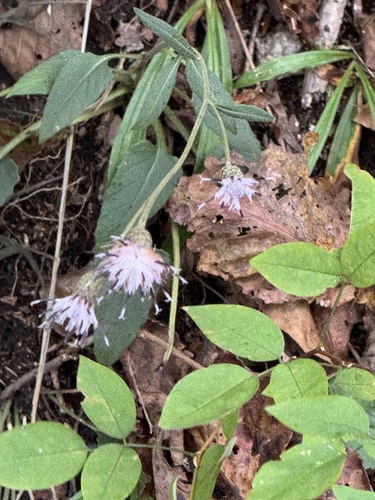
iNaturalist· cc-by-nc-sa
(c) José María Escolano, some rights reserved (CC BY-NC-SA)
iNaturalist· cc-by-nc
(c) rdelv, some rights reserved (CC BY-NC)
Summary
Source: WikipediaCarthamus lanatus is a species of thistle known as woolly distaff thistle, downy safflower or saffron thistle. It is closely related to safflower (Carthamus tinctorius). This annual plant is a native of the Mediterranean Basin, but it is familiar in other places where it was introduced and has become a noxious weed, such as in parts of North America and southern Australia with similar climates.
Description
An annual plant. It grows 80 cm high and spreads 50 cm wide. The stem is erect and stiff. The leaves are divided into lobes along the stalk. They are spiny at the edges. The flowers are yellow and like a thistle flower.
Edible Uses
An edible oil is obtained from the seed.
Traditional Uses
The stems are eaten raw. An edible oil is extracted from the seeds. The leaves at the base are used in stews. The roots are dried and eaten as a spice.
Medicinal Uses
The plant is anthelmintic, diaphoretic, and febrifuge.
Distribution
It is a Mediterranean climate plant. It grows best in well-composted soils in an open sunny position. It is resistant to drought and frost.
Where It Grows
Africa, Argentina, Asia, Australia, Brazil, Central Asia, Chile, Europe*, India, Italy, Mediterranean, Morocco, New Zealand, North Africa, Sicily, Slovenia, South America, Spain, Tajikistan, Tasmania, Turkey, Türkiye, Uruguay,
Cultivation
Succeeds in ordinary garden soil. Requires a position in full sun. This species is a potentially serious pest plant in N. America.
Propagation
Sow seed in spring with gentle heat in a greenhouse. Germination usually occurs within 2–4 weeks at 15°C. Once seedlings are large enough to handle, prick them out into individual pots and plant into permanent positions in late spring or early summer. Seed can also be sown in situ in April or May, though plants may not have enough time to ripen their seed under those conditions.
Other Uses
An oil is obtained from the seed, though no further details on its non-edible applications are recorded.
Notes
There are 14 Carthamus species. They are thistle like plants. They are mostly Mediterranean.
Synonyms
Also Known As
Cardo lanudo, Cardo santo, Coronicas, Dikenli afin, Dikenli afyon, El-asfar, Vavanazzi, Volnati rumenik, Zafferanone selvatico
References (15)
- Biscotti, N. et al, 2018, The traditional food use of wild vegetables in Apulia (Italy) in the light of Italian ethnobotanical literature. Italian Botanist 5:1-24
- Blanco-Salas, J., et al, 2019, Wild Plants Potentially Used in Human Food in the Protected Area “Sierra Grande de Hornachos” of Extremadura (Spain). Sustainability 2019, 11, 456
- Bodkin, F., 1991, Encyclopedia Botanica. Cornstalk publishing, p 218
- Dobriyal, M. J. R. & Dobriyal, R., 2014, Non Wood Forest Produce an Option for Ethnic Food and Nutritional Security in India. Int. J. of Usuf. Mngt. 15(1):17-37
- Ertug, F, Yenen Bitkiler. Resimli Türkiye Florası -I- Flora of Turkey - Ethnobotany supplement
Show all 15 references Hide references
- Geraci, A., et al, 2018, The wild taxa utilized as vegetables in Sicily (Italy): a traditional component of the Mediterranean diet. Journal of Ethnobiology and Ethnomedicine (2018) 14:14
- Lentini, F. and Venza, F., 2007, Wild food plants of popular use in Sicily. J Ethnobiol Ethnomedicine. 3: 15
- Malezas Comestibles del Cono Sur, INTA, 2009, Buernos Aires
- Özdemir, E. and Kültür, S., 2017, Wild Edible Plants of Savaştepe District (Balıkesir, Turkey), Marmara Pharm J 21/3: 578-589
- Pasta, S., et al, 2020, An Updated Checklist of the Sicilian Native Edible Plants: Preserving the Traditional Ecological Knowledge of Century-Old Agro-Pastoral Landscapes. Frontiers in Plant Science. Volume 11|Article 388
- Rivera, D. et al, 2006, Gathered Mediterranean Food Plants - Ethnobotanical Investigations and Historical Development, in Heinrich M, Müller WE, Galli C (eds): Local Mediterranean Food Plants and Nutraceuticals. Forum Nutr. Basel, Karger, 2006, vol 59, pp 18–74 (subsp. boeticus)
- Signorini, M. A., et al, 2009, Plants and traditional knowledge: An ethnobotanical investigation on Monte Ortobene (Nuoro, Sardinia). Journal or Ethnobiology and Ethnomedicine, 5:6
- Steenbeeke, Greg as part of the Plants Directory project. List of plant species from northern NSW that may be used as food plants p 15
- Tardio, J., et al, Ethnobotanical review of wild edible plants in Spain. Botanical J. Linnean Soc. 152 (2006), 27-71
- Tbatou, M, et al, 2016, Wild Edible Plants traditionally used in the countryside of El Jadida, Coastal Area in the Center of Morocco. Life Sciences Leaflets 75:28-48