Dioscorea laurifolia
Wallich ex Hook.f.
Ghost's benzoin climber
wikimedia· cc-by-sa
Wikimedia Commons - UPLB MNH Digital Archives
wikimedia· cc-by-sa
Wikimedia Commons - UPLB MNH Digital Archives
Description
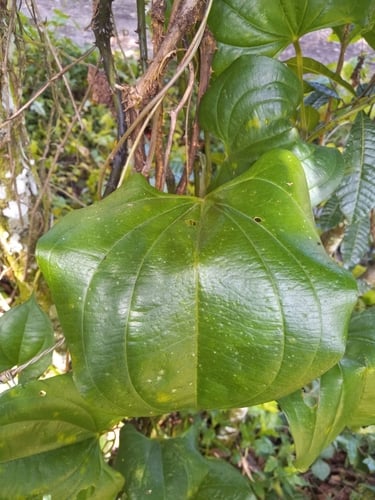
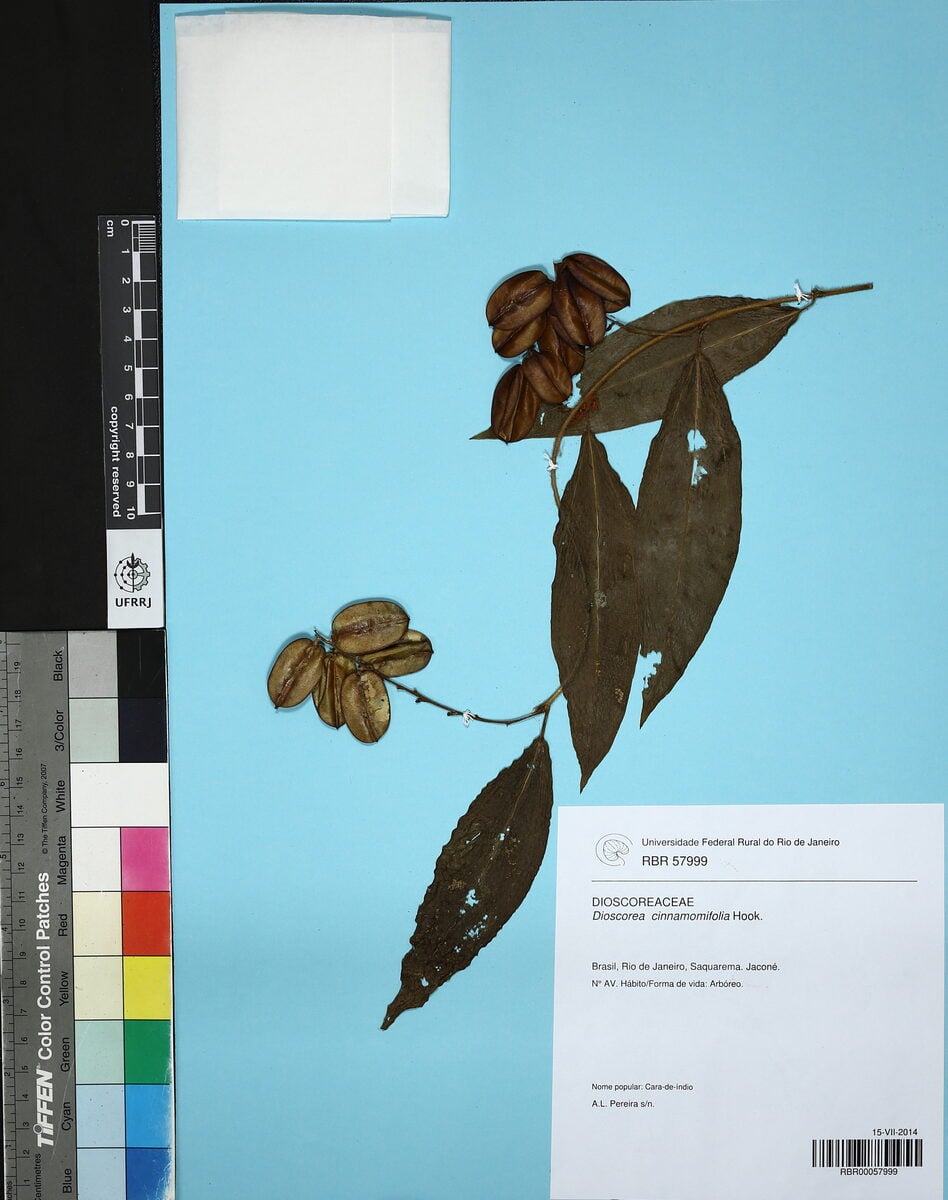
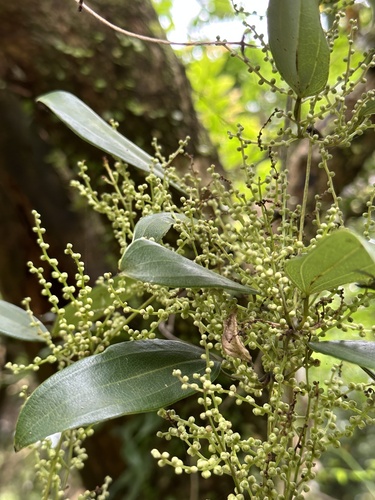
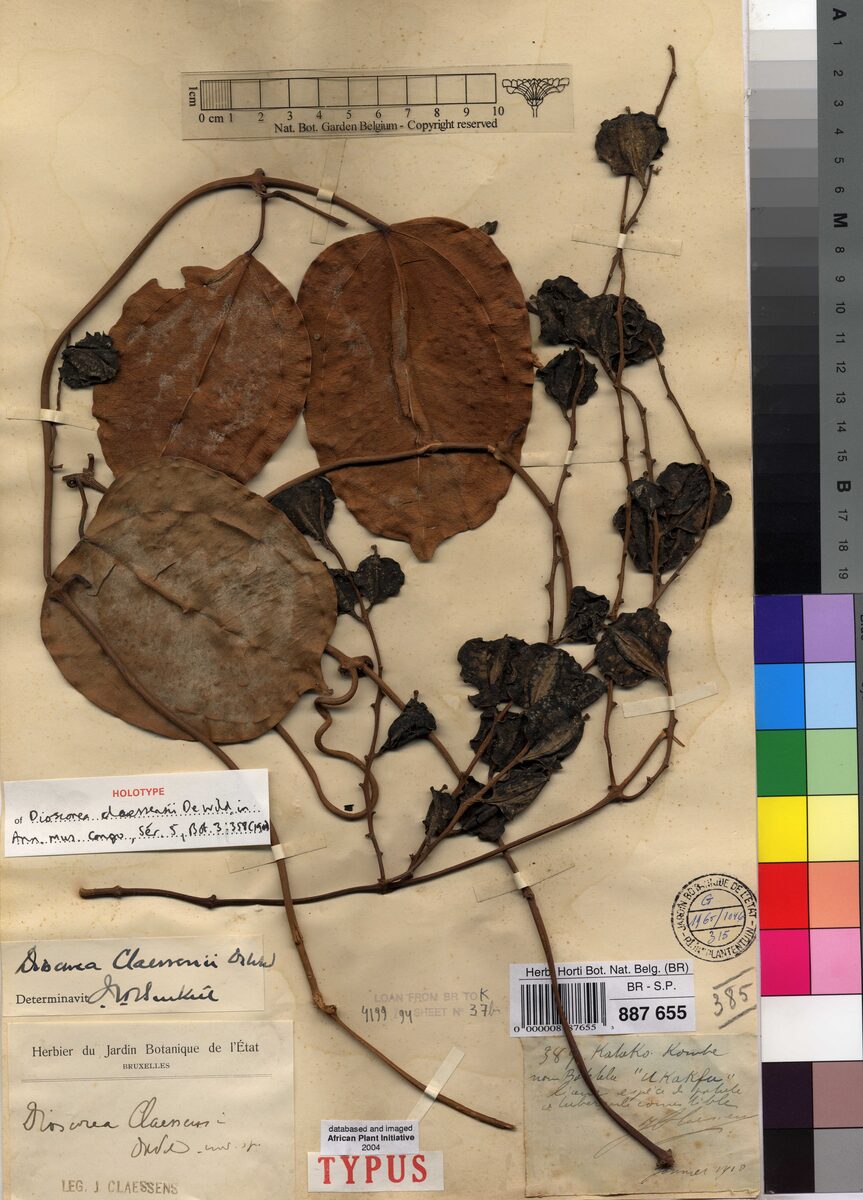
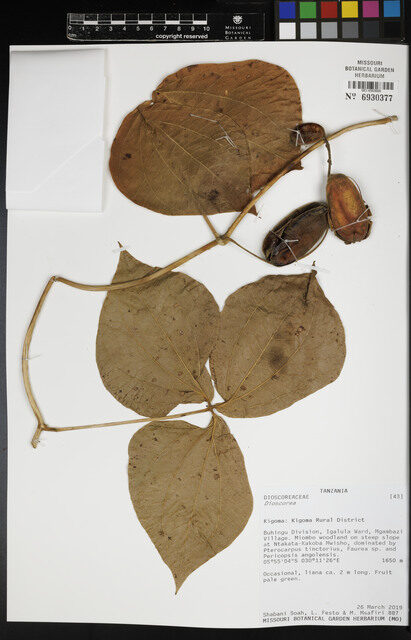
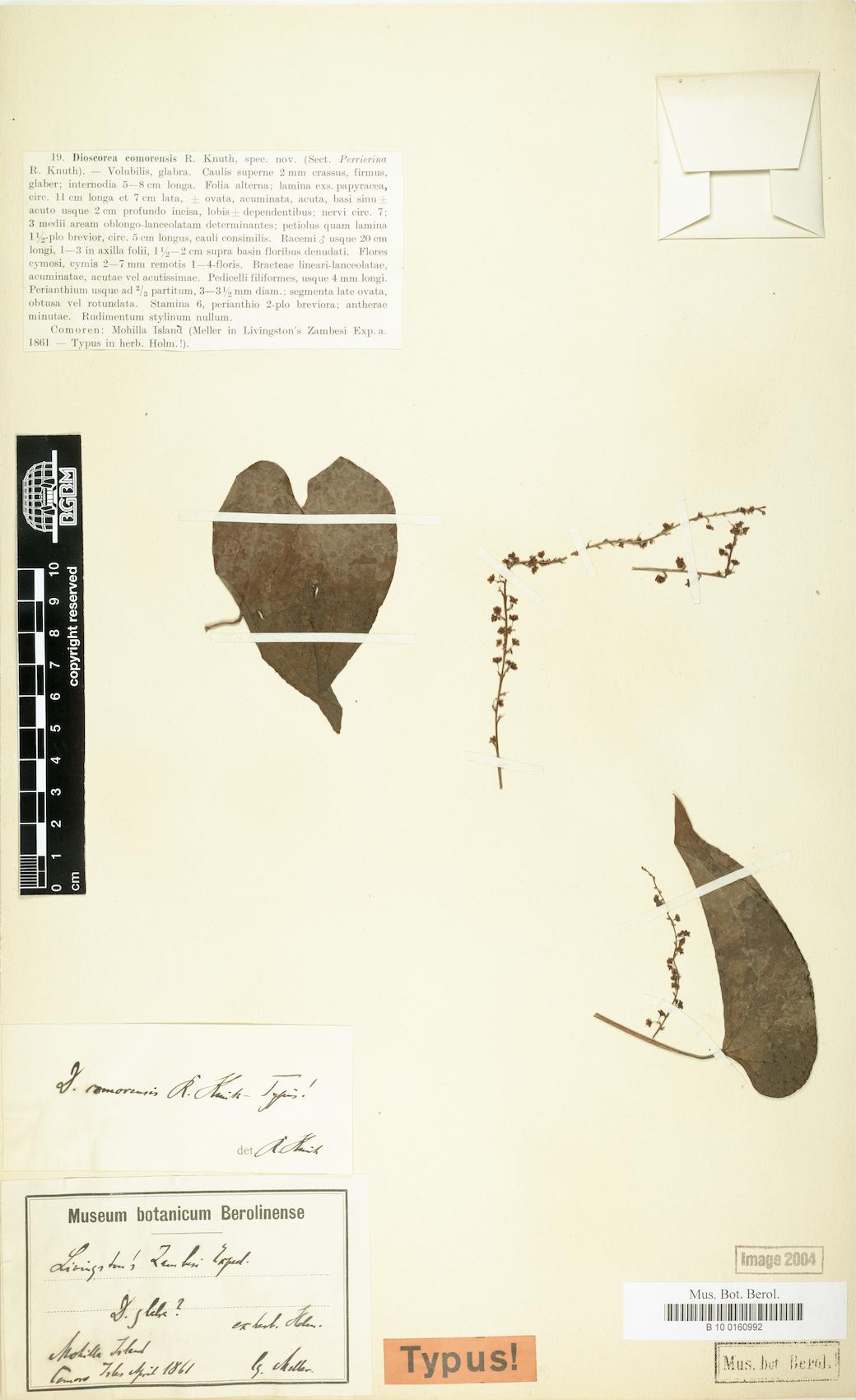
A yam. It keeps growing from year to year by sprouting from the tubers. It is a slender plant. The vines do not have thorns and they twine to the right. There are 1-2 tubers which do not go very deeply into the soil. The flesh is pink or red. The leaves are simple and alternate. They are rough. The leaf stalk is less than half the length of the blade. The leaf blade is oval to sword shaped but varies. The leaf can be 16 cm long by 5 cm wide. The male flowers curve upwards. They can be 7 cm long with 40-60 flowers without stalks. The male flowers have a scent. The female flowers occur as 2 together and are 10 cm long. The flowers have a smell of benzoin.
Edible Uses
The tubers and roots are eaten.
Distribution
A tropical plant. It grows in the mountains in Peninsula Malaysia. It grows up to 1200 m altitude.
Where It Grows
Asia, Himalayas, India, Indochina, Malaysia, Northeastern India, SE Asia, Thailand,
Notes
There are about 650 species of Dioscorea.
Synonyms
Also Known As
Akar kemahang, Akar kemenyan hantu, Clangporn, Eghen ngegek, Kemenyan batu, Serunding
References (6)
- Burkill, I.H., 1966, A Dictionary of the Economic Products of the Malay Peninsula. Ministry of Agriculture and Cooperatives, Kuala Lumpur, Malaysia. Vol 1 (A-H) p 834
- Castillo, C., 2013, The Archaeobotany of Khao Sam Kaeo and Phu Khao Thong: The Agriculture of Late Prehistoric Southern Thailand. Ph. D. thesis University College, London p 378
- Lim, T. K., 2015, Edible Medicinal and Non Medicinal Plants. Volume 9, Modified Stems, Roots, Bulbs. Springer p 36
- Murtem, G. & Chaudhrey, P., 2016, An ethnobotanical note on wild edible plants of Upper Eastern Himalaya, India. Brazilian Journal of Biological Sciences, 2016, v. 3, no. 5, p. 63-81
- PROSEA handbook Volume 9 Plants yielding non-seed carbohydrates. p 172
Show all 6 references Hide references
- World Checklist of Useful Plant Species 2020. Royal Botanic Gardens, Kew