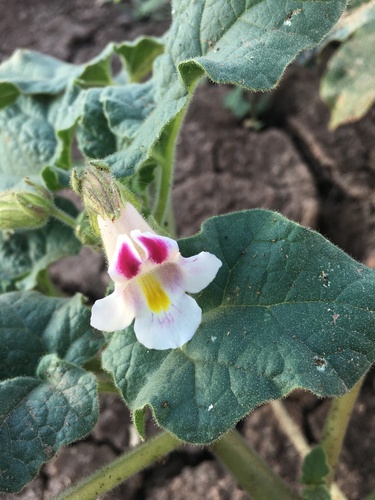
Martynia annua
L.
Devil's claw, Tiger claw
iNaturalist· cc-by-nc
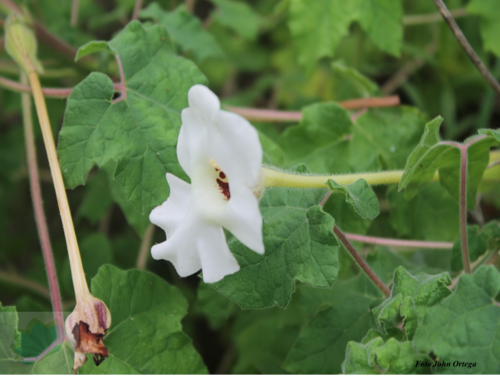
(c) Anil Kumar Verma, some rights reserved (CC BY-NC), uploaded by Anil Kumar Verma
iNaturalist· cc-by-nc
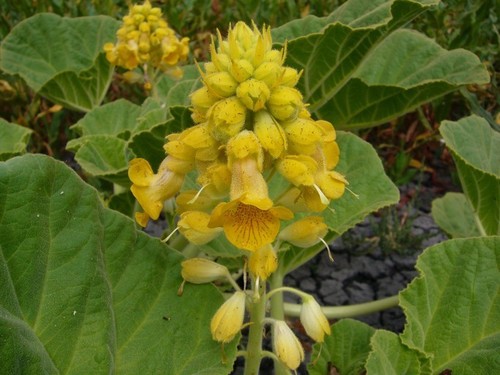
(c) Alexis Felipe, some rights reserved (CC BY-NC), uploaded by Alexis Felipe
iNaturalist· cc-by-nc
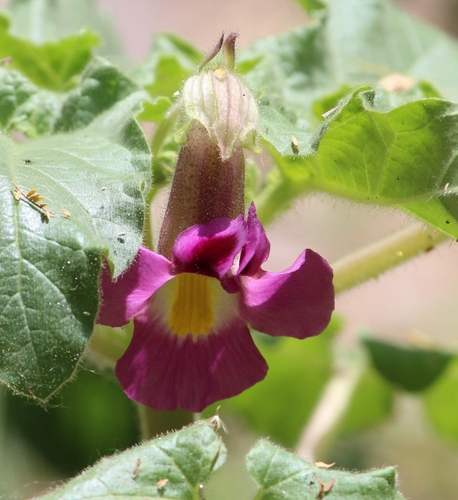
(c) Alänä Atl, some rights reserved (CC BY-NC), uploaded by Alänä Atl
Description
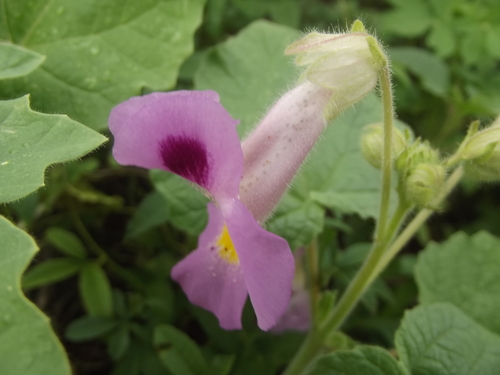
A herb. It is branched and grows 1.5 m high. The stem is succulent. The leaves are opposite and almost heart shaped. They are 7-15 cm long and 7-20 cm wide. There are small teeth. The flowers are showy and lilac and mottled red, blue or yellow inside. The fruit is a capsule 3 cm long.
Edible Uses
The leaves, fruit, and bark of the fruit are all eaten. The plant serves as a famine food.
Traditional Uses
The leaves are eaten. The fruit is eaten. The bark of the fruit is chewed.
This uses section is brief — help expand it
Medicinal Uses
The plant is used for making beads and other native ornaments. It has been applied for numerous supposed treatments in Ayurveda and Siddha folk medicine.
Distribution
It is a tropical plant. It grows near Bombay in India. In Pakistan it grows up to about 1,000 m altitude. In southern China it grows between 500-1,500 m above sea level.
Where It Grows
Asia, Australia, Bahamas, Bangladesh, Belize, Benin, Burkina Faso, Cambodia, Central America*, China, Costa Rica, Cuba*, Dominican Republic, El Salvador, Guatemala, Haiti*, Himalayas, Honduras, India, Laos, Leeward Is., Lesser Antilles* Laos, Mauritius, Mexico, Myanmar, Nepal, New Caledonia, Nicaragua, NIgeria, North America, Northeastern India, Pakistan, Puerto Rico, SE Asia, South America*, Sri Lanka, Thailand, Togo, Trinidad-Tobago, Vietnam, West Indies*, Winward is.,
Other Information
They are a famine food.
Notes
The fruit is used in medicine. There is only one Martynia species. (?) Several names are unresolved. It grows in Mexico.
Synonyms
Also Known As
Bag lucha, Bagh noki, Bagha-nekhi, Baghjuge, Bana sarsar, Bichu, Garuda-mukku, Hathajori, Khata amba, Puli-nagam, Puli-nakham, Telukondichettu, Thelkodukkukai, Vichchida, Vinchu
References (15)
- Ambasta, S.P. (Ed.), 2000, The Useful Plants of India. CSIR India. p 357 (As Martynia diandra)
- Behera K. K., et al, 2008, Wild Edible Plants of Mayurbhanj District, Orissa, India. J. Econ. Taxon. Bot. Vol. 32 (Suppl.) pp 305-314
- Casas, A., et al, 1996, Plant Management Among the Nahua and the Mixtec in the Balsas River Basin, Mexico: An Ethnobotanical Approach to the Study of Plant Domestication. Human Ecology, Vol. 24, No. 4 pp. 455-478
- Cooper, W. and Cooper, W., 2004, Fruits of the Australian Tropical Rainforest. Nokomis Editions, Victoria, Australia. p 394
- Dangol, D. R. et al, 2017, Wild Edible Plants in Nepal. Proceedings of 2nd National Workshop on CUAOGR, 2017.
Show all 15 references Hide references
- Flora of Pakistan. www.eFloras.org
- GAMMIE, (As Martynia diandra)
- Gautam, R. S., et al, 2020, Wild Edible Fruits of Nepal. Int. J. Appl. Sci. Biotechnol. Vol 8(3): 289-304
- Kew Plants of the World Online
- Martin, P. S. et al, (Eds.), 1998, Gentry's Rio Mayo Plants. The Tropical Deciduous Forest & Environs of Northwest Mexico. University of Arizona Press.
- Moerman, D. F., 2010, Native American Ethnobotany. Timber Press. p 336 (As Martynia sp.)
- Observ. bot. 14, t. 1. 1785 - an illegitimate, superfluous name (ICBN Art. 52) for M. annua L.
- Piedra-Malagón, E. M., et al, 2022, Edible native plants of the Gulf of Mexico Province. Biodiversity Data Journal 10: e80565 p 25
- Plants of Haiti Smithsonian Institute http://botany.si.edu/antilles/West Indies
- Thapa, L. B., et al, 2014, Wild Edible Plants used by endangered and Indigenous Raji Tribe in Western Nepal. International Journal of Applied Sciences and Biotechnology. Vol 2(3):243-252