Caladenia carnea
R. Br.
Pink fingers
iNaturalist· cc-by-nc
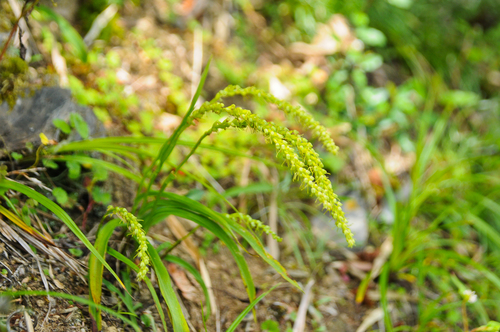
(c) Matt Campbell, some rights reserved (CC BY-NC), uploaded by Matt Campbell
iNaturalist· cc-by-nc-sa
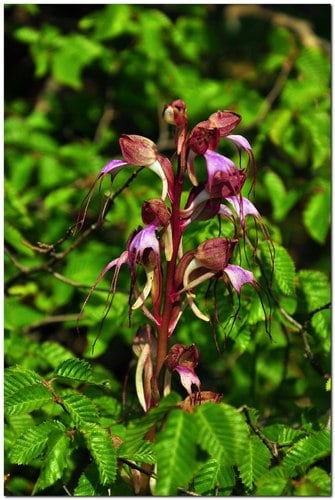
(c) BBCAlburyWodonga, some rights reserved (CC BY-NC-SA)
iNaturalist· cc-by-nc-sa
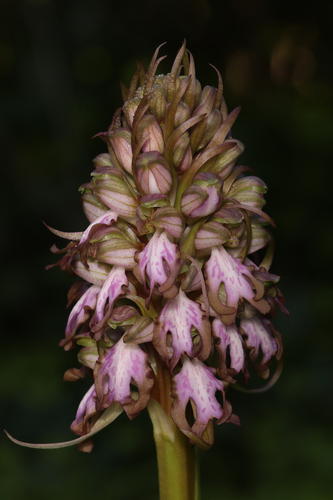
(c) Reiner Richter, some rights reserved (CC BY-NC-SA), uploaded by Reiner Richter
Summary
Source: WikipediaCaladenia carnea, commonly known as pink fingers, is a plant in the orchid family Orchidaceae and is endemic to eastern and south-eastern Australia, including Tasmania. It has a single thin, green leaf and one to five white or pink flowers with red stripes and two rows of yellow-tipped "calli" on their labellum.
Description
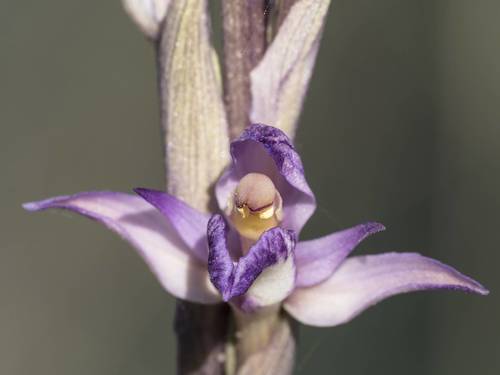
A small orchid. They grow in the ground. They have underground tubers. It grows 12-25 cm tall and 1.5 mm thick. It has a single hairy leaf. The leaf is narrow and 9-15 cm long by 3-4 mm wide. Leaves are slightly hairy. The flowers are one to two colourful flowers. The flower stalk is 30 cm long. Each flower is about 3-5 cm across. Flowers can be white or pink but with red bars on the upper lip.
Edible Uses
The tubers can be eaten raw, and the flowers are also edible.
Traditional Uses
The tubers can be eaten raw.
This uses section is brief — help expand it
Known Hazards
Plants are damaged by drought and frost.
Distribution
It is a temperate plant. It grows in open forests at low to moderate altitudes with a distinct dry season. It also grows in heathland. It grows best in light to medium well-drained soils. It needs a protected partly shaded position. It is damaged by drought and frost.
Where It Grows
Australia*, Malaysia, Pacific, SE Asia, Tasmania,
Cultivation
Plants can be grown from tubers. They require a soil mix with leaf litter from Eucalyptus species and coarse sand. They can also be grown from seed.
Notes
There are about 80-160-200 Caladenia species. Many are in Australia.
Synonyms
References (14)
- Bodkin, F., 1991, Encyclopedia Botanica. Cornstalk publishing, p 183
- Caton, J.M. & Hardwick, R. J., 2016, Field Guide to Useful Native Plants from Temperate Australia. Harbour Publishing House. p 140 (As Petalochilus carneus)
- Collier, P., 1993, Orchids of Tasmania. Plant Identikit. Society for growing Australian Plants. Tasmania. p 19
- Dashorst, G.R.M., and Jessop, J.P., 1998, Plants of the Adelaide Plains & Hills. Botanic Gardens of Adelaide and State Herbarium. p 202
- Elliot, W.R., & Jones, D.L., 1982, Encyclopedia of Australian Plants suitable for cultivation. Vol 2. Lothian. p 403
Show all 14 references Hide references
- Harris, S., Buchanan, A., Connolly, A., 2001, One Hundred Islands: The Flora of the Outer Furneaux. Tas Govt. p 125
- Holliman, J., (Ed.), 2002, Orchids. Botanica's Pocket. Random House, Australia. p 111
- Jones, D., Wapstra, H., Tonelli, P., and Harris S., 1999, The Orchids of Tasmania. Miegunyah Press, MUP, Victoria, Australia. p 67
- Lim, T. K., 2015, Edible Medicinal and Non Medicinal Plants. Volume 9, Modified Stems, Roots, Bulbs. Springer p 20
- Low, T., 1992, Bush Tucker. Australia’s Wild Food Harvest. Angus & Robertson. p 121
- Melzer, R. & Plumb, J., 2011, Plants of Capricornia. Belgamba, Rockhampton. p 493
- Steenbeeke, Greg as part of the Plants Directory project. List of plant species from northern NSW that may be used as food plants p 12
- Tasmanian Herbarium Vascular Plants list p 71
- White, G., 2008, The Bush Tucker Survival Guide. https://www.survival.org.au