Berberis integerrima
Bunge
Integrifolius barberry
iNaturalist· cc-by
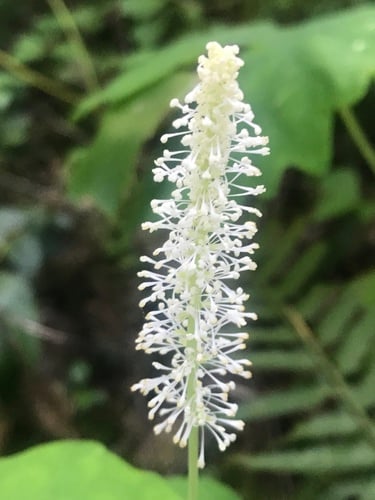
(c) Dmitry Kulakov, some rights reserved (CC BY), uploaded by Dmitry Kulakov
iNaturalist· cc-by-nc
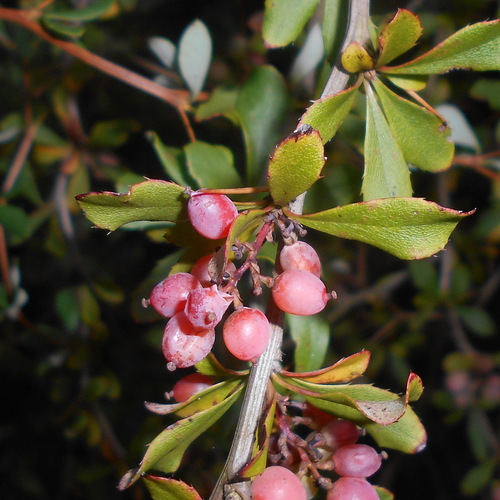
(c) Houman Doroudi 𐏃𐎻𐎶𐎴 𐎯𐎽𐎮, some rights reserved (CC BY-NC)
iNaturalist· cc-by-nc
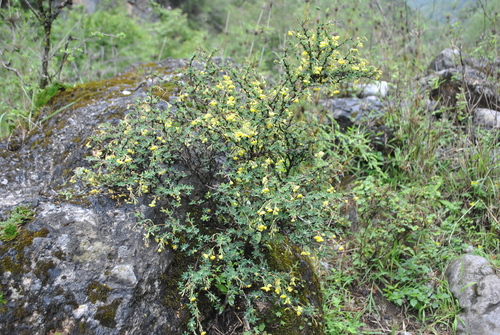
(c) MRN, some rights reserved (CC BY-NC)
Description
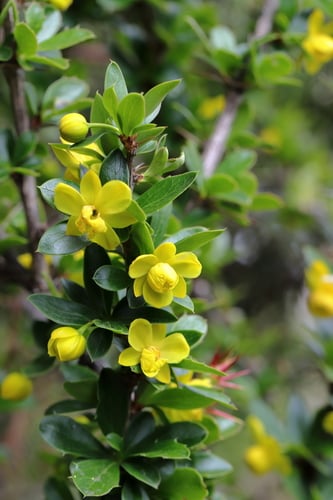
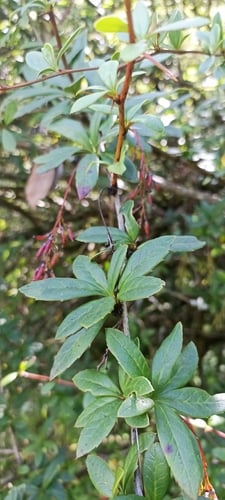
A shrub. It has many branches. It grows 4 m high and has brownish-purple angled shoots. These have thick, straight thorns in groups of 3. The leaves are leathery and broadly oval. There are 12-25 flowers in a group 6-10 cm long. The flowers are 8-9 mm across. The fruit are purplish-red berries. They have a bluish covering. They are 7-8 mm across. There are 2-3 dark seeds.
Edible Uses
The edible berries, though rich in vitamin C, have a very sharp or sour flavour and are not widely consumed because the thorny shrubs make them difficult to harvest. In Europe, the berries have been traditionally used as an ingredient in making jam. The berries are high in pectin which makes the jam congeal as it cools after having been boiled. In southwestern Asia, especially Iran, the berries are used for cooking, as well as for jam-making. In Iran, barberries are commonly used as a currant in rice pilaf. زرشک zerešk is the Persian name for the dried fruit of Berberis spp., particularly also that of Berberis integerrima called زرشک بیدانه zerešk bi-dâne, literally 'seedless barberry', which is widely cultivated in Iran. Iran is the largest producer of zerešk. The South Khorasan province in Iran is the main area of zerešk and saffron production in the world, especially around Birjand and Qaen. About 85% of production is in Qaen and about 15% in Birjand. There is evidence of cultivation of seedless barberry in South Khorasan two hundred years ago. A garden of zerešk is called زرشکستان zerešk-estân. Zerešk is widely used in cooking, imparting a tart flavour to chicken dishes. It is usually cooked with rice, called زرشک پلو zerešk polo, and provides a meal with chicken.
Distribution
It is a temperate plant. In Kazakhstan it grows on mounds and stony slopes of mountains.
Where It Grows
Asia, Central Asia, Europe, Kazakhstan, Tajikistan, Turkey, Türkiye, Uzbekistan,
Also Known As
Zirk
References (3)
- Dzhangaliev, A. D., et al, 2003, The Wild Fruit and Nut Plants of Kazakhstan, Horticultural Reviews, Vol. 29. pp 305-371
- Ertug, F, Yenen Bitkiler. Resimli Türkiye Florası -I- Flora of Turkey - Ethnobotany supplement
- Khojimatov, O. K. et al, 2015, Some wild growing plants in traditional foods of Uzbekistan. Journal of Ethnic Foods. 2 (2015) 25-28