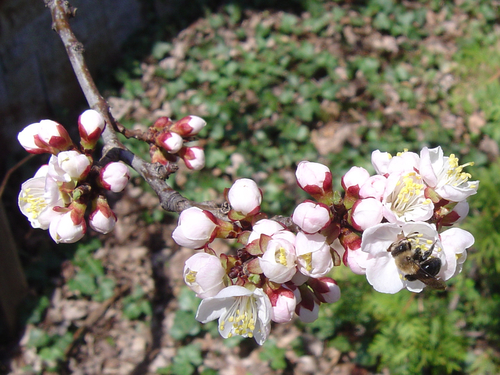
Prunus cerasus var. humilis
Bean
Tien-Shan cherry
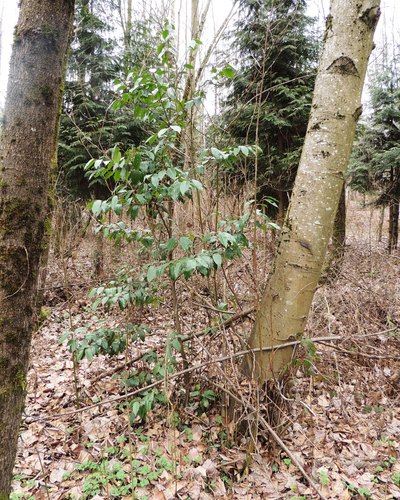
iNaturalist· cc-by-nc
(c) felixf, some rights reserved (CC BY-NC), uploaded by felixf
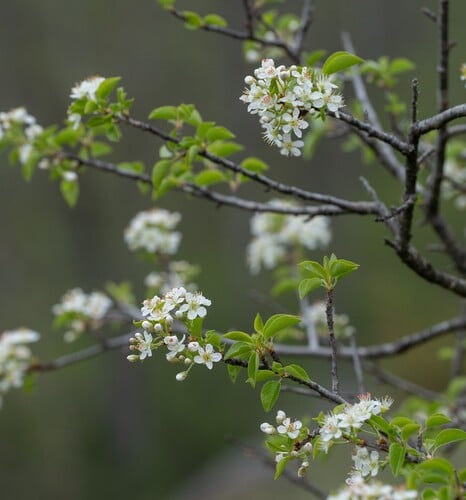
iNaturalist· cc-by-nc
(c) Aleksandr_Levon, some rights reserved (CC BY-NC), uploaded by Aleksandr_Levon
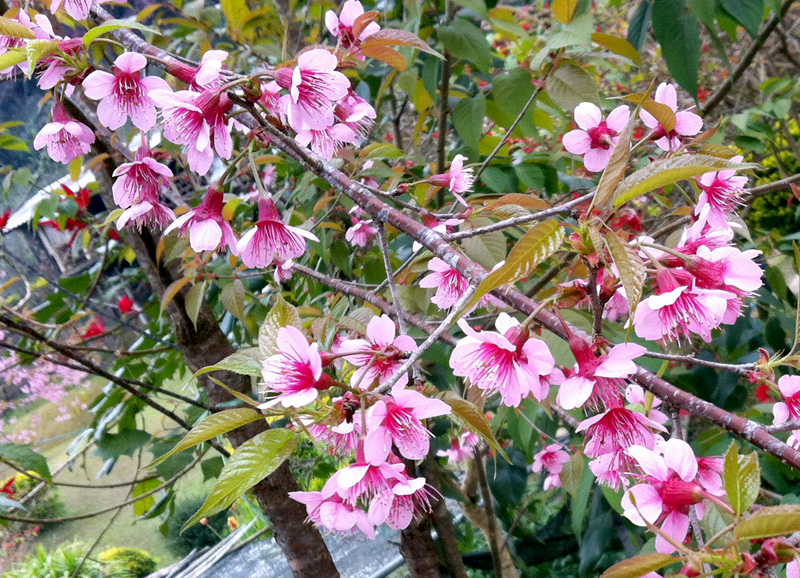
iNaturalist· cc0
no rights reserved, uploaded by Dag Endresen
Summary
Source: WikipediaPrunus cerasus (sour cherry, tart cherry, or dwarf cherry) is an Old World species of Prunus in the subgenus Cerasus (cherries). It has two main groups of cultivars: the dark-red Morello cherry and the lighter-red Amarelle cherry. The sour pulp is edible.
Description
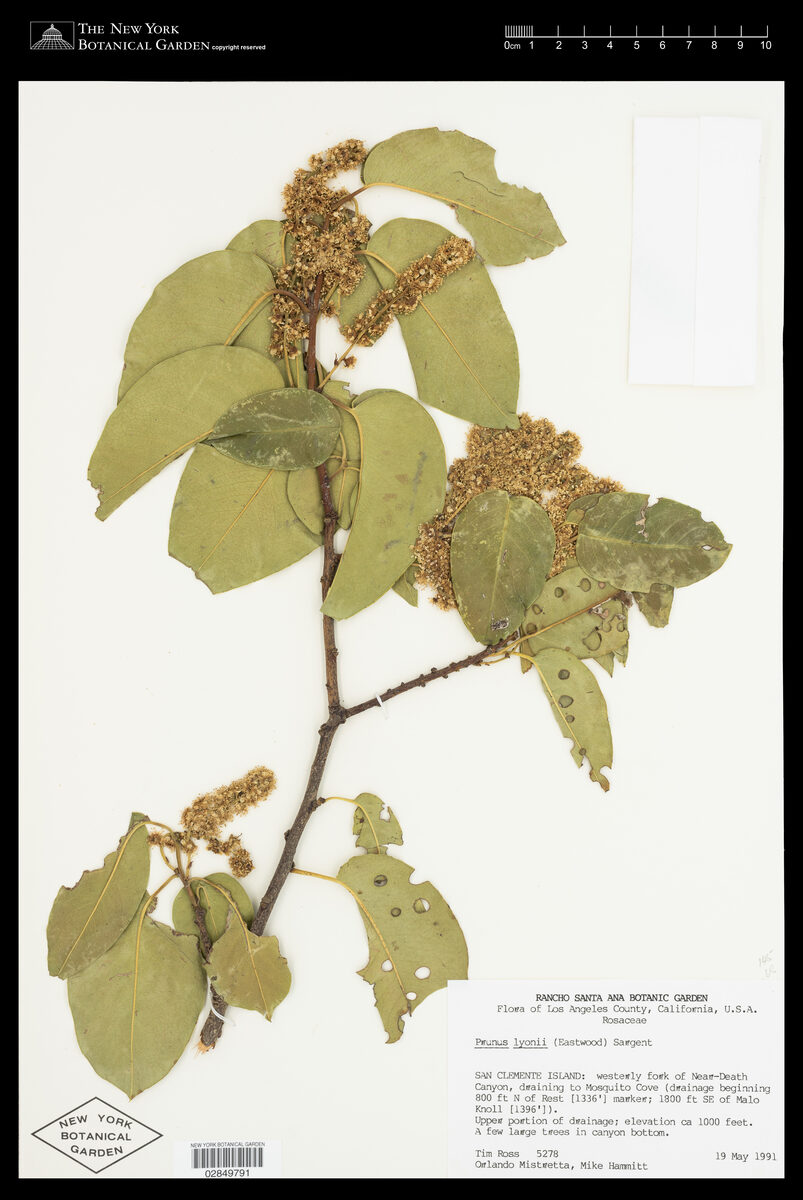
A shrub. It grows 1.6 m high. The bark on the annual shoots is pale yellowish grey. It is dark on older shoots. The leaves are narrowly sword shaped. They are 3 cm long by 0.9 cm wide. The flowers are pink. There are 4-6 in a cluster on spurs. The fruit is fleshy with a stone inside. It is dark red and 7-9 mm across. The fruit are edible.
Edible Uses
The sour pulp is edible. Dried sour cherries are used in cooking including soups, pork dishes, cakes, tarts, and pies. They are also used to make a jam/fruit spread. Sour cherries are particularly common in Turkey, especially in the form of vişne suyu (sour cherry nectar), a widely consumed beverage, and vişne reçeli (sour cherry jam), often eaten as part of a traditional breakfast or mixed into plain yoghurt. Sour cherries or sour cherry syrup are used in liqueurs and drinks, such as the Romanian vișinată or the Portuguese ginjinha. In Iran, Turkey, Greece and Cyprus, sour cherries are prized for making spoon sweets by slowly boiling pitted sour cherries and sugar; the syrup thereof is used for sharbat-e Albalou, vişne şurubu or vyssináda, a beverage made by diluting the syrup with ice-cold water. A particular use of sour cherries is in the production of kriek lambic, a cherry-flavored variety of a naturally fermented beer made in Belgium. In Germany and Austria, sour cherries are used for desserts such as the donauwelle. Cherry bounce is made by infusing sour cherries in old French brandy.
Distribution
In Kazakhstan it grows on stony ground between 800-1,000 m altitude.
Where It Grows
Asia, Central Asia, Kazakhstan,
Synonyms
References (1)
- Dzhangaliev, A. D., et al, 2003, The Wild Fruit and Nut Plants of Kazakhstan, Horticultural Reviews, Vol. 29. pp 305-371 (As Cerasus tianschanica)