Asparagus suaveolens
Burch.
Bushveld asparagus
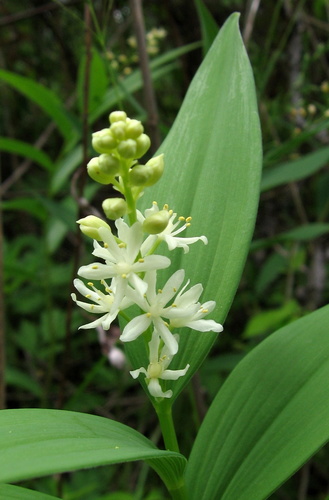
iNaturalist· cc-by-nc-sa
(c) David Hoare, some rights reserved (CC BY-NC-SA), uploaded by David Hoare
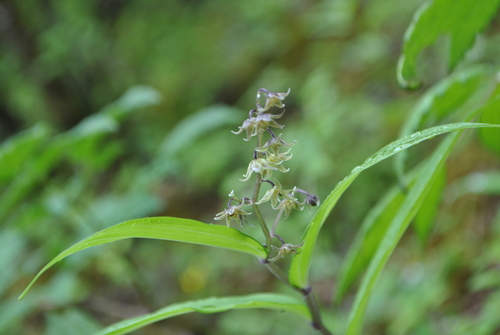
iNaturalist· cc-by-sa
(c) Tony Rebelo, some rights reserved (CC BY-SA), uploaded by Tony Rebelo
iNaturalist· cc-by-nc
(c) Steven Molteno, some rights reserved (CC BY-NC), uploaded by Steven Molteno
Summary
Source: WikipediaAsparagus suaveolens ("Bushveld Asparagus" or "Mvane"), is a shrub of the Asparagus genus, that is indigenous to rocky areas in Africa, from Kenya to South Africa.
Description
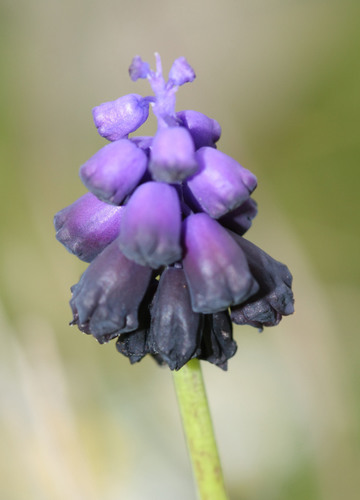
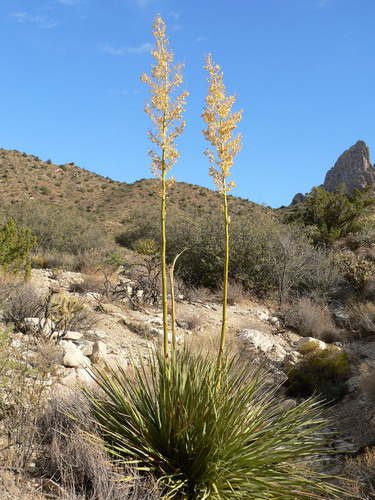
A small shrub. It can be a climber. It keeps growing from year to year. It grows 1-2 m high. The stems are spiny. These put out new branches each year. The stems are flattened and look like leaves. There are 1-6 in a group. They are narrow. The flowers have a scent. The flowers occur as 1-3 in a cluster. They are small and white with a red stripe. The fruit is a round, black or red berry. It has one seed. It is about 5 mm across.
Edible Uses
Young shoots. No more details are given but it is likely that they are cooked and used like asparagus.
Traditional Uses
The plants is eaten as a vegetable.
This uses section is brief — help expand it
Distribution
It is a subtropical plant. It grows on sandy and stony soil. It can grow in arid places.
Where It Grows
Africa, Botswana, East Africa, Eswatini, Lesotho, Namibia, South Africa, Southern Africa, Swaziland, Zimbabwe,
Cultivation
Easily grown in any good garden soil. Prefers a rich sandy loam. A dioecious species, both male and female forms must be grown if seed is required.
Propagation
Seed - best sown as soon as it is ripe. Pre-soak stored seed for 12 hours in warm water and then sow in containers in a lightly shaded position. It usually germinates in 3 - 6 weeks at 25°c. Prick out the seedlings into individual pots when they are large enough to handle and grow them on in a sunny position until ready to plant out. Division as the plant comes into growth.
Synonyms
Also Known As
Lethajwa, Mannetjie, Mvane
References (8)
- Fox, F. W. & Young, M. E. N., 1982, Food from the Veld. Delta Books. p 249, 255
- Long, C., 2005, Swaziland's Flora - siSwati names and Uses http://www.sntc.org.sz/flora/
- Royal Botanic Gardens, Kew (1999). Survey of Economic Plants for Arid and Semi-Arid Lands (SEPASAL) database. Published on the Internet; http://www.rbgkew.org.uk/ceb/sepasal/internet [Accessed 4th April 2011]
- Ruiters-Welcome, A. K., 2019, Food plants of southern Africa. Ph.D. thesis. Univ. of Johannesburg p 30
- van der Burg, W.J., 2004. Asparagus flagellaris (Kunth) Baker. [Internet] Record from Protabase. Grubben, G.J.H. & Denton, O.A. (Editors). PROTA (Plant Resources of Tropical Africa / Ressources végétales de l’Afrique tropicale), Wageningen, Netherlands. < http://database.prota.org/search.htm>. Accessed 13 October 2009.
Show all 8 references Hide references
- van Wyk, Be., & Gericke, N., 2007, People's plants. A Guide to Useful Plants of Southern Africa. Briza. p 68
- Welcome, A. K. & Van Wyk, B.-E., 2019, An inventory and analysis of the food plants of southern Africa. South African Journal of Botany 122 (2019) 136–179
- World Checklist of Useful Plant Species 2020. Royal Botanic Gardens, Kew