Mouriri grandiflora
A. DC.
Bigflower mouriri
iNaturalist· cc-by-nc
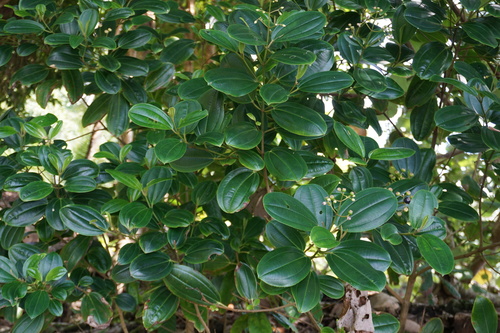
(c) Hervé GALLIFFET, some rights reserved (CC BY-NC), uploaded by Hervé GALLIFFET
iNaturalist· cc-by
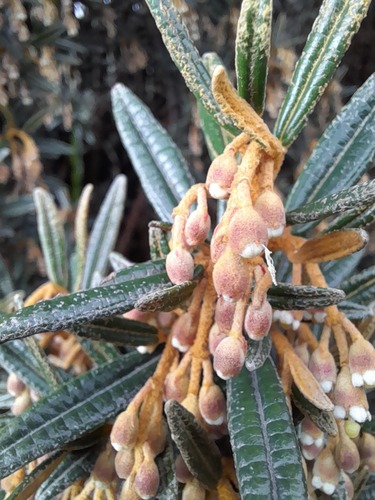
(c) Vincent A. Vos, some rights reserved (CC BY)
Description
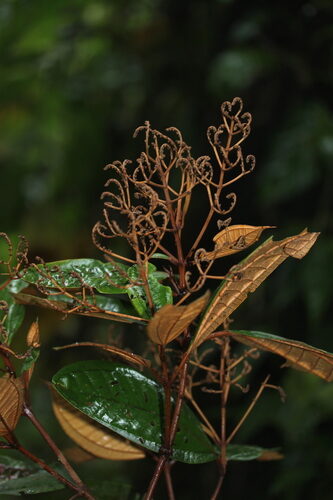
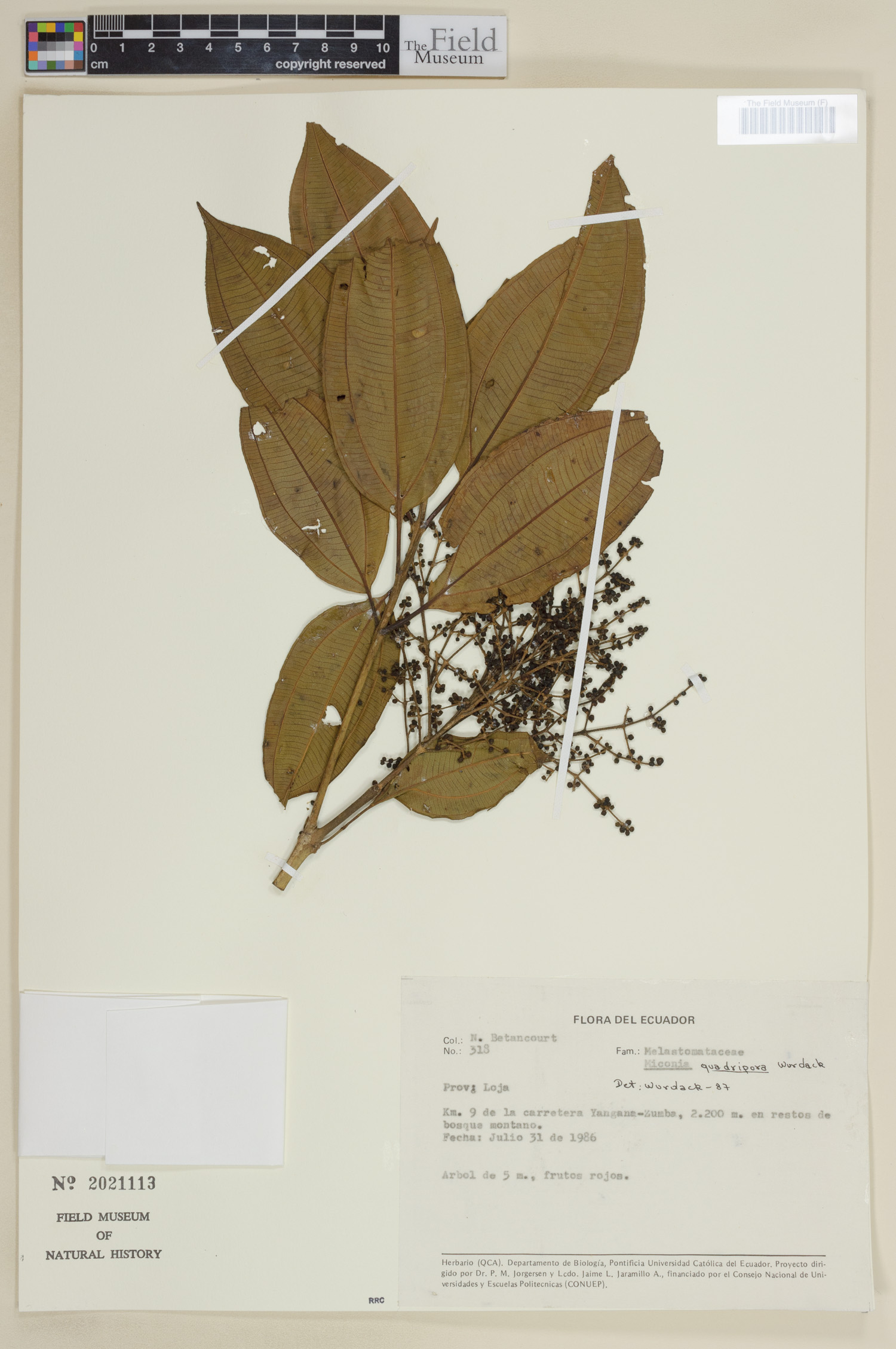
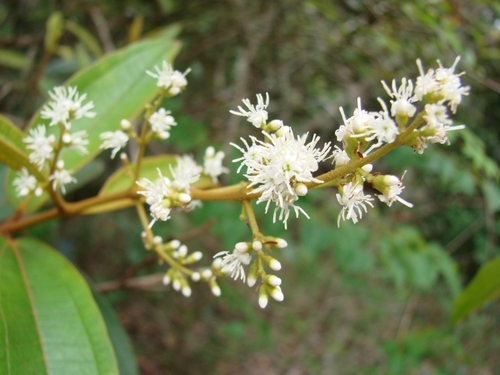
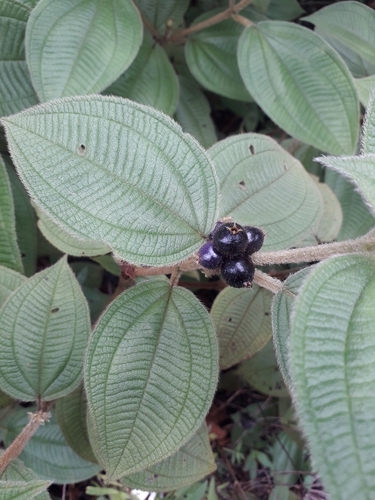
A shrub or small tree. It has weak hanging branches. It can grow 30 m high and have a trunk 30 cm across. The leaves are 11-31 cm long by 5-11 cm wide. They are narrowly oval. They taper to the tip and are rounded at the base. The flowering branches occur on the trunks, the branches and the twigs. There can be 1-5 flowers in a group. The petals are white and can be red. The fruit can be yellow, orange of red. They are a flattened round shape. They are 2 cm high. There can be 1-5 seeds.
Edible Uses
Fruit - raw. The orange-yellow to red, subglobose fruit is up to 25mm long by 18mm in diameter, containing 1 - 5 seeds.
Traditional Uses
The fruit are eaten raw.
This uses section is brief — help expand it
Medicinal Uses
The leaves are boiled, and the water drunk as a treatment for swollen stomach.
Distribution
It is a tropical plant. It grows in the forests often near streams and can be in areas that are occasionally flooded. They grow up to 400 m altitude.
Where It Grows
Amazon, Bolivia, Brazil, Colombia, Ecuador, French Guiana, Guianas, Guyana, Peru, South America, Suriname, Venezuela,
Notes
They have also been put in the family Memecylaceae.
Synonyms
Also Known As
Araca, Bois fleche, Camutin, Charachuela, Chipaio, Chipayeopo, Derello, Desconocido, Edemoye, Graine-coumarou, Guajarai, Kimoto, Komotoriballi, Komotorie, Lanza caspi, Mamuri-balli, Manniballi, Mirauba, Molokoto kahi, Oenilokodikoro, Panwedamankawe, Pauwies mofo, Sharimiat, Sipaiopo, Spikrihoedoe, Topi, Wakopopi, Wokopopi
References (12)
- Bendezu, Y. F., 2018, Arboles nativos de lad Region Ucayali. Instituto Nacional de Innovacion Agraria. p 204
- Cavalcante, P.B. 1991. Frutas comestíveis da Amazônia. Edições CEJUP.
- Grandtner, M. M. & Chevrette, J., 2013, Dictionary of Trees, Volume 2: South America: Nomenclature, Taxonomy and Ecology. Academic Press p 423
- Kermath, B. M., et al, 2014, Food Plants in the Americas: A survey of the domesticated, cultivated and wild plants used for Human food in North, Central and South America and the Caribbean. On line draft. p 551 (As Mouriri macrophylla)
- Kew Plants of the World Online
Show all 12 references Hide references
- Lopez-Diago, D. & Garcia, N., 2021, Wild edible fruits of Colombia. Biota ColomBiana 22 (2) p 42
- Morley, T., 1976, Melastomataceae, Flora Neotropica Vol. 15 p 96
- Paz, F. S., et al, 2021, Edible Fruit Plant Species in the Amazon Forest Rely Mostly on Bees and Beetles as Pollinators. Journal of Economic Entomology, XX(XX), 2021, 1–13
- Roa, J. A. G. & Boada, D. S. G., 2018, Fundación para el Fortalecimiento de la Fruticultura y Plantas Alimenticias no Convencionales en Colombia.
- Torre, de la, L., et al, 2008, Enciclopedia de las Plantas Útiles del Ecuador. Herbario QCA. Pontificia Universidad Católica del Ecuador. p 432
- Van den Eynden, V., et al, 2003, Wild Foods from South Ecuador. Economic Botany 57(4): 576-603
- Vasquez, R. and Gentry, A. H., 1989, Use and Misuse of Forest-harvested Fruits in the Iquitos Area. Conservation Biology 3(4): 350f