Astragalus atropilosulus subsp. abyssinicus
(Hochst.) Steud. ex A. Rich.
gbif· cc0
Royal Botanic Garden Edinburgh
gbif· cc-by
Meise Botanic Garden
gbif· cc-by
Royal Botanic Gardens, Kew
Summary
Source: WikipediaAstragalus atropilosulus is a perennial herb in the family Fabaceae. It is native to Eastern Africa and some parts of the Arabian Peninsula. It is used as a vegetable in Malawi and Kenya.
Description
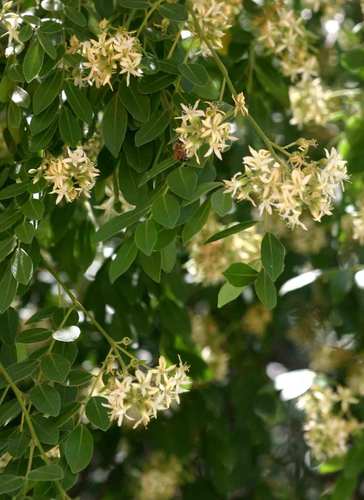
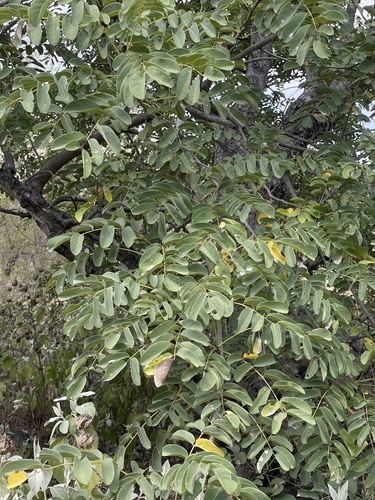
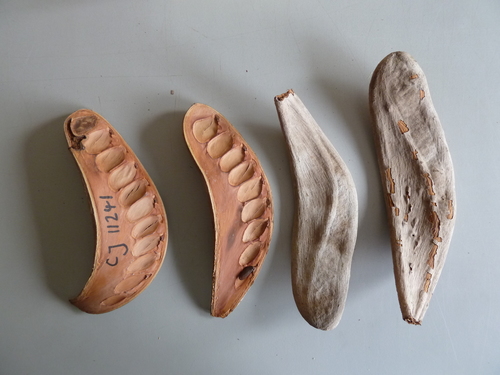
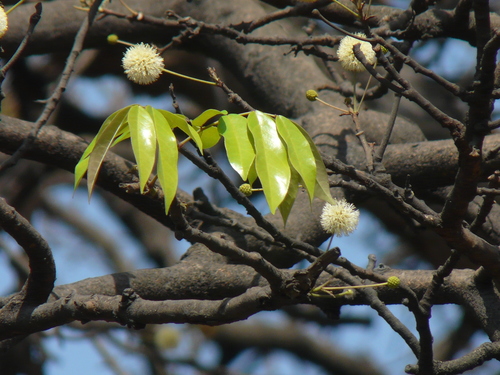
A herb or small shrub. The stems are usually erect. The leaves are 20 cm long. There are 11-51 leaflets. They are opposite. They are 3 cm long by 1.4 cm wide. They are sword shaped. There is a point at the tip. There are many flowers along 10 cm long stalks. The corolla is purple, yellow or white. The fruit is a pod 40 mm long by 7 mm wide. It is narrow at both ends. It splits into 2 halves at maturity. The seeds are 2 mm long. They are kidney shaped and dark brown.
Edible Uses
The leaves are used as a side dish and are sometimes mixed with the leaves of Solanum nigrum. The roots are added to hot milk to help a woman having uterine pains after childbirth.
Traditional Uses
The leaves are cooked and eaten as a side dish.
This uses section is brief — help expand it
Distribution
A tropical plant. It grows in seasonally flooded grassland and woodlands. It is sometimes on termite mounds. In southern Africa it grows between 900-2,250 m altitude and up to 3,900 m altitude in other places.
Where It Grows
Africa, Central Africa, Congo, East Africa, Eritrea, Ethiopia, Kenya, Malawi, Middle East, Mozambique, Saudi Arabia, Somalia, South Africa, Southern Africa, Sudan, Yemen, Zambia, Zimbabwe,
Other Information
It is of local importantce.
Notes
There are 2,000 Astragalus species.
Synonyms
References (6)
- Flora Zambesiaca. http://apps.kew.org/efloras
- Grivetti, L. E., 1980, Agricultural development: present and potential role of edible wild plants. Part 2: Sub-Saharan Africa, Report to the Department of State Agency for International Development. p 45 (As Astragalus abyssinicus)
- Grubben, G. J. H. and Denton, O. A. (eds), 2004, Plant Resources of Tropical Africa 2. Vegetables. PROTA, Wageningen, Netherlands. p 99
- Jardin, C., 1970, List of Foods Used In Africa, FAO Nutrition Information Document Series No 2.p 57
- Martin, F.W. & Ruberte, R.M., 1979, Edible Leaves of the Tropics. Antillian College Press, Mayaguez, Puerto Rico. p 198
Show all 6 references Hide references
- Tent. fl. abyss. 1:193. 1847