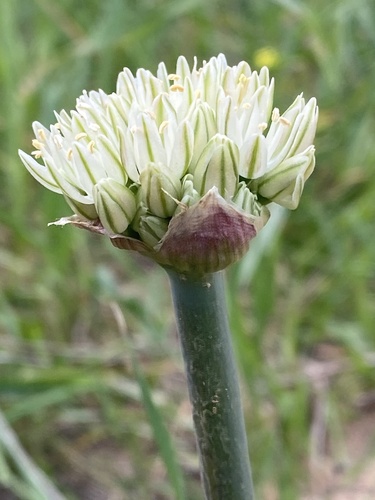
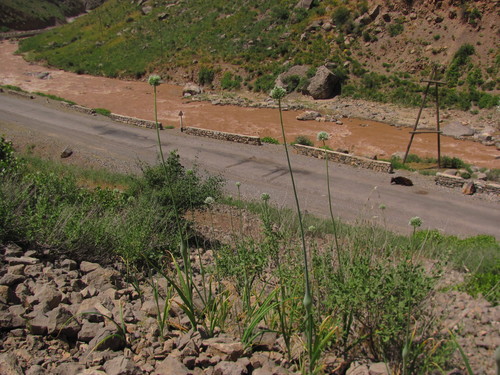
Tristagma patagonicum
Philippi
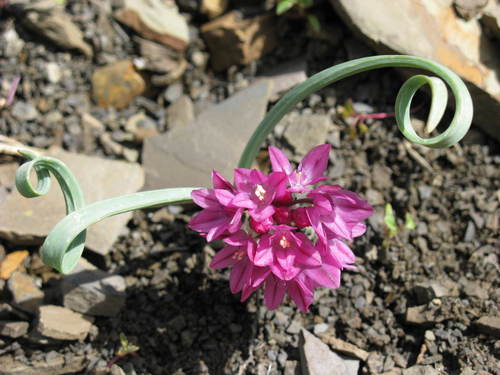
iNaturalist· cc-by-nc
(c) Lada Malek, some rights reserved (CC BY-NC)
iNaturalist· cc-by-nc
(c) Lada Malek, some rights reserved (CC BY-NC)
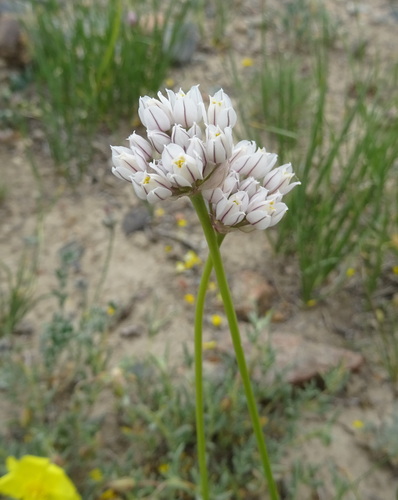
iNaturalist· cc-by
(c) Ariadna Tripaldi, some rights reserved (CC BY)
Description
A temperate herb in the Amaryllidaceae family native to the Patagonian steppes of Argentina. It grows from rhizomes that are used as a food source.
This description is brief — help expand it
Edible Uses
The rhizomes are eaten raw or cooked.
Traditional Uses
The rhizomes are eaten raw or cooked.
This uses section is brief — help expand it
Distribution
It is a temperate plant. It grows on the Patagonian steppes in Argentina.
Where It Grows
Argentina, South America,
Notes
Also put in the family Liliaceae.
Also Known As
Chaleo, Chaquil, Liuto
References (6)
- Ladio, A. H., 2001, The Maintenance of Wild Edible Plant Gatherings in a Mapuche Community of Patagonia. Economic Botany, Vol. 55, No. 2, pp. 243-254
- Ladio, A. H. and Lozada, M., 2003, Comparison of wild edible plant diversity and foraging strategies in two aboriginal communities of northwestern Patagonia. Biodiversity and Conservation 12: 937–951
- Ladio, A. H. and Lozada, M., 2004, Patterns of use and knowledge of wild edible plants in distinct ecological environments: a case study of a Mapuche community from northwestern Patagonia. Biodiversity and Conservation 13:1153-1173
- Ladio, A., Lozada, M. & M. Weigandt, 2007, Comparison of traditional wild plant knowledge between aboriginal communities inhabiting arid and forest environments in Patagonia, Argentina. Journal of Arid Environments 69 (2007) 695–715
- Leon-Lobos, P., et al, 2022, Patterns of Traditional and Modern Uses of Wild Edible Native Plants of Chile: Challenges and Future Perspectives. Plants (Basel) v 11 (6) Table S1
Show all 6 references Hide references
- Ochoa, J. S., & Ladio, A, H, 2015, Current use of wild plants with edible underground storage organs in a rural population of Patogonia: between tradition and change. Journal of Ethnobiology and Ethnomedicine 11:70