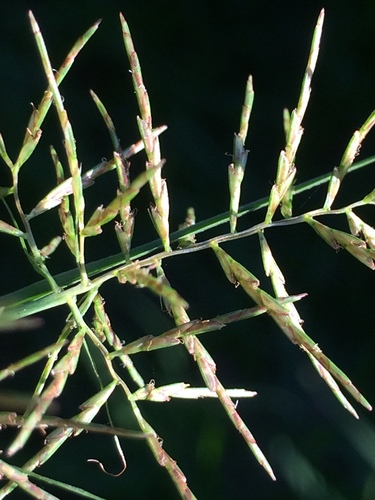
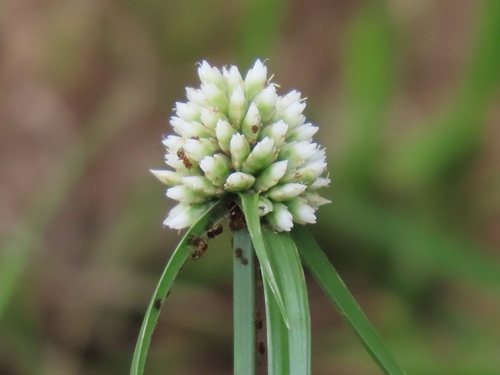
Cyperus amauropus
Steud.
Cyperaceae Edible: Bulb
gbif· cc-by-sa
Susan Brown
gbif· cc-by-sa
Susan Brown
gbif· cc-by-sa
Susan Brown
Summary
Source: WikipediaCyperus amauropus is a species of sedge that is native to eastern parts of Africa and the Arabian peninsula. The species was first formally described by the botanist Ernst Gottlieb von Steudel in 1854.
Description
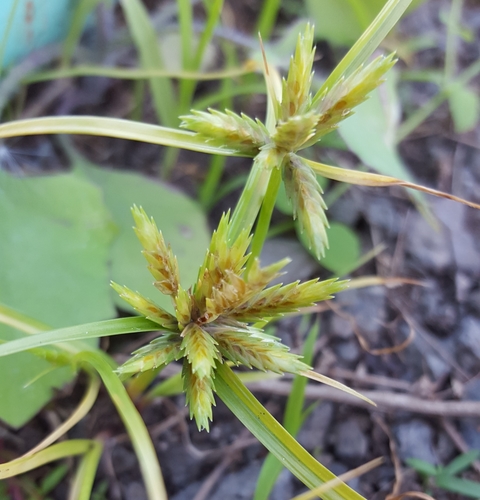
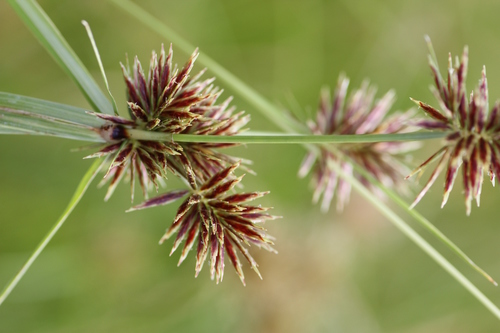
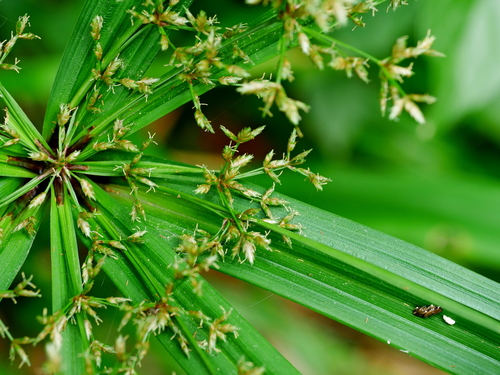
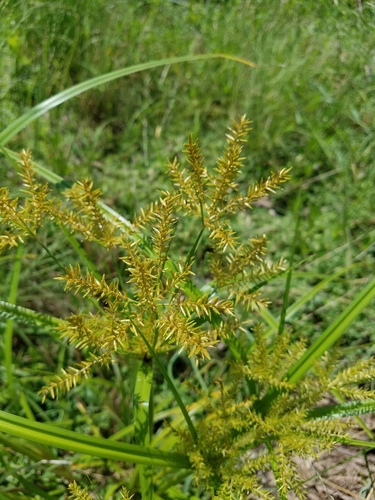
A sedge. It has a short rhizome and sometimes 1-5 cm long stolons. The stems are 15-60 cm long by 1-2 mm wide. They are triangle shaped. The leaves are 25 cm long and 1-4 mm wide.
Edible Uses
The bulb-like base of the stalk is eaten.
Traditional Uses
The bulb like base of the stalk is eaten.
This uses section is brief — help expand it
Distribution
It is a tropical plant. It grows in grassland savannah and in shallow soils over rocks.
Where It Grows
Africa, East Africa, Kenya, Somalia,
Synonyms
Mariscus amauropus (Steud.) Cufodand several others
References (2)
- Mutie, F. M., et al, 2023, Important Medicinal and Food Taxa (Orders and Families) in Kenya, Based on Three Quantitative Approaches. Plants 2023, 12, 1145
- Simpson, D. A. & Inglis, C. A., 2001, Cyperaceae of Economic, Ethnobotanical and Horticultural Importance: A checklist. Kew Bulletin Vol. 56, No. 2 (2001), pp. 257-360