Acca sellowiana
(Berg.) Burret
Pineapple guava, Feijoa
iNaturalist· cc-by-nc
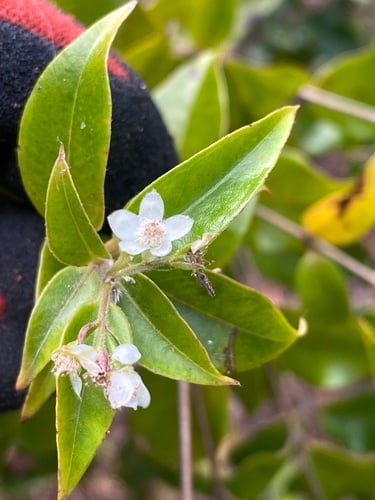
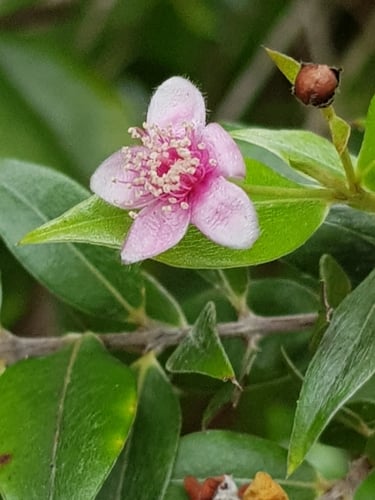
(c) biggsy, some rights reserved (CC BY-NC)
iNaturalist· cc-by
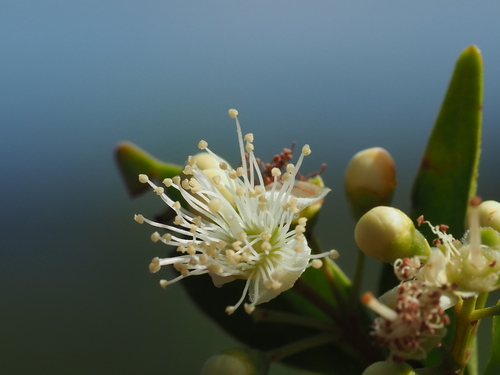
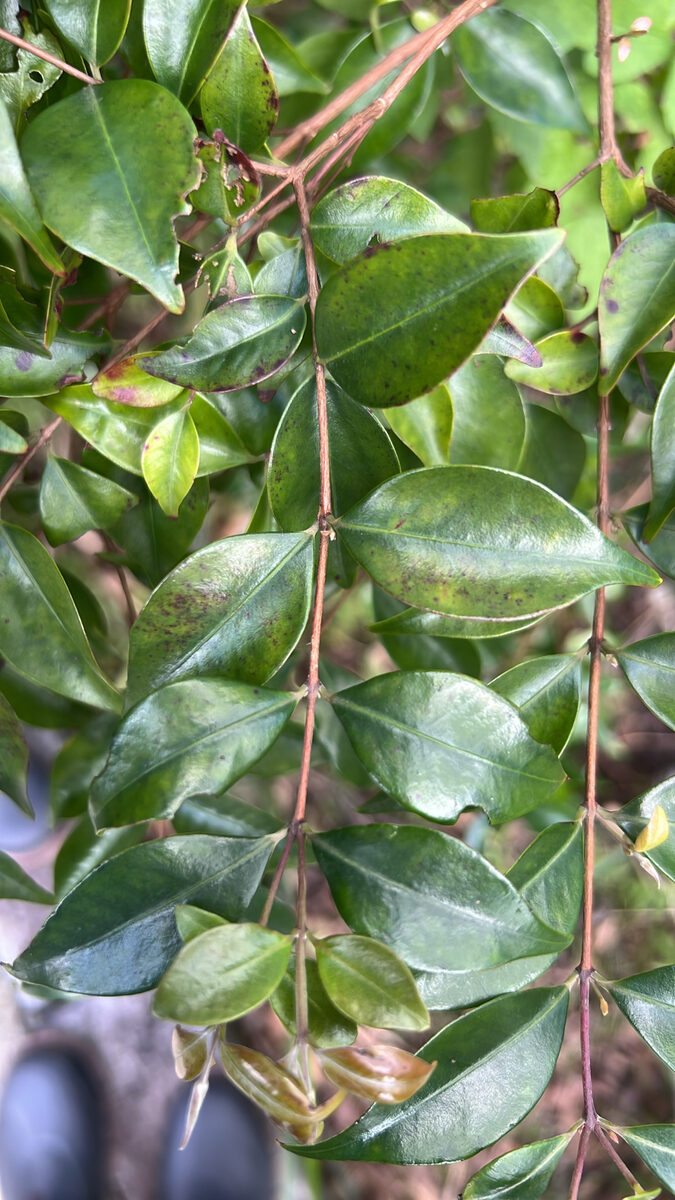
(c) Denis Zabin, some rights reserved (CC BY)
iNaturalist· cc-by
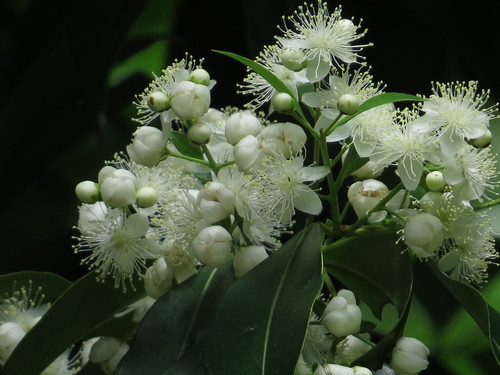
(c) Denis Zabin, some rights reserved (CC BY)
Summary
Source: WikipediaAn evergreen shrub reaching 3 m tall and wide at medium growth rate. Hardy to UK zone 8, not frost tender. Flowers in July with seeds ripening October to January. Hermaphroditic but not self-fertile, insect-pollinated and noted for attracting wildlife. Tolerates light sandy, medium loamy, and heavy clay soils with good drainage, across acidic to alkaline pH. Requires full sun, tolerates drought and maritime exposure.
Description
A shrub or small tree. It grows 5 m tall. There are prickles along the stem. The leaves are twice divided and there are 8-18 pairs of pinnae. There are up to 50 pairs of pinnules on each pinnae. The flowers are yellow. They are in large clusters at the ends of branches. The pods are flattened.
Edible Uses
The fruit can be eaten raw or cooked, with a delicious aromatic flavour often described as a cross between pineapple and strawberry. It is best eaten fresh but also works well in pies, cakes, puddings, jams, and jellies. Fruits can suffer damage from autumn frosts, though flavour develops better at low temperatures. Each fruit grows up to 7.5cm long. The flower petals are also edible raw — sweet, crisp, and flavourful, tasting more like a fruit than many fruits do. They should be harvested just after they begin to soften.
Traditional Uses
The fruit are used raw or cooked. They can be used for jellies and sauces. The flower petals can be eaten raw.
This uses section is brief — help expand it
Medicinal Uses
None known
Distribution
It is a warm temperate and subtropical plant. It suits cool places and can tolerate temperatures below freezing when the plant is in its dormant stage. It needs good drainage but can grow on fairly poor soils. Feijoas prefer cool winters and moderate summers (26° to 32°C), and are generally adapted to areas where temperatures stay above -9°C. They need 50 hours of chilling for good flower production. Fruit taste better in cooler than warmer climate. Plants can tolerate seaside locations. It does best in warm and subtropical zones. They are not well suited to tropical regions. It suits hardiness zones 8-11. In Melbourne Botanical Gardens. In Hobart Botanical gardens. In Brisbane Botanical Gardens.
Where It Grows
Africa, Andes, Argentina, Asia, Australia, Azerbaijan, Bahamas, Brazil*, Britain, Caucasus, Central America, Chile, China, Colombia, Cook Islands, Costa Rica, Cuba, East Africa, Europe, France, Georgia, Hawaii, Himalayas, India, Indochina, Indonesia, Israel, Italy, Jamaica, Kenya, Madagascar, Mediterranean, Mexico, Middle East, New Zealand, North America, Pacific, Papua New Guinea, PNG, Paraguay, Philippines, Portugal, Russia, SE Asia, Slovenia, South America, Spain, Switzerland, Tanzania, Tasmania, Uganda, Uruguay, USA, West Indies,
Cultivation
Trees can be grown from seed and transplanted. Seedling trees are not always true to type. Seed is extracted by squeezing fruit into water and letting it ferment for 4 days. Seeds are then strained out and dried. Seed can be stored dry for 12 months. Seeds germinate in 3 weeks. Grafting or cuttings can also be used with some difficulty. Young wood cuttings will root in 2 months with bottom heat and mist. Layering can also be used. Some kinds need to have cross pollination to produce fruit. It does not need any special pruning, although lateral branches can be removed to avoid overcrowding. A spacing of 2 metres is recommended.
Propagation
Sow seed in spring in a greenhouse, rinsing it beforehand to remove any fruit flesh that could inhibit germination. The seed usually germinates in 3–6 weeks at 15°C. Prick seedlings into individual pots as soon as they are large enough to handle. Grow on through at least the first winter under glass, then plant out in late spring or early summer after the last expected frosts, with some protection during the first winter outdoors. Half-ripe cuttings of 5–7cm with a heel can be taken in July or August and rooted in a frame. Rooting is slow but eventually yields a good percentage take.
Other Uses
Due to its dense foliage and attractive flowers, feijoa can be used in agroforestry as a hedgerow or border plant. It resists maritime exposure and can be grown as a shelter hedge in mild maritime areas despite not being very cold hardy in Britain. The flowers are rich in nectar and pollen and are highly attractive to pollinators including bees. Various birds and small mammals consume the fruit, and the dense foliage provides cover for wildlife, offering shelter and potential nesting or roosting sites. The plant structure can also offer overwintering sites for invertebrates, and fallen leaves contribute to ground cover, benefiting soil organisms.
Production
Plants grow slowly. Trees start to fruit after 3-4 years. Fruit needs to be stored for a week or more after it falls from the tree, to become fully ripe. Birds and bees pollinate the flowers. Poor fruit bearing is normally the result of poor pollination. Fruit ripen in 4-7 months. Mature fruit can be stored in a refrigerator for about one week. Fruit can be stored at 3-5°C for 2-3 months. Dipping fruit in lemon juice after peeling stops the fruit turning brown.
Other Information
It is a significant fruit tree. Trees have been tried in a few highland areas in Papua New Guinea but so far have not established or produced well. Cultivated.
Notes
There are 6 Acca species. The fruit of this one has high levels of water soluble iodine. (1.6-4 mg/kg) They are also rich in folic acid. Fruit are high in folates 91μg/100.
Nutrition
| Part | Moisture | kJ | kcal | Protein | Vit A | Vit C | Iron | Zinc |
|---|---|---|---|---|---|---|---|---|
| Fruit | 86.6 | 205 | 49 | 1.2 | 0 | 20 | 0.1 | 0.04 |
| Flowers | — | — | — | — | — | — | — | — |
Synonyms
Also Known As
Ananasova gvava, Feikhoa, Goiaba-do-campo, Goiaba serrana, Goiaba verde, Goiabo abacaxi, Goiabeira-serrana, Guayaba chilena, Guayabo chico, Guayabo del pais, Guayabo grande, Jambu nanas
References (61)
- Ambasta, S.P. (Ed.), 2000, The Useful Plants of India. CSIR India. p 219 (As Feijoa sellowiana)
- Arora, R. K., 2014, Diversity in Underutilized Plant Species - An Asia-Pacific Perspective. Bioversity International. p 70 (As Feijoa sellowiana)
- Bodkin, F., 1991, Encyclopedia Botanica. Cornstalk publishing, p 470
- Brack, P., et al, 2020, Frutas nativas do Rio Grande do Sul, Brasil: riqueza e potencial alimentício. Native fruits of Rio Grande do Sul, Brazil: richness and potential as food. Rodriguésia 71: e03102018.
- Brazil: Biodiversity for Food and Nutrition. http://www.b4fn.org/countries/brazil/
Show all 61 references Hide references
- Brickell, C. (Ed.), 1999, The Royal Horticultural Society A-Z Encyclopedia of Garden Plants. Convent Garden Books. p 63
- Burkill, I.H., 1966, A Dictionary of the Economic Products of the Malay Peninsula. Ministry of Agriculture and Cooperatives, Kuala Lumpur, Malaysia. Vol 1 (A-H) p 1014 (As Feijoa sellowiana)
- Bussman, R. W., et al, 2021, Unity in diversity—food plants and fungi of Sakartvelo (Republic of Georgia), Caucasus. Journal of Ethnobiology and Ethnomedicine (2021) 17:72 p 9
- Cheifetz, A., (ed), 1999, 500 popular vegetables, herbs, fruits and nuts for Australian Gardeners. Random House p 191
- Coronel, R.E., 1982, Fruit Collections in the Philippines. IBPGR Newsletter p 9 (As Feijoa sellowiana)
- Cundall, P., (ed.), 2004, Gardening Australia: flora: the gardener's bible. ABC Books. p 82
- Etherington, K., & Imwold, D., (Eds), 2001, Botanica's Trees & Shrubs. The illustrated A-Z of over 8500 trees and shrubs. Random House, Australia. p 58
- Facciola, S., 1998, Cornucopia 2: a Source Book of Edible Plants. Kampong Publications, p 157 (As Feijoa sellowiana)
- Flowerdew, B., 2000, Complete Fruit Book. Kyle Cathie Ltd., London. p 154
- Fouqué, A., 1972, Espèces fruitières d'Amérique tropicale. Institut français de recherches fruitierès outre-mer (ifac)
- French, B.R., 1986, Food Plants of Papua New Guinea, A Compendium. Asia Pacific Science Foundation p 296
- Gouldstone, S., 1983, Growing your own Food-bearing Plants in Australia. Macmillan p 96 (As Feijoa sellowiana)
- Grandtner, M. M. & Chevrette, J.,2013, Dictionary of Trees, Volume 2: South America: Nomenclature, Taxonomy and Ecology. Academic Press p 9
- Hackett, C. & J. Carolane. 1982. Edible Horticultural Crops.
- Hardwick, G., 2001, Economically Useful Plants for Northern Australia: Master Species List. Crusader eBooks. (As Feijoa sellowiana)
- Hermandez Bermejo, J.E., and Leon, J. (Eds.), 1994, Neglected Crops. 1492 from a different perspective. FAO Plant Production and Protection Series No 26. FAO, Rome. p16, 233
- Hu, Shiu-ying, 2005, Food Plants of China. The Chinese University Press. p 577 (As Feijoa sellowiana)
- Hunter, D., et al, 2019, The potential of neglected and underutilized species for improving diets and nutrition. Planta (2019) 250:709-729
- Jardin, C., 1970, List of Foods Used In Africa, FAO Nutrition Information Document Series No 2.p 118
- John, L., & Stevenson, V., 1979, The Complete Book of Fruit. Angus & Robertson p 131
- Kew Plants of the World Online (As Feijoa)
- Kinupp, V. F., 2007, Plantas alimenticias nao-convencionais da regiao metropolitana de Porto Alegre, RS, Brazil p 84
- Kinupp, V. F. & Bergman, I., 2008, Protein and minerals of native species, potential vegetables and fruits. Cienc.Tecnol. Aliment. Vol. 28 No. 4 Campinas Oct/Dec.
- Kiple, K.F. & Ornelas, K.C., (eds), 2000, The Cambridge World History of Food. CUP p 1772 (As Feijoa sellowiana)
- Kunkel, G. Plants for human consumption
- Llamas, K.A., 2003, Tropical Flowering Plants. Timber Press. p 282
- Morton, Julia F., 1987, Fruits of Warm Climates. Creative Resources Systems, Inc. . p. 367 (As Feijoa sellowiana)
- Lorenzi, H., 2002, Brazilian Trees. A Guide to the Identification and Cultivation of Brazilian Native Trees. Vol. 01 Nova Odessa, SP, Instituto Plantarum p 270
- Lorenzi, H., Bacher, L., Lacerda, M. & Sartori, S., 2006, Brazilian Fruits & Cultivated Exotics. Sao Paulo, Instituto Plantarum de Estuados da Flora Ltda. p 176
- Lyle, S., 2006, Discovering fruit and nuts. Land Links. p 202
- Macmillan, H.F. (Revised Barlow, H.S., et al) 1991, Tropical Planting and Gardening. Sixth edition. Malayan Nature Society. Kuala Lumpur. p 314
- Martin, F. W., et al, 1987, Perennial Edible Fruits of the Tropics. USDA Handbook 642 p 41
- Martin, F.W., C.W. Campbell and R.M. Ruberté, 1987, Perennial edible fruits of the tropics - An inventory. United States Department of Agriculture, Agricultural Research Service, Agriculture Handbook No. 642. Washington, D.C., USA.
- Mabberley, D. J., 1990, The plant-book: a portable dictionary of the higher plants. Cambridge University Press. NY.
- Miguel, E., et al, 1989, A checklist of the cultivated plants of Cuba. Kulturpflanze 37. 1989, 211-357
- Morley, B. & Everard, B., 1970, Wild Flowers of the World. Ebury press. Plate 179
- Permaculture website Ngare Ndare project Kenya
- Perry, F., and Hay, R., 1982, Guide to Tropical and Subtropical Plants. Sun Books p 30
- Plants for a Future database, The Field, Penpol, Lostwithiel, Cornwall, PL22 0NG, UK. http://www.scs.leeds.ac.uk/pfaf/
- Purseglove, J.W., 1968, Tropical Crops Dicotyledons, Longmans. p 398
- Recher, P, 2001, Fruit Spirit Botanical Gardens Plant Index. www.nrg.com.au/~recher/ seedlist.html p 2 (As Acca sellowiana)
- Repert. Spec. Nov. Regni Veg. 50:59. 1941
- Roa, J. A. G. & Boada, D. S. G., 2018, Fundación para el Fortalecimiento de la Fruticultura y Plantas Alimenticias no Convencionales en Colombia.
- Segura, S., et al, 2018, The edible fruit species in Mexico. Genet Resour Crop Evol (2018) 65:1767–1793
- Self, M., 199, Phoenix Seeds catalogue. p 15
- Solomon, C., 2001, Encyclopedia of Asian Food. New Holland. p 142
- Staples, G.W. and Herbst, D.R., 2005, A tropical Garden Flora. Bishop Museum Press, Honolulu, Hawaii. p 417
- Striegel, L., et al, 2019, Promising Tropical Fruits High in Folates. Foods 2019, 8, 363; doi:10.3390/foods8090363. www.mdpi.com/journal/foods
- Sukarya, D. G., (Ed.) 2013, 3,500 Plant Species of the Botanic Gardens of Indonesia. LIPI p 578
- Tankard, G., 1990, Tropical fruit. An Australian Guide to Growing and using exotic fruit. Viking p 42
- USDA, ARS, National Genetic Resources Program. Germplasm Resources Information Network - (GRIN). [Online Database] National Germplasm Resources Laboratory, Beltsville, Maryland. Available: www.ars-grin.gov/cgi-bin/npgs/html/econ.pl (10 April 2000)
- Vignale, B., et al, 2016, Selección de frutales nativos en Uruguay. 19 Horticultura Argentina 35 (87): May.-Ago. 2016
- van Wyk, B., 2005, Food Plants of the World. An illustrated guide. Timber press. p 40
- Wiersema, J. H. & Leon, B., 2013, World Economic Plants. A Standard Reference CRC Press. 2nd Ed. p 9
- World Checklist of Useful Plant Species 2020. Royal Botanic Gardens, Kew
- www.worldagroforestrycentre.org/treedb/ (As Feijoa)