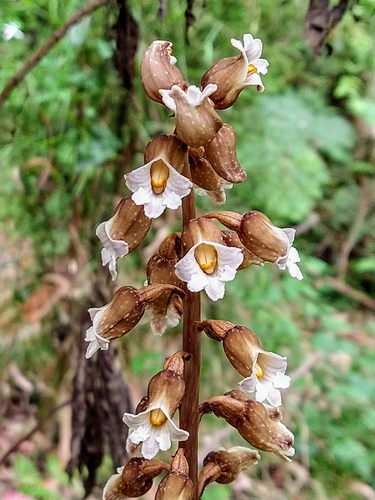
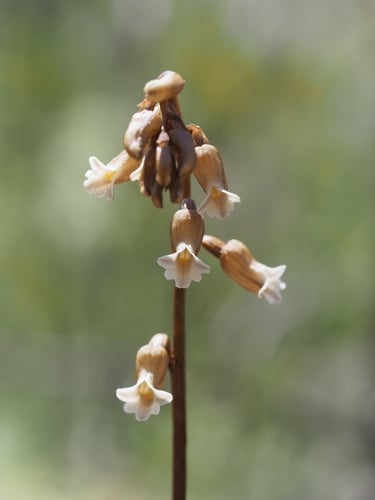
Himantoglossum robertianum
(Loisel.) P.Delforge
Barlia, Giant orchid
iNaturalist· cc-by-sa
(c) Nicholas Wei, some rights reserved (CC BY-SA), uploaded by Nicholas Wei
iNaturalist· cc-by-nc
(c) Pablo de la Nava, some rights reserved (CC BY-NC)
iNaturalist· cc-by-nc
(c) Rosa Chaves, some rights reserved (CC BY-NC)
Description
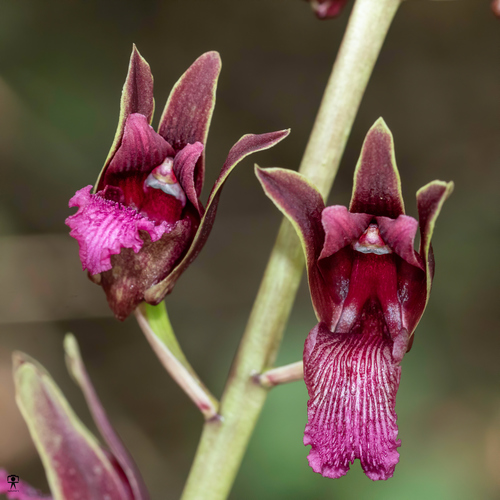
An orchid. It has 2 bulbs. It grows 25-80 cm tall. The leaves are narrowly oval and 25 cm long. They are in groups at the base of the stem. The flowers are reddish with purple spots.
Edible Uses
The bulb is the edible portion; it is traditionally washed, cut into pieces, roasted, and seasoned with salt and oil.
Traditional Uses
The bulb is washed and cut in pieces and roasted seasoned with salt and oil.
This uses section is brief — help expand it
Distribution
It is a Mediterranean climate plant.
Where It Grows
Africa, Europe, Italy, Mediterranean, Morocco, North Africa, Portugal, Sicily, Switzerland, Tunisia, Turkey, Türkiye,
Synonyms
Also Known As
Gadduzzi, Patatara, Patpatanak
References (6)
- Bircher, A. G. & Bircher, W. H., 2000, Encyclopedia of Fruit Trees and Edible Flowering Plants in Egypt and the Subtropics. AUC Press. p 54 (As Barlia longibracteata)
- Ertug, F., 2004, Wild Edible Plants of the Bodrum Area. (Mugla, Turkey). Turk. J. Bot. 28 (2004): 161-174 (As Barlia robertiana)
- Ertug, F, Yenen Bitkiler. Resimli Türkiye Florası -I- Flora of Turkey - Ethnobotany supplement (As Barlia robertiana)
- Geraci, A., et al, 2018, The wild taxa utilized as vegetables in Sicily (Italy): a traditional component of the Mediterranean diet. Journal of Ethnobiology and Ethnomedicine (2018) 14:14
- Lentini, F. and Venza, F., 2007, Wild food plants of popular use in Sicily. J Ethnobiol Ethnomedicine. 3: 15 (As Barlia robertiana)
Show all 6 references Hide references
- Pasta, S., et al, 2020, An Updated Checklist of the Sicilian Native Edible Plants: Preserving the Traditional Ecological Knowledge of Century-Old Agro-Pastoral Landscapes. Frontiers in Plant Science. Volume 11|Article 388 (As Barlia robertiana)