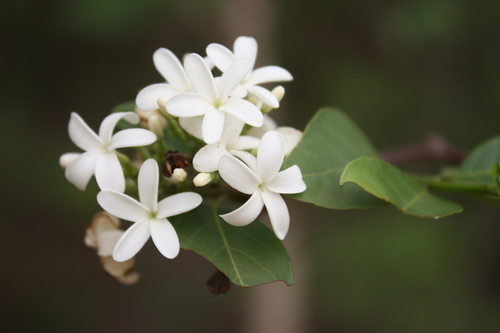
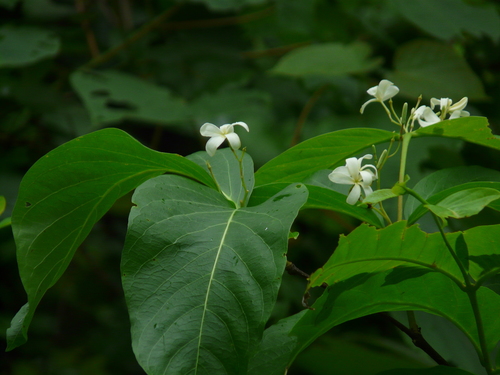
Thevetia ahouai
(L.) A. DC.
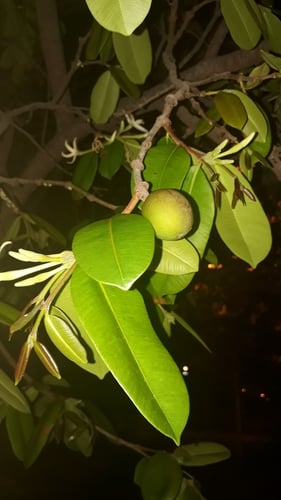
Chilindron
iNaturalist· cc-by-nc
(c) Carlos Galindo-Leal, some rights reserved (CC BY-NC), uploaded by Carlos Galindo-Leal
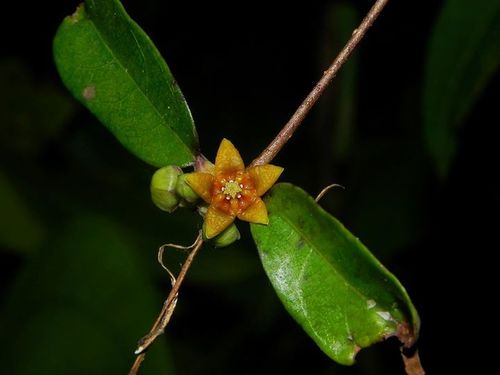
iNaturalist· cc-by-nc
(c) Leyla Cárdenas, some rights reserved (CC BY-NC), uploaded by Leyla Cárdenas
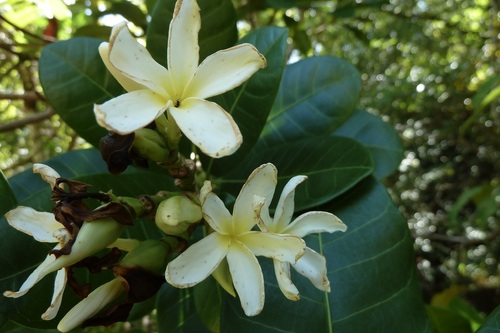
iNaturalist· cc-by-nc
(c) geomanuel, some rights reserved (CC BY-NC), uploaded by geomanuel
Summary
Source: WikipediaThevetia ahouai is a species of flowering plant in the family Apocynaceae, native to Mexico, Central America, Cuba, Colombia, and Venezuela, and introduced to southeastern China. An evergreen shrub or small tree of forests reaching 3 m (10 ft), it is used as a street tree in Nicaragua and Colombia.
Description
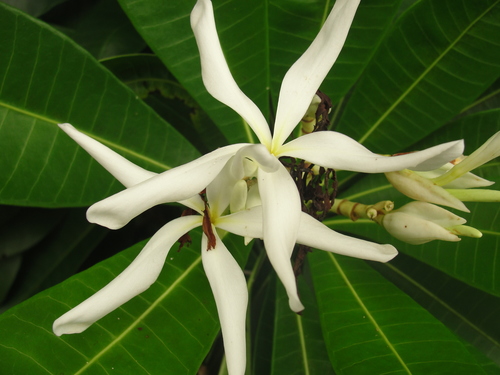
A bush or small tree. It grows 1-3 m tall. It has a short stem. The leaves are alternate and simple. They are narrow and long and 8-20 cm long by 3-7 cm wide. They are broadly oval and taper to the tip. They bunch towards the tip of the branches. All parts have lots of latex. There are many flowers in a group. They are yellow. The fruit are 3-5 cm across. They are red.
Edible Uses
The fruit pulp is eaten.
Traditional Uses
The pulp of the fruit is eaten. The sap and seeds are poisonous to animals.
This uses section is brief — help expand it
Medicinal Uses
The plant is cathartic, emetic and febrifuge. It is used for healing ulcers. The fruit is used as a purgative in the treatment of rheumatism and dropsy. The fruit is mixed with the stem-bark and used as a febrifuge.
Known Hazards
The sap and seeds are poisonous to animals.
Distribution
It is a tropical plant. It grows from sea level to 600 m altitude in Central America. It mostly grows along the edges of forests. It is in the humid lowlands.
Where It Grows
Asia, Belize, Brazil*, Central America, China, Colombia, Costa Rica, El Salvador, Guatemala, Honduras, Mexico, Nicaragua, North America, Panama, South America, Venezuela,
Production
Fruit occur at any time of the year.
Notes
There are about 10 Thevetia species.
Synonyms
Also Known As
Cojon be toro, Huevo de gato, Tomate del diablo
References (9)
- Chizmar Fernandez, C., et al, 2009, Plantas comestibles de Centroamerica. Instituto de Biodiversidad, Costa Rica. p 55
- Condit, R., et al, 2011, Trees of Panama and Costa Rica. PrincetonField Guides. p 74
- Grandtner, M. M., 2008, World Dictionary of Trees. Wood and Forest Science Department. Laval University, Quebec, Qc Canada. (Internet database http://www.wdt.qc.ca)
- Grandtner, M. M. & Chevrette, J., 2013, Dictionary of Trees, Volume 2: South America: Nomenclature, Taxonomy and Ecology. Academic Press p 663
- Hellmuth, N. M., 2011, Maya Ethnobotany. Complete Inventory of plants. Associacion FLAAR Mesoamerica. Tenth edition.
Show all 9 references Hide references
- Kermath, B. M., et al, 2014, Food Plants in the Americas: A survey of the domesticated, cultivated and wild plants used for Human food in North, Central and South America and the Caribbean. On line draft. p 865
- Lopez-Diago, D. & Garcia, N., 2021, Wild edible fruits of Colombia. Biota ColomBiana 22 (2) p 30
- Martin, F. W., et al, 1987, Perennial Edible Fruits of the Tropics. USDA Handbook 642 p 82 (As Ahouai nitida)
- Roa, J. A. G. & Boada, D. S. G., 2018, Fundación para el Fortalecimiento de la Fruticultura y Plantas Alimenticias no Convencionales en Colombia. (As Ahouai nitida)