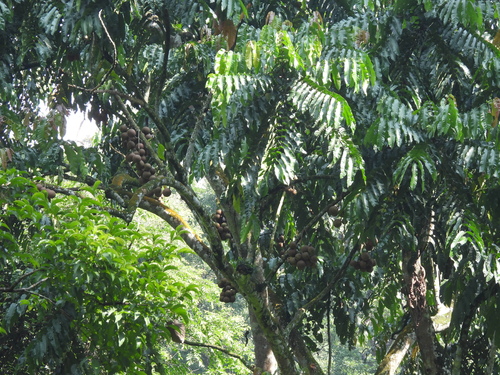
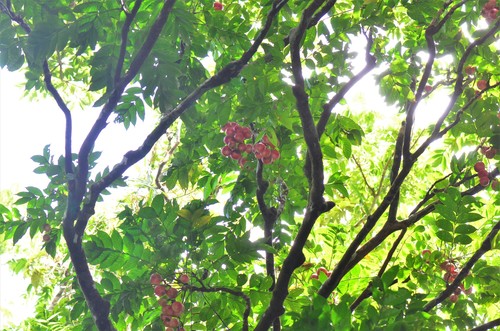
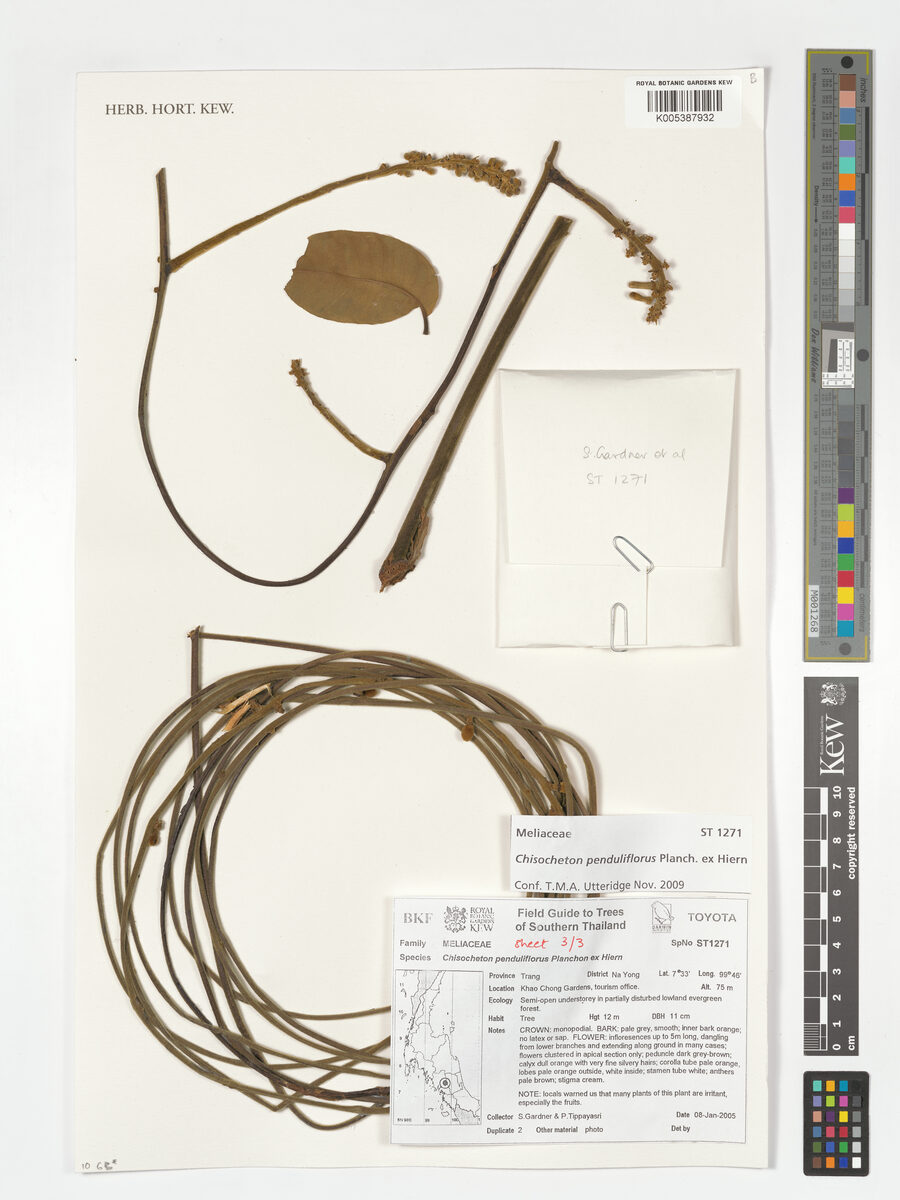
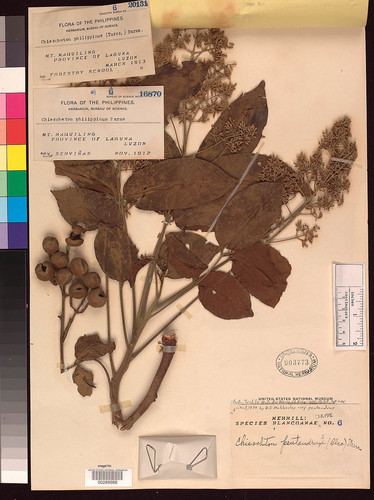
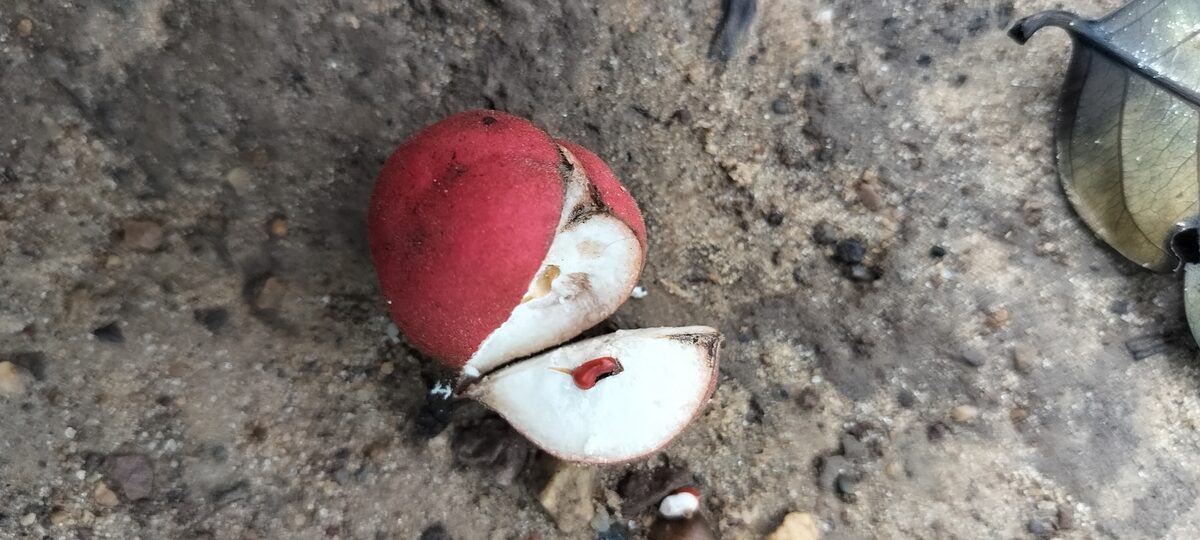
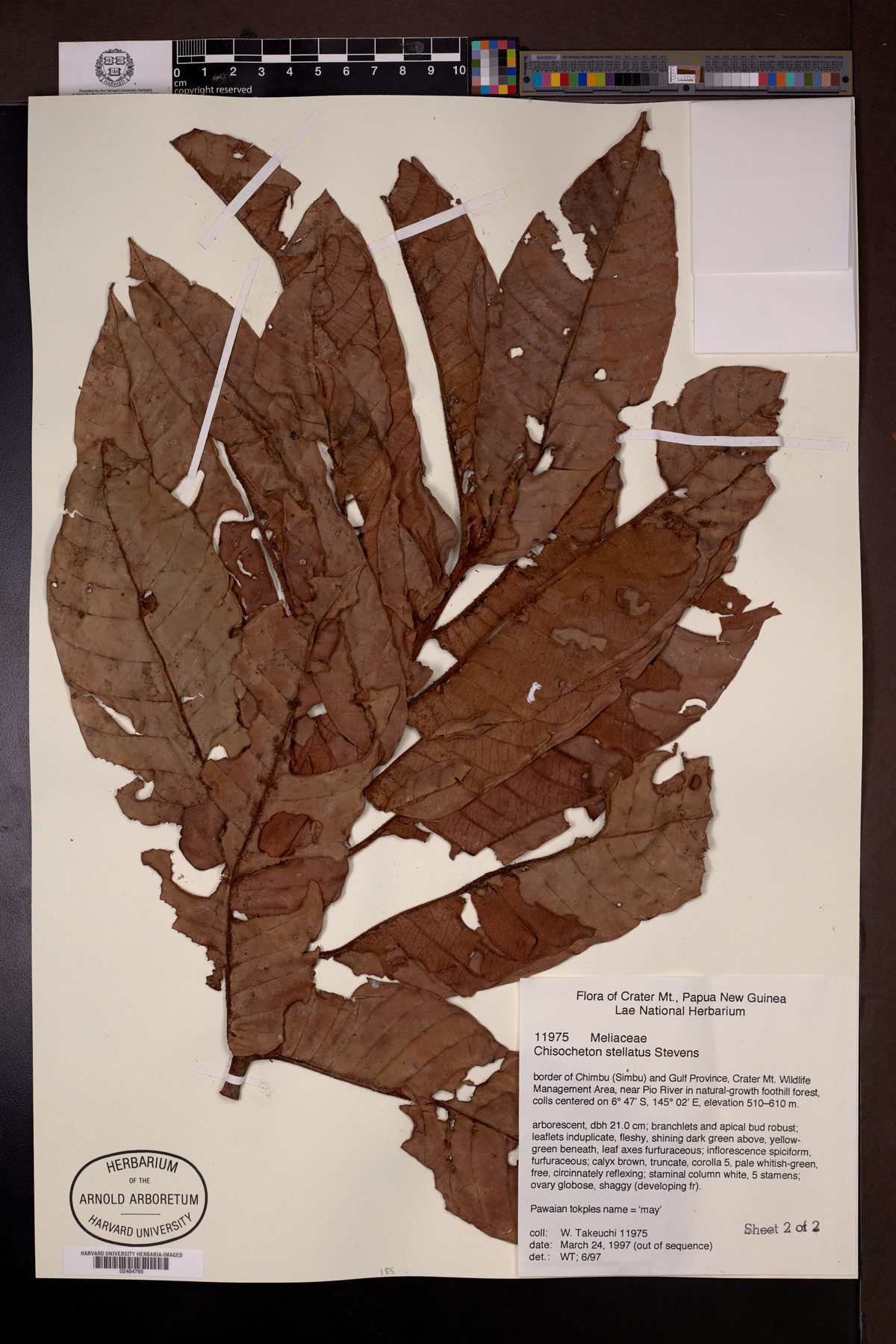
Chisocheton cumingianus
(C. DC.) Harms
Balukanag
iNaturalist· cc-by-nc
(c) Noopur Borawake, some rights reserved (CC BY-NC), uploaded by Noopur Borawake
iNaturalist· cc-by
(c) Jyotsna Nag, some rights reserved (CC BY)
Summary
Source: WikipediaChisocheton cumingianus is a tree in the family Meliaceae. The tree is named for the English naturalist Hugh Cuming. Habitat is rain forests from sea-level to 1,300 metres (4,300 ft) elevation. C. cumingianus is found from India and tropical China through Indochina and throughout Malaysia. In the Philippines, the seeds of C. cumingianus (known locally as balukanag) are used to make a non-drying oil either for traditional medicine or as fuel for oil lamps.
Description
A large tropical rainforest tree of the Meliaceae family that grows to 35 m tall with a buttressed trunk reaching 3 m in height. It is found from sea level to 1,300 m elevation.
Edible Uses
The fruit is eaten.
Medicinal Uses
Used medicinally.
Distribution
It is a tropical plant. It grows from rainforest from sea level to 1,300 m above sea level.
Where It Grows
Asia, Bangladesh, Bhutan, Cambodia, China, Himalayas, India, Laos, Malaysia, Myanmar, Northeastern India, Papua New Guinea, PNG, Philippines, SE Asia, Solomon Islands, Thailand, Vietnam,
Cultivation
A fast-growing tree. Natural regeneration is good.
Other Uses
The seeds yield a non-drying oil. Called catoseed oil, it is used for illumination. The white wood is soft. It is used for making furniture, wall panelling, plywood, boxes etc, and is suitable for the production of pulp for paper making.
Synonyms
References (1)
- World Checklist of Useful Plant Species 2020. Royal Botanic Gardens, Kew