Acanthophora spicifera
(Vahl) Borgesen
Spiny sea plant, Spiny weed, Soft spineweed
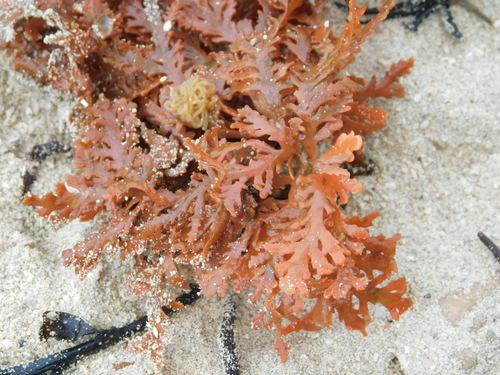
iNaturalist· cc-by-nc
(c) Alison Young, some rights reserved (CC BY-NC), uploaded by Alison Young
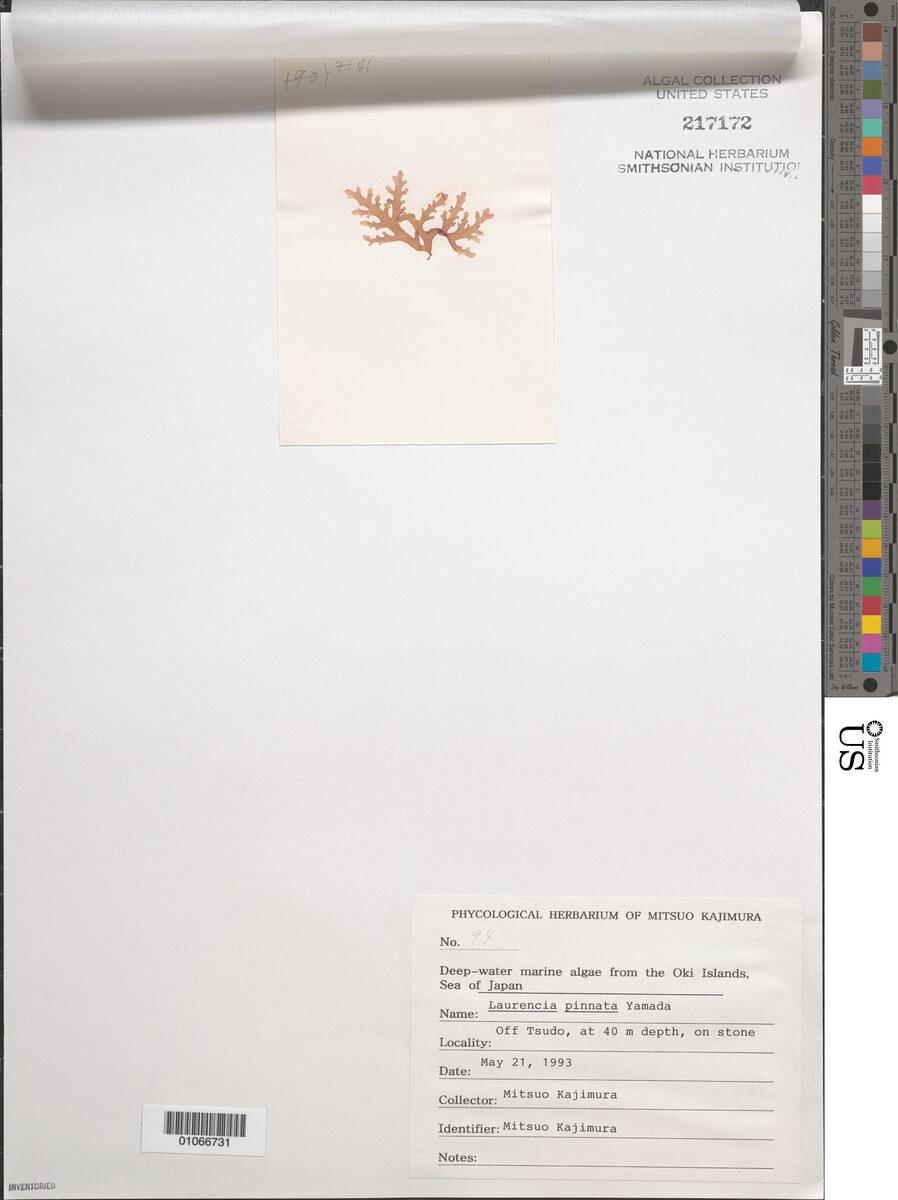
iNaturalist· cc-by-nc
(c) grinnin, some rights reserved (CC BY-NC)
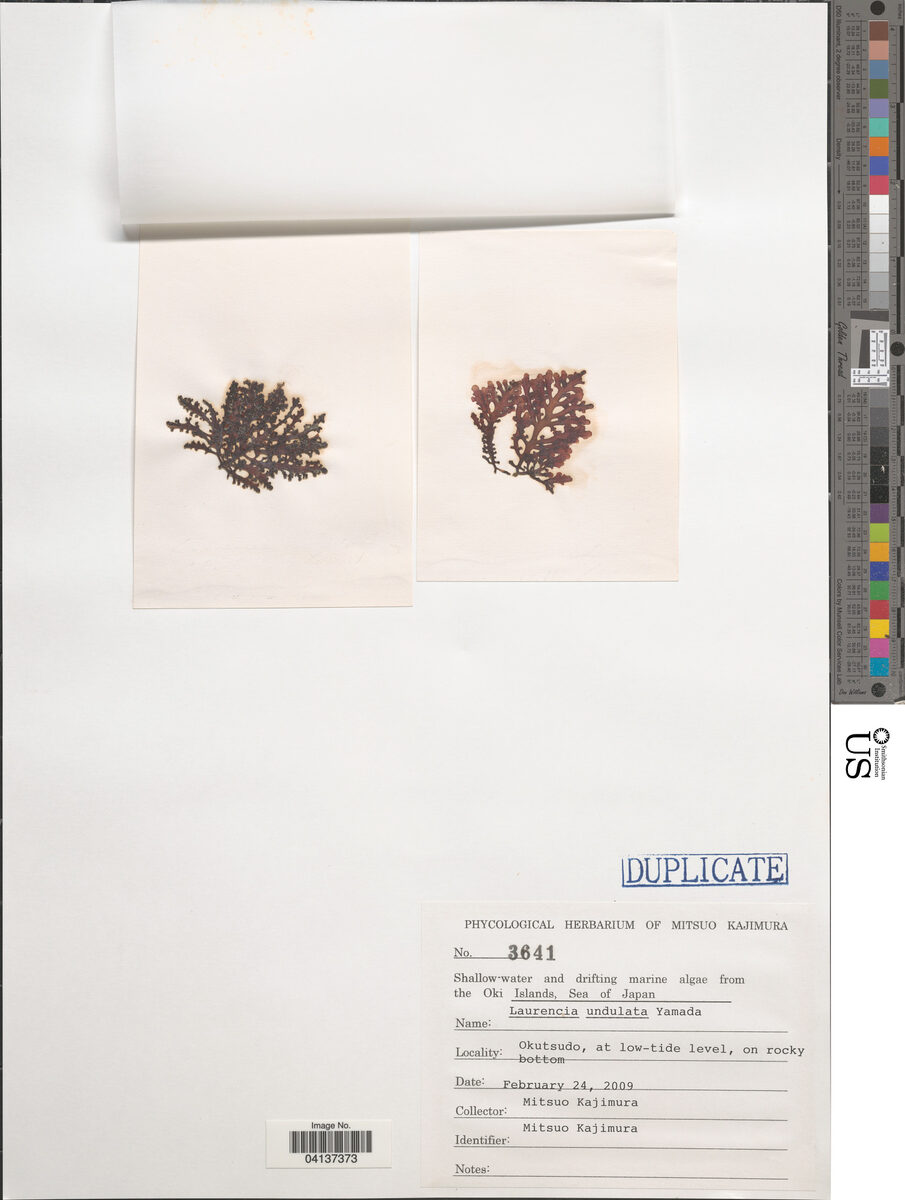
iNaturalist· cc-by-nc
(c) grinnin, some rights reserved (CC BY-NC)
Summary
Source: WikipediaAcanthophora spicifera is a species of marine red algae in the family Rhodomelaceae.
Description
A shrub or small tree. It grows 5 m tall. There are prickles along the stem. The leaves are twice divided and there are 8-18 pairs of pinnae. There are up to 50 pairs of pinnules on each pinnae. The flowers are yellow. They are in large clusters at the ends of branches. The pods are flattened.
Edible Uses
The fronds are eaten in salads and cooked as a vegetable.
Traditional Uses
It is eaten in salads and also cooked.
This uses section is brief — help expand it
Medicinal Uses
It has been proved by research workers that Acanthophora spicifera has significant cytotoxicity.
Distribution
A tropical plant. It grows along warm coasts. It grows in the lower intertidal zones on sheltered shores. It grows on reefs and tidal pools. It grows on atolls.
Where It Grows
Africa, Andamans, Angola, Asia, Australia, Bahran, Bangladesh, Brazil, Cameroon, Caribbean, China, Colombia, Cuba, Egypt, Eritrea, Fiji, FSM, Gabon, Guam, Guinea-Bissau, Hawaii, Hispaniola, India, Indochina, Indonesia, Japan, Kenya, Kiribati, Kuwait, Madagascar, Malaysia, Maldives, Mauritania, Mauritius, Mexico, Micronesia, Middle East, Mozambique, Myanmar, New Caledonia, Oman, Pacific, Pakistan, Palau, Papua New Guinea, PNG, Philippines, Reunion, Samoa, Sao Tome & Principe, Saudi Arabia, SE Asia, Senegal, Sierra Leone, Singapore, Solomon Islands, South Africa, Sri Lanka, Sudan, Taiwan, Tanzania, Thailand, Tonga, Vanuatu, Venezuela, Vietnam, Virgin Islands, West Indies, Yemen,
Other Information
It is a minor food.
Synonyms
Also Known As
Abu-abu, Bulung tombong bideng, Culot, Kirokiro, Lumi karokaro
References (16)
- Ambasta S.P. (Ed.), 2000, The Useful Plants of India. CSIR India. p 8
- Burkill, I.H., 1966, A Dictionary of the Economic Products of the Malay Peninsula. Ministry of Agriculture and Cooperatives, Kuala Lumpur, Malaysia. Vol 1 (A-H) p
- Cribb, A.B. & J.W., 1976, Wild Food in Australia, Fontana. p 196
- Cribb, A.B., 1996, Seaweeds of Queensland A Naturalist's Guide. The Queensland Naturalists' Club Handbook No. 2. p 65
- http://www.seavegetables.com
Show all 16 references Hide references
- Kiple, K.F. & Ornelas, K.C., (eds), 2000, The Cambridge World History of Food. CUP p 236
- Millar, A. J., et al, 1999, Annotated and Illustrated Survey of the Marine Macroalgae from Motupore Island and Vicinity (Port Moresby area, Papua New Guinea). 111. Rhodophyta. Australian Systematic Botany 12, 549-591
- Novaczek, I., 2001, A Guide to the Common Edible and Medicinal Plants of the Pacific Islands. SPC. p 1
- Siemonsma, J. S. & Kasem Piluek, eds. 1993. Vegetables. In: Plant Resources of South-East Asia (PROSEA) 8:311.
- South, G. R., 1993, Edible Seaweeds of Fiji: An Ethnobotanical Study. Botabica Marina. Vol. 36 pp 335-349
- Velasquez, G.T., 1972, Studies and utilization of the Philippine marine algae. In Proceedings of the Seventh International Seaweed Symposium, ed. K Nisizawa, 62-5. New York.
- Wang, Wei-Lung and Chiang, Young-Meng, 1994, Potential Economic Seaweeds of Hengchun Peninsula, Taiwan, Economic Botany, Vol. 48, No. 2, pp. 182-189
- Womersley, H.B. S. & Bailey, A., 1970, Marine algae of the Solomon Islands. Philosophical Transactions of the Royal Society of London. B. Biological Sciences 259:257-352
- World Checklist of Useful Plant Species 2020. Royal Botanic Gardens, Kew
- Xia, B., and Abbott, I.A., 1987, Edible seaweeds of China and their place in the Chinese diet. Economic Botany 41:341-53
- Zemke-White, W. L. & Ohno, M., 1999, World seaweed utilisation: An end-of-century summary. Journal of Applied Phycology 11: 369-376