Capparis flexuosa
(L.) L.
Bay-leaved caper
iNaturalist· cc-by-nc
(c) antoniobulnes, some rights reserved (CC BY-NC)
iNaturalist· cc-by-nc
(c) antoniobulnes, some rights reserved (CC BY-NC)
iNaturalist· cc-by-nc
(c) antoniobulnes, some rights reserved (CC BY-NC)
Description
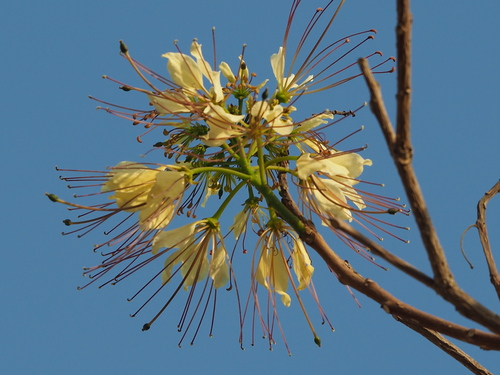
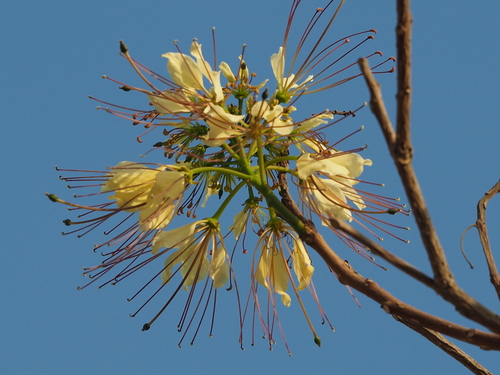
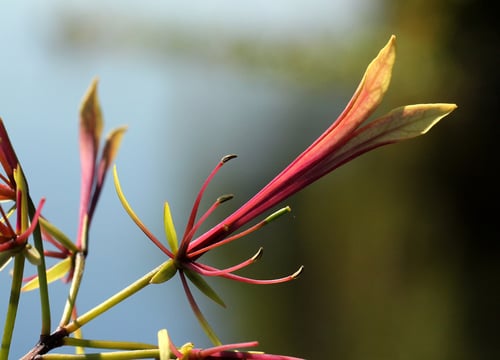
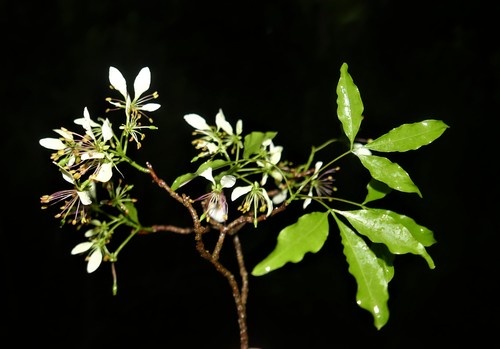
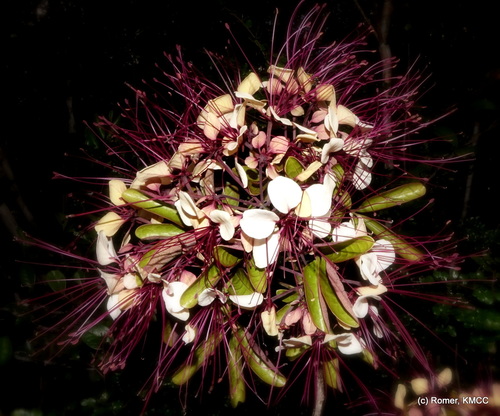
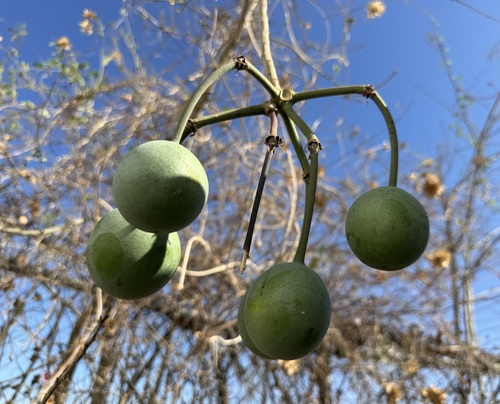
A woody shrub that can be scrambling. It is much branched from the base. Stem can be 2-10 m long. The branches hang down. They are smooth and light brown and 20 cm across at the base. The leaves are alternate and 4-10 cm long by 2-3 cm wide. They are narrowly oblong. The edges curl back. They are yellowish green on the top surface and pale green underneath. The flowers come out at night and have a scent. They are in clusters at the ends of branches. They are yellowish green. The fruit are cylinder shaped fleshy follicles. They are 6-8 cm long. The seeds are 1 cm long with a white fleshy covering.
Edible Uses
The flower buds are used like capers, and the fruit is eaten.
Traditional Uses
The flower buds are used like caper.
This uses section is brief — help expand it
Medicinal Uses
The flowers are used as a flavouring.
Distribution
It is a tropical plant. It grows in coastal forests and on limestone.
Where It Grows
Antilles, Argentina, Belize, Brazil, Central America*, Costa Rica, Cuba, Curacao, Dominican Republic, Ecuador, El Salvador, Guadeloupe, Guatemala, Guianas, Haiti, Honduras, Mexico*, Panama, Nicaragua, North America, Paraguay, Puerto Rico, South America, Suriname, USA, Venezuela, Virgin Islands, West Indies*,
Production
In Central America it flowers March to October and fruits August and September.
Notes
There are about 250 Capparis species. There are about 50 Capparis species in tropical America. Also as Capparidaceae.
Synonyms
Also Known As
Black witty, Bottle wiss, Burro, Feijao de boi, Goat wiss, Hurihuri, Limber caper, Palawang, Palinguam, Palo de burro
References (8)
- Bircher, A. G. & Bircher, W. H., 2000, Encyclopedia of Fruit Trees and Edible Flowering Plants in Egypt and the Subtropics. AUC Press. p 81 (As Capparis saligna)
- Ekman Herbarium records Haiti (As Capparis fluxuosa)
- Grandtner, M. M., 2008, World Dictionary of Trees. Wood and Forest Science Department. Laval University, Quebec, Qc Canada. (Internet database http://www.WDT.QC.ca)
- Grandtner, M. M. & Chevrette, J., 2013, Dictionary of Trees, Volume 2: South America: Nomenclature, Taxonomy and Ecology. Academic Press p 97
- Nascimento, V. T. D., et al, 2013, Knowledge and Use of Wild Food Plants in Areas of Dry Seasonal Forests in Brazil. Ecology of Food and Nutrition, 52:317–343
Show all 8 references Hide references
- Plants of Haiti Smithsonian Institute http://botany.si.edu
- Scarpa, G. F., 2009, Wild food plants used by the indigenous peoples of South American Gran Chaco: A general synopsis and intercultural comparison. Journal of Applied Botany and Food Quality 83:90-101
- www.theplantlist.org