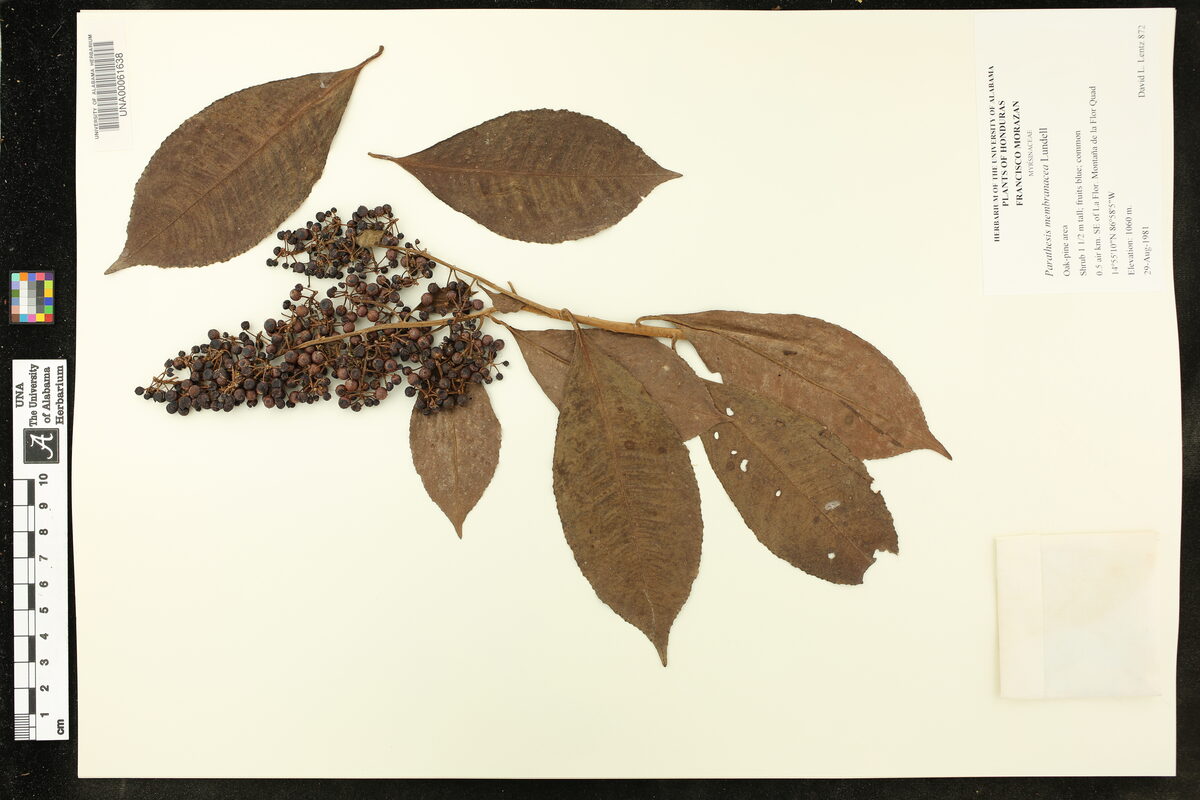
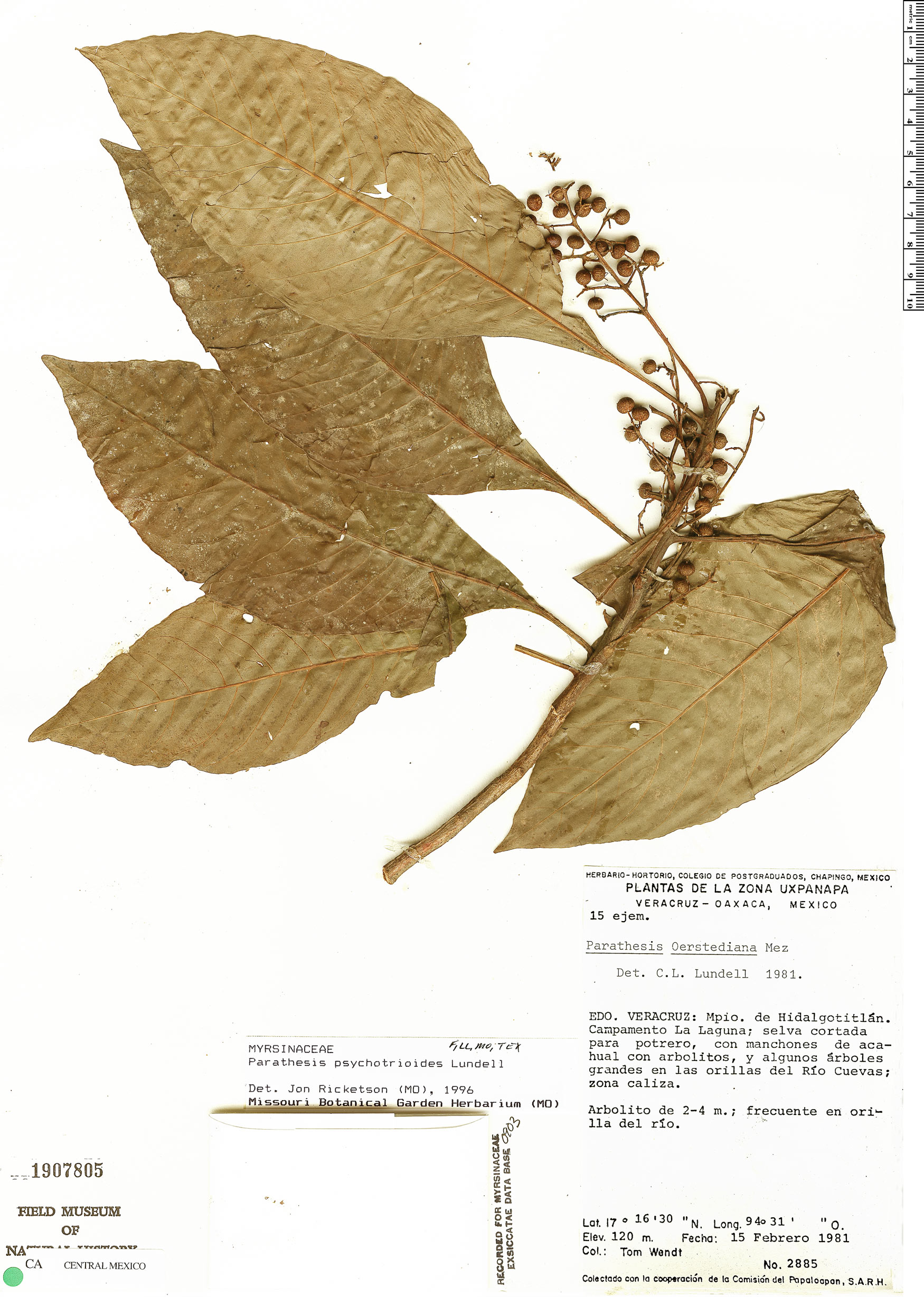
Clavija costaricana
Pittier
Musola
iNaturalist· cc-by-nc
(c) zunigasm, some rights reserved (CC BY-NC)
iNaturalist· cc-by
(c) Vargas Alisson, some rights reserved (CC BY)
iNaturalist· cc-by
(c) Vargas Alisson, some rights reserved (CC BY)
Description
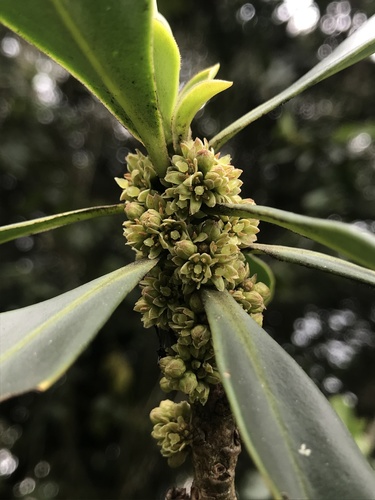
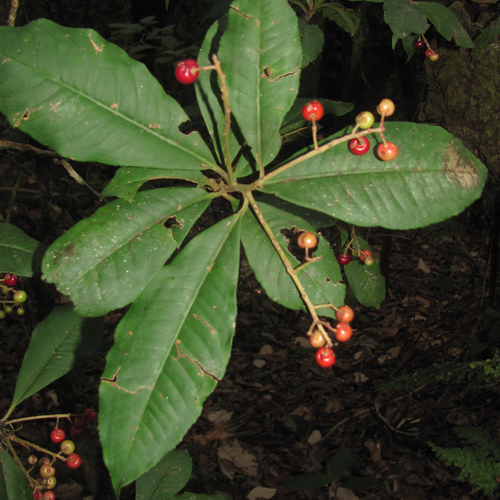
A shrub or small tree. It grows 4 m tall. It has few branches. The stem is stout and has clusters of old leaf scars up the stem. The leaves are alternate in tight spirals at the top of the stem. The leaves are 0.3-1.2 m long by 8-23 cm wide. They are narrowly sword shaped and widest at the top. They taper gradually to the base. The flowers are orange to red. They are 1 cm wide. The flowers are in long dangling clusters. The fruit is hard and fleshy and bright orange. They are 2-4.5 cm wide. They are white inside and have 2-20 seeds. These have an orange to white coating.
Edible Uses
The fruit is eaten.
Distribution
It is a tropical plant. It grows in moist to wet forests. It grows from sea level to 1,100 m above sea level.
Where It Grows
Central America, Costa Rica,
Production
Plants fruit all year round.
Notes
It has also been put in the family Theophrastaceae.
References (3)
- Castaneda, H., & Stepp, J. R., 2007, Ecosystems as Sources of Useful Plants for the Guaymi People of Costa Rica. Ethnobotany Journal. 5:249-257
- Gargiullia, M., et al, A Field Guide to Plants of Costa Rica.
- Langlois, H. C., 2004, Ethnobotanical analysis of different successional stages as sources of wild edible plants for the Guaymi people in Costa Rica. M. Sc. thesis University of Florida.