Cyphostemma adenocaule
(Steud. ex A. Rich.) Desc. ex Wild & Drummond
Aserkush
iNaturalist· cc-by-nc
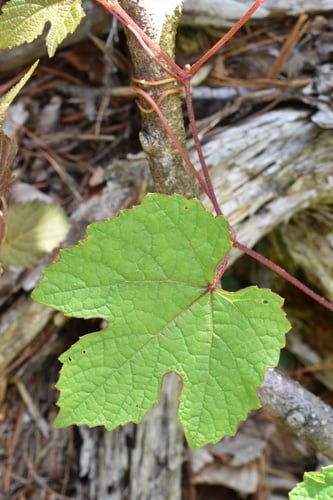
(c) niyigaba, some rights reserved (CC BY-NC)
iNaturalist· cc-by-nc
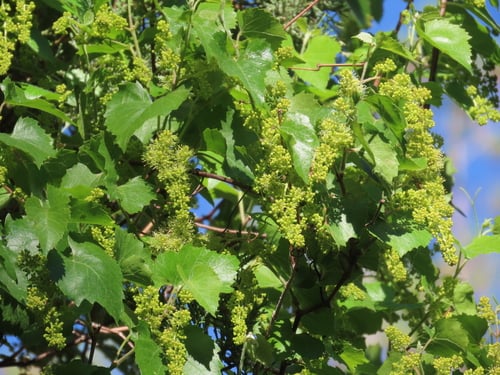
(c) Judy Flatt, some rights reserved (CC BY-NC)
iNaturalist· cc-by-nc
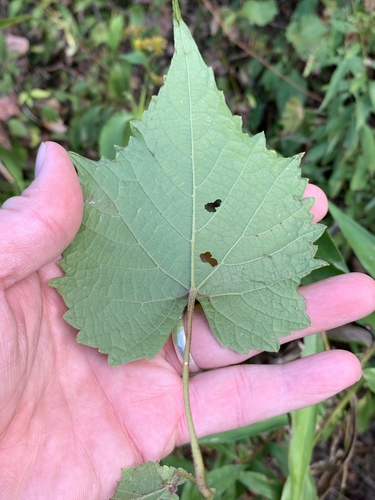
(c) Judy Flatt, some rights reserved (CC BY-NC)
Description
A climbing herb. It has annual stems from a swollen rootstock. It can climb 7.5 m high. The flowers are pink to red. They can be white, green or yellow. The fruit are red to black. They are oval and 6-8 mm long by 4-6 mm wide.
Edible Uses
The leaves are cooked as a vegetable and in soups, with a sour taste. The fruit are acid and eaten raw or in soups. The roots are boiled and eaten fresh, or sliced, dried, and stored for 1-2 months. The stems are cut to release drinking water.
Traditional Uses
The leaves are cooked and used as a vegetable and in soups. They taste sour. The stems are cut to release drinking water. The fruit are acid and eaten and used in soups. The roots are boiled and eaten. They are also sliced and dried and stored. They can be stored for 1-2 months.
Medicinal Uses
The leaves are chewed as a remedy for a sore throat, whilst the macerated leaves are mixed with honey as a cough treatment. An infusion of the leaves is taken as a purgative and to treat swollen abdomen. The leaf sap is used to cure ophthalmia, and is also applied to cuts. Heated over a fire, the leaves are applied as a compress to reduce swellings and to the chest to cure pneumonia. The roots contain tannins and are astringent. They are macerated and used as a treatment for tapeworms. The root has been used to treat malaria. Water in which roots have been boiled is drunk to treat syphilis, abdominal pain (related to pregnancy or not) and to prevent abortion. A paste made of the roots is applied topically to draw abscesses and reduce swellings. Root and leaf are prescribed against diarrhoea with blood.
Distribution
It is a tropical plant. It grows in savannah in West Africa. It grows between sea level and 2,280 m above sea level. It can grow in arid places.
Where It Grows
Africa, Angola, Benin, Burkina Faso, Central Africa, Congo DR, Côte d'Ivoire, East Africa, Eritrea, Ethiopia, Ghana, Guinea, Guinée, Guinea-Bissau, Ivory Coast, Kenya, Malawi, Mali, Mozambique, Nigeria, Rwanda, Senegal, Sierra Leone, Somalia, Tanzania, Uganda, West Africa,
Other Uses
A fibre obtained from the bark is used to make string. Leaves crushed in water are used as an insecticide against chicken lice. Field tests were carried out in Uganda using the plant as a trap crop for Taylorilygus vosseleri, an insect pest of cotton. When treated with insecticide to prevent the development of large populations of the pest, Cyphostemma adenocaule gave considerable protection to the cotton crop. The dried stems are used for hut building.
Notes
They are tropical plants.
Synonyms
Also Known As
Agana, Anaya, Anunu, Awuliakongo, Ayaka, Bombeye, Deda ako, Emorosi, Emoross, Gnainrisse angbaman, Gobia, Inkorodo, Mendengele, Mtoromola, Mubata mukundo, Mwengele, Nimos, Nimus, Okoto, Ombeye, Tiyankwounti, Umushaariita
References (23)
- Achigan-Dako, E, et al (Eds), 2009, Catalogue of Traditional Vegetables in Benin. International Foundation for Science.
- Asfaw, Z., Conservation and use of traditional vegetables in Ethiopia. FAO
- Asfaw, Z. and Tadesse, M., 2001, Prospects for Sustainable Use and Development of Wild Food Plants in Ethiopia. Economic Botany, Vol. 55, No. 1, pp. 47-62
- Bonou, A., et al, 2013, Valeur economique des Produits Forestiers Non Ligneux (PFNL) au Benin. Editions Universitaires Europeennes p 93
- Burkill, H. M., 1985, The useful plants of west tropical Africa, Vol. 2. Kew.
Show all 23 references Hide references
- Dansi, A., et al, 2008, Traditional leafy vegetables and their use in the Benin Republic. Genet Resour Crop Evol (2008) 55:1239–1256
- East African Herbarium records, 1981,
- Goode, P., 1989, Edible Plants of Uganda. FAO p 30
- Goode, P., 1989, Edible Plants of Uganda. FAO p 36
- Grubben, G. J. H. and Denton, O. A. (eds), 2004, Plant Resources of Tropical Africa 2. Vegetables. PROTA, Wageningen, Netherlands. p 279
- Lulekal, E., et al, 2011, Wild edible plants in Ethiopia: a review on their potential to combat food insecurity. Afrika Focus - Vol. 24, No 2. pp 71-121
- Masters, T., 2021, Traditional food plants of the upper Aswa River catchment of northern Uganda—a cultural crossroads. Journal of Ethnobiology and Ethnomedicine (2021) 17:24
- Mutie, F. G., 2020, Conservation of Wild Food Plants and Their Potential for Combatting Food Insecurity in Kenya as Exemplified by the Drylands of Kitui County. Plants 2020, 9, 1017
- Mutie, F. M., et al, 2023, Important Medicinal and Food Taxa (Orders and Families) in Kenya, Based on Three Quantitative Approaches. Plants 2023, 12, 1145
- Ojelel, S. & Kakudidi, E. K., 2015, Wild edible plant species utilized by a subsistence farming community in the Obalanga sub-county, Amuria district, Uganda. Journal of Ethnobiology and Ethnomedicine. 11:7
- Peters, C. R., O'Brien, E. M., and Drummond, R.B., 1992, Edible Wild plants of Sub-saharan Africa. Kew. p 201
- Royal Botanic Gardens, Kew (1999). Survey of Economic Plants for Arid and Semi-Arid Lands (SEPASAL) database. Published on the Internet; http://www.rbgkew.org.uk/ceb/sepasal/internet [Accessed 13th June 2011]
- Segnon, A. C. and Achigan-Dako, E. G., 2014, Comparative analysis of diversity and utilization of edible plants in arid and semi-arid areas in Benin. Journal of Ethnobiology and Ethnomedicine. 10:80
- Shumsky, S., et al, 2014, Institutional factors affecting wild edible plant (WEP) harvest and consumption in semi-arid Kenya. Land Use Policy 38(2014) 48-69
- Shumsky, S., et al, 2014, Understanding the contribution of wild edible plants to rural social- ecological resilience in semi-arid Kenya. Ecology and Society 19(4): 34
- Teklehaymanot, T., and Mirutse Giday, M., 2010, Ethnobotanical study of wild edible plants of Kara and Kwego semi-pastoralist people in Lower Omo River Valley, Debub Omo Zone, SNNPR, Ethiopia Journal of Ethnobiology and Ethnomedicine 2010, 6:23
- Termote, C., et al, 2011, Eating from the wild: Turumbu, Mbole and Bali traditional knowledge of non-cultivated edible plants, District Tshopo, DRCongo, Gen Resourc Crop Evol. 58:585-618
- World Checklist of Useful Plant Species 2020. Royal Botanic Gardens, Kew