Byttneria catalpifolia subsp. africana
Jacq., (Mast.) Exell & Mendonca
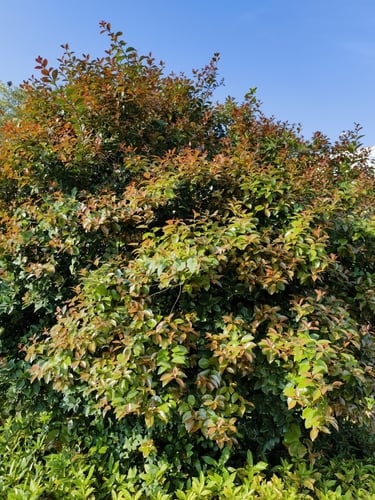
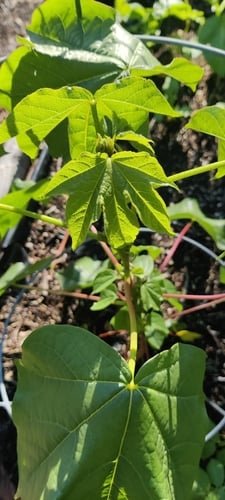
iNaturalist· cc-by-nc
(c) Sébastien SANT, some rights reserved (CC BY-NC), uploaded by Sébastien SANT
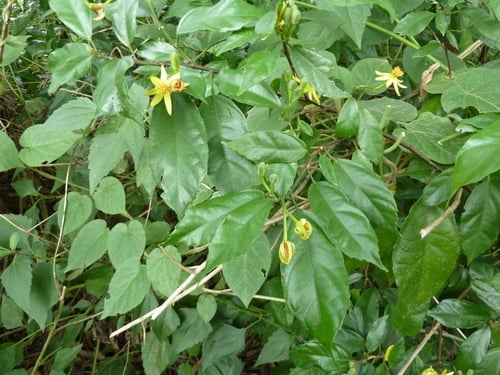
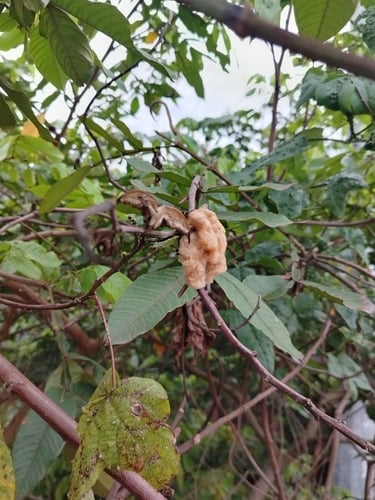
iNaturalist· cc-by-nc
(c) Jan Meerman, some rights reserved (CC BY-NC), uploaded by Jan Meerman
Description
A shrub or woody creeper. It has long thick trailing stems. They can be 15 m long. The leaves are slightly hairy. The flowers are white and have a scent. The fruit are rounded capsules 2-4 cm long by 3 cm wide. They have spines 4-15 mm long.
Edible Uses
The stem water and sap are consumed.
Distribution
It is a tropical plant. It grows in the forest between 900-1.100 m above sea level.
Where It Grows
Africa, Angola, Benin, Cameroon, Central Africa, Central African Republic, CAR, Congo DR, Côte d'Ivoire, East Africa, Gabon, Ghana, Ivory Coast, Liberia, Nigeria, Sudan, Togo, Uganda, West Africa,
Production
The stem can be cut to yield large amounts of water.
Notes
There are 130-140 Byttneria species. Also put in the family Sterculiaceae.
Synonyms
Also Known As
Ekwo, Samangoro, Sukuruwa
References (4)
- Burkill, H. M., 1985, The Useful Plants of West Africa. Vol 5.
- Dalziel, J. M., 1937, The Useful plants of west tropical Africa. Crown Agents for the Colonies London. (As Buettneria africana)
- FAO Corporate Document Repository. The Major Significance of 'Minor' Forest Products. Appendix 4
- Peters, C. R., O'Brien, E. M., and Drummond, R.B., 1992, Edible Wild plants of Sub-saharan Africa. Kew. p 187