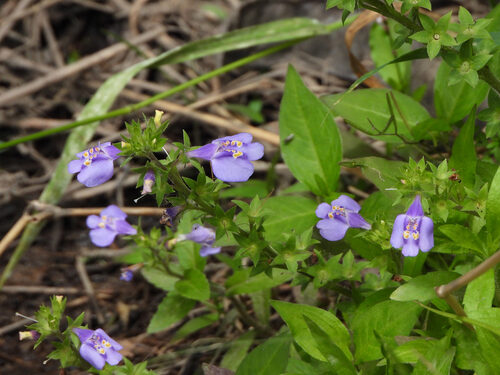
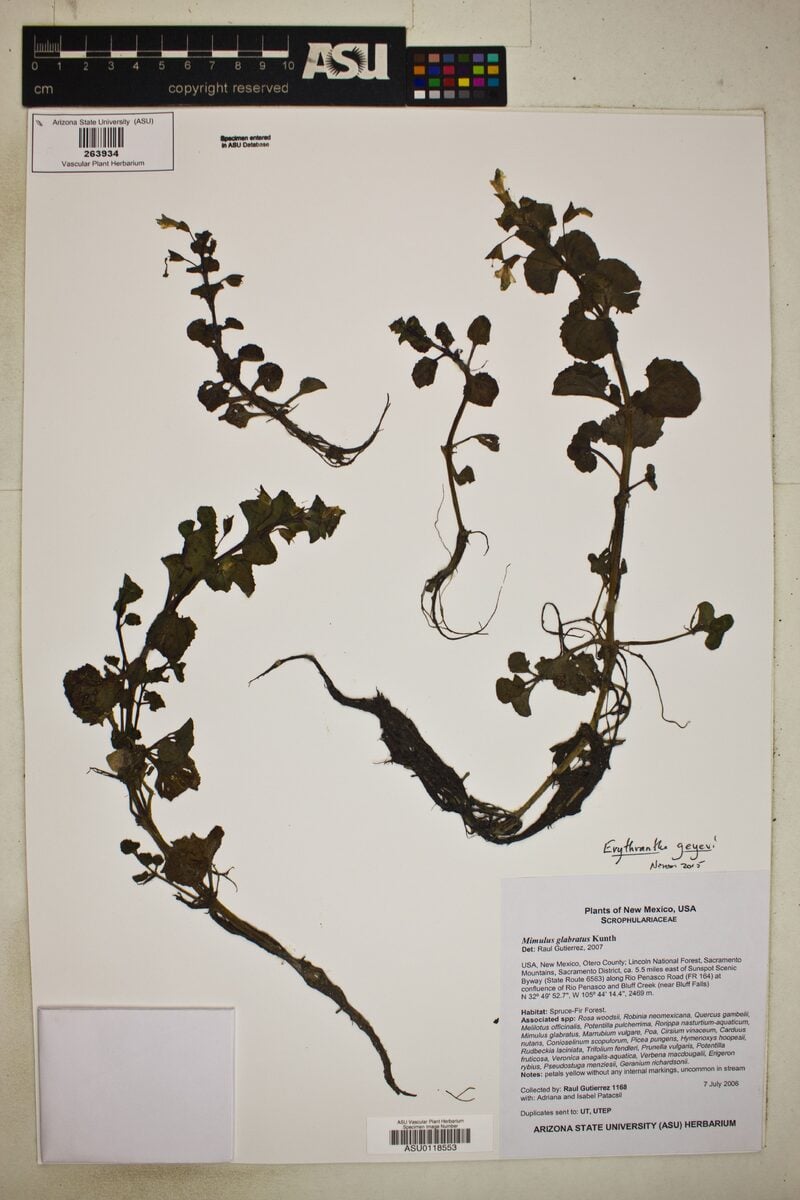
Cycnium tubulosum
(L. f.) Engl.
Vlei ink-flower
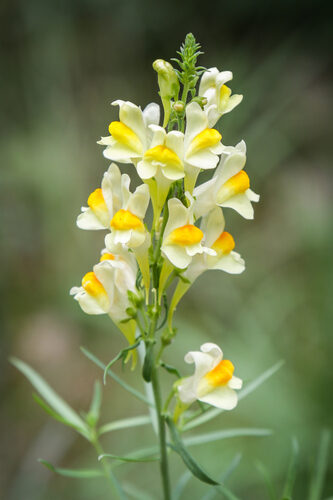
iNaturalist· cc-by-nc-nd
(c) Joachim Louis, some rights reserved (CC BY-NC-ND), uploaded by Joachim Louis
iNaturalist· cc-by-nc
(c) Jonathan Newman, some rights reserved (CC BY-NC)
iNaturalist· cc-by-nc
(c) Jonathan Newman, some rights reserved (CC BY-NC)
Summary
Source: WikipediaCycnium tubulosum, also known as the vlei ink-flower and the tissue paper flower, is a slender hemiparasitic perennial plant of the broomrape family. Its range includes much of southern and eastern Africa, from South Africa to Ethiopia, including Madagascar. It has creeping, straggling or upright stems, with few narrow, entire leaves and erect, white or pinkish, slightly zygomorph flowers on a long tube, with five lobes, reminiscent of a Phlox-flower. It may not always be fully dependent on the supply of minerals by other plants, but usually makes connections with the roots of grasses. It can be found in moist, short grasslands, reaching altitudes of about 1,550 m (5,090 ft). Its conservation status in South-Africa is "least concern".
Description
A herb that can be erect or straggling. It has a woody tuberous rhizome. It can grow partly by feeding on grass roots. The stems are 5-40 cm long. The leaves are 7 cm long. They are narrowly oval. They can have teeth or lobes. The flowers are pink, white or mauve. They have a sweet scent. The flowers can occur singly. The fruit is a capsule 5-15 mm long. It has wings.
Edible Uses
The rhizome and root are edible, though caution should be exercised.
Distribution
It is a tropical plant. It grows on damp meadows. It also grows in swamps and river banks and in water up to 1 m deep. It can grow up to 1,540 m altitude.
Where It Grows
Africa, Angola, Botswana, Burkina Faso, Central Africa, East Africa, Madagascar, Malawi, Mozambique, Namibia, South Africa, Southern Africa, Sudan, West Africa, Zambia, Zimbabwe,
Synonyms
Also Known As
Motshe-wabadimo
References (6)
- East African Herbarium records, 1981,
- Flora Zambesiaca. http://apps.kew.org/efloras
- Fowler, D. G., 2007, Zambian Plants: Their Vernacular Names and Uses. Kew. p 60
- Peters, C. R., O'Brien, E. M., and Drummond, R.B., 1992, Edible Wild plants of Sub-saharan Africa. Kew. p 185
- Pickering, H., & Roe, E., 2009, Wild Flowers of the Victoria Falls Area. Helen Pickering, London. p 106
Show all 6 references Hide references
- Roodt, V., 1998, Common Wild Flowers of the Okavango Delta. Medicinal Uses and Nutritional value. The Shell Field Guide Series: Part 2. Shell Botswana. p 145