Adenia volkensii
Harms
iNaturalist· cc-by-nc
(c) koenbetjes, some rights reserved (CC BY-NC), uploaded by koenbetjes
iNaturalist· cc-by-nc
(c) andreaudzungwa, some rights reserved (CC BY-NC)
Description
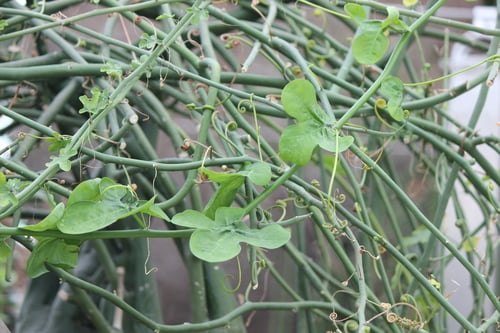
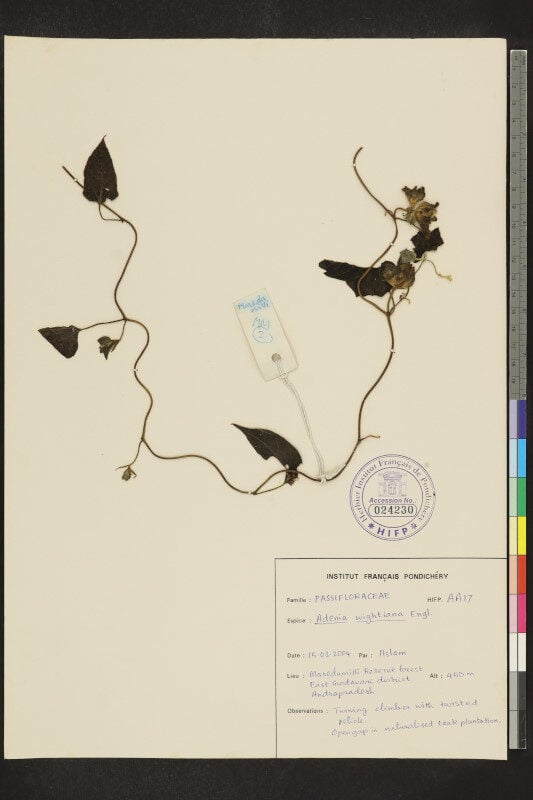
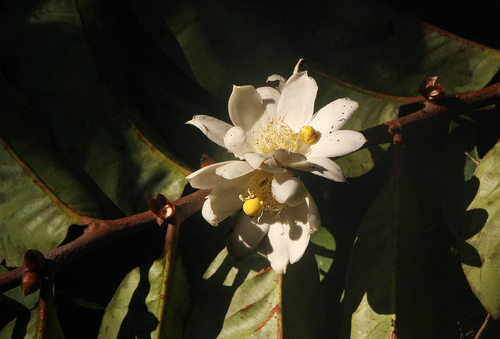
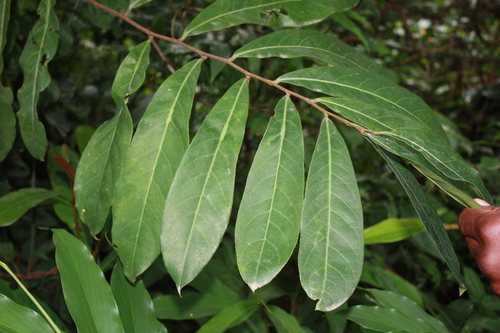
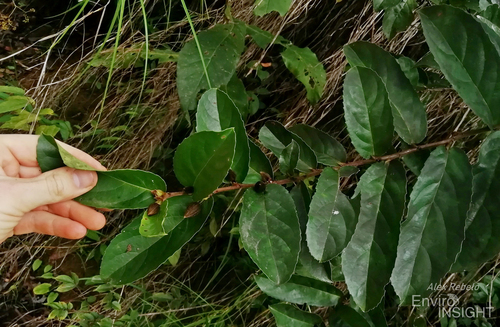
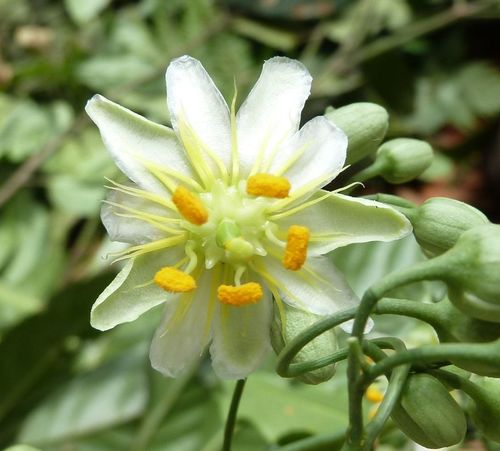
A herb or small shrub. It is a climber. It grows 1.5 m high. It has a rootstock that can be 5.5 cm across. The leaves can be deeply divided. The flowers are cream.
Edible Uses
The fruit are eaten cooked, and the leaves are used as a flavoring in relishes and chutneys.
Traditional Uses
The fruit are eaten cooked. The leaves are used as a flavouring in relishes and chutneys. Caution: Fruit and roots can be poisonous.
This uses section is brief — help expand it
Medicinal Uses
A leaf decoction is taken orally to treat bronchitis, coughs and fever, or is used as a purgative enema. The pounded seeds are given in enema form as a diuretic. A few drops of sap are sucked from a piece of twig or stem to treat gonorrhoea. This should be done with extreme care; larger amounts are very poisonous. Powder of the roasted rootstock is taken to treat coughs, colds and pneumonia, and is combined with milk to treat stomach-ache and internal swellings. The most important active ingredient is volkensin - this is a potent inhibitor of eukaryotic protein synthesis in whole cells as well as in cell-free systems. The inhibitory activity is a function of the A subunit; the B subunit has a lectin function and allows the protein to pass the intact cell membrane. Volkensin is one of the most lethal double-chain ribosome-inactivating and ricin-like toxins. Chemically, it resembles most closely modeccin, the toxin of Adenia digitata. It causes neuron death not only at the injection site, but it is also transported between neurons. Possibilities have also been studied of selectively killing mononuclear macrophages, the cells in which the HIV virus survives and which transfer it to T-cells in which the virus is rapidly multiplied resulting in the development of Aids. All parts of the plant, even the flowers, contain cyanogenic glycosides, with the rootstock accounting for about 90% of the amount of these compounds. The cyanogenic glycosides isolated are tetraphyllin B (barterin) and its epimer epi-tetraphyllin B (volkenin).
Known Hazards
The fruit and roots can be poisonous.
Distribution
It is a tropical plant. It grows between 900-1,750 m above sea level. It can grow in arid places. It suits well-drained soil.
Where It Grows
Africa, East Africa, Kenya, Malawi, Somalia, Tanzania,
Cultivation
It can be grown from seeds or cuttings.
Propagation
Seed - Cuttings. Fairly easy, but the resultant plants do not always form the swollen stems found in seed-grown material.
Notes
There are 95 Adenia species. They are common in the semiarid regions of Africa.
Also Known As
Gakiri, Loarakimak
References (5)
- Morgan, W. T. W., 1981, Ethnobotany of the Turkana: Use of plants by a Pastoral People and Their Livestock in Kenya. Economic Botany 35(1):96-130
- Mutie, F. M., et al, 2023, Important Medicinal and Food Taxa (Orders and Families) in Kenya, Based on Three Quantitative Approaches. Plants 2023, 12, 1145
- Peters, C. R., O'Brien, E. M., and Drummond, R.B., 1992, Edible Wild plants of Sub-saharan Africa. Kew. p 159
- Royal Botanic Gardens, Kew (1999). Survey of Economic Plants for Arid and Semi-Arid Lands (SEPASAL) database. Published on the Internet; http://www.rbgkew.org.uk/ceb/sepasal/internet [Accessed 5th May 2011]
- World Checklist of Useful Plant Species 2020. Royal Botanic Gardens, Kew