Trichilia monadelpha
(Thonn.) J. J. De Wilde
gbif· cc-by-sa
Saint Fédriche NDZAI
gbif· cc-by-sa
Saint Fédriche NDZAI
Description
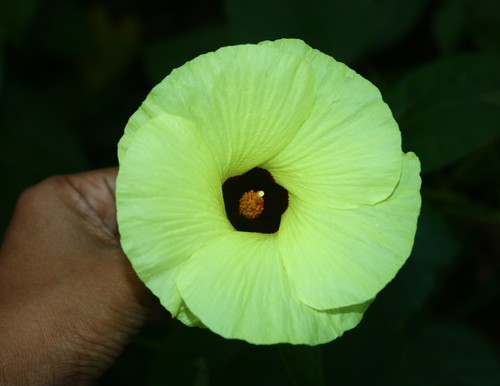
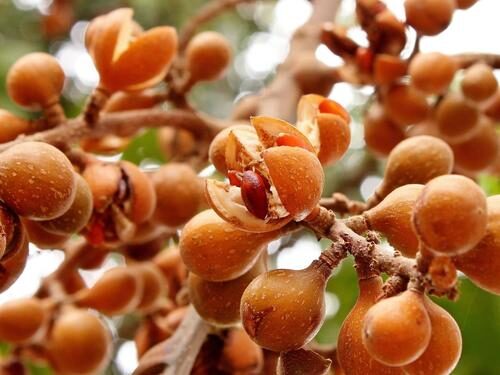
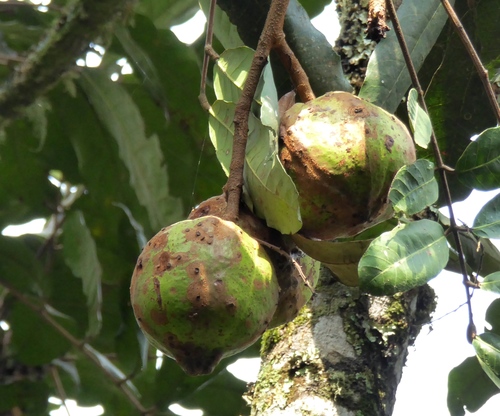
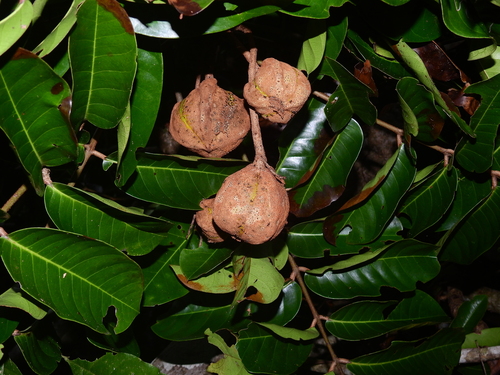
A tree. It grows 12-20 m high. The trunk is straight. It can be 40-60 cm across. The crown is large and open and spreading. The leaves are alternate and compound. There are 3-6 pairs of leaflets with one at the end. The leaflets are oval and 4-26 cm long by 2-9 cm wide. Male and female flowers are separate but on the same tree. The flowers are in groups 12-20 cm long in the axils of leaves.
Edible Uses
The seed oil is occasionally used in cooking, and the seed aril is edible.
Traditional Uses
The seed oil is occasionally used in cooking.
This uses section is brief — help expand it
Medicinal Uses
Bark extracts are traditionally used for malaria control.
Known Hazards
The sawdust may cause irritation to the respiratory tracts in wood workers.
Distribution
It is a tropical plant. It grows in lowland forests and is often along the banks of rivers. It can be in palm groves.
Where It Grows
Africa, Angola, Cameroon, Central Africa, Central African Republic, CAR, Congo, Congo DR, Côte d'Ivoire, Gabon, Ghana, Guinea, Guinée, Guinea-Bissau, Ivory Coast, Liberia, Nigeria, Sierra Leone, West Africa,
Cultivation
Plants can be grown from seeds. Fresh seeds germinate in 8-15 days. Young seedlings are best with shade.
Propagation
Seed - when sown immediately after harvest, they germinate within 8 - 15 days, with a high germination percentage. Young seedlings require shade.
Other Uses
A reddish brown dye can be obtained from the bark. It has been used for dyeing cloth and hides. Twigs are used as chew-sticks to clean the teeth and maintain their health. The heartwood is pale pinkish brown to reddish brown; more or less distinctly demarcated from the whitish brown or greyish brown sapwood. The grain is usually straight; the texture fine to moderately coarse. The wood is moderately lightweight, soft, moderately durable, susceptible to blue stain, dry-wood borer and marine borer attacks, whereas the liability to termite attack is recorded as variable. It is rather difficult to saw and work because of quickly gumming up and blunting of sawteeth and cutting edges; it planes and finishes satisfactorily, producing nice back-sawn and quarter-sawn surfaces; the nailing and gluing properties are good. The wood is used in house building, especially for piles. It is locally favoured for wood carving, and is used for making masks and canoes. It is suitable for light flooring, joinery, interior trim, ship building, vehicle bodies, furniture, cabinet work, boxes, crates, toys, novelties, veneer, plywood, hardboard and particle board, as well as pulpwood for paper production. It is also used as firewood and for charcoal production. The tree is useful for soil protection and soil improvement.
Notes
The bark is used for medicine. Extracts of the bark are useful for malaria control.
Synonyms
Also Known As
Jasui, Nendo, Nequeno, Tandro
References (4)
- Busson, 1965,
- Oteng-Amoako, A. A. (Ed.), 2006, 100 Tropical African Timber Trees from Ghana. Forestry Research Institute of Ghana. p 246
- Peters, C. R., O'Brien, E. M., and Drummond, R.B., 1992, Edible Wild plants of Sub-saharan Africa. Kew. p 147
- PROTA