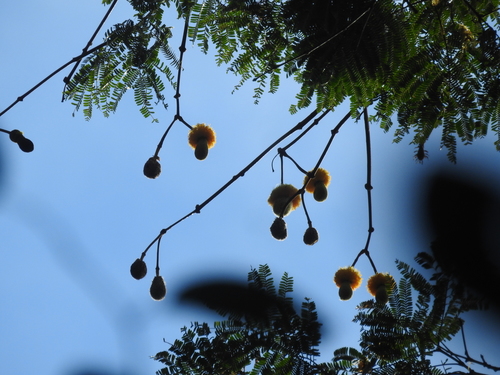
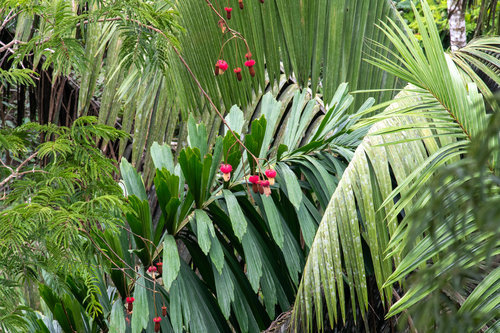
Senegalia mellifera
(Vahl) Seigler & Ebinger
Blackthorn
iNaturalist· cc-by-nc-sa
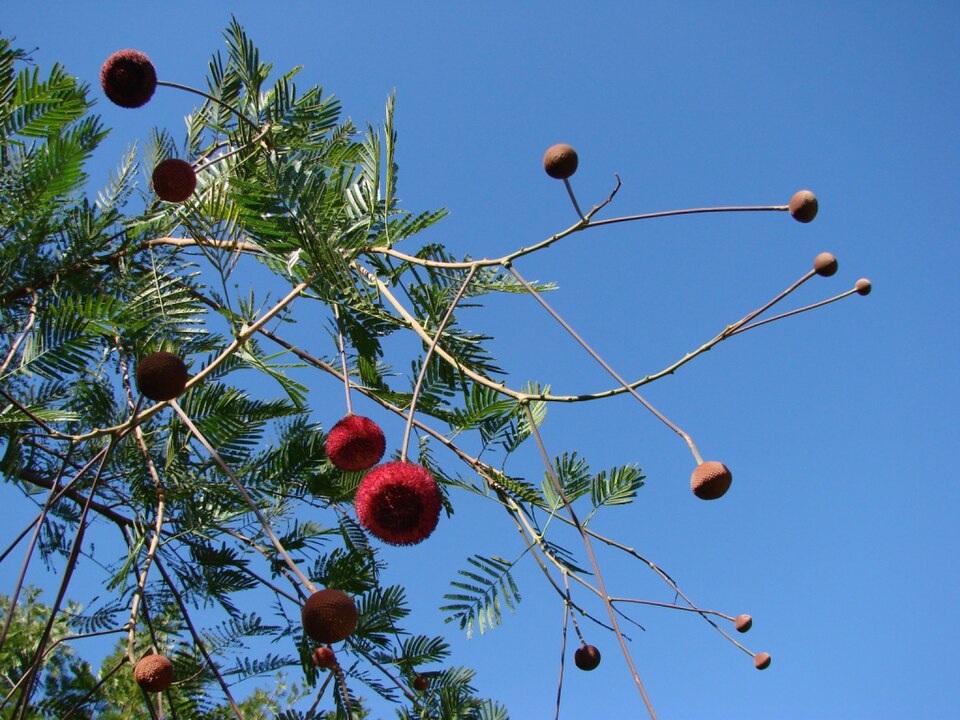
(c) David Hoare, some rights reserved (CC BY-NC-SA), uploaded by David Hoare
iNaturalist· cc-by-nc
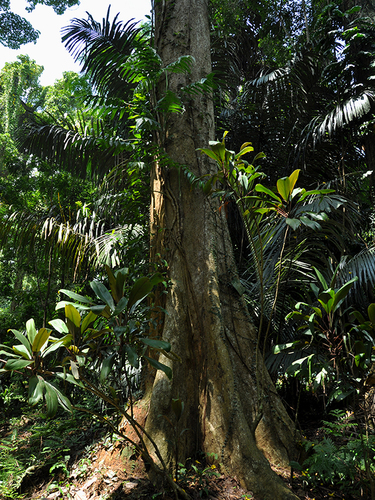
(c) rpmundo, some rights reserved (CC BY-NC)
iNaturalist· cc-by-nc
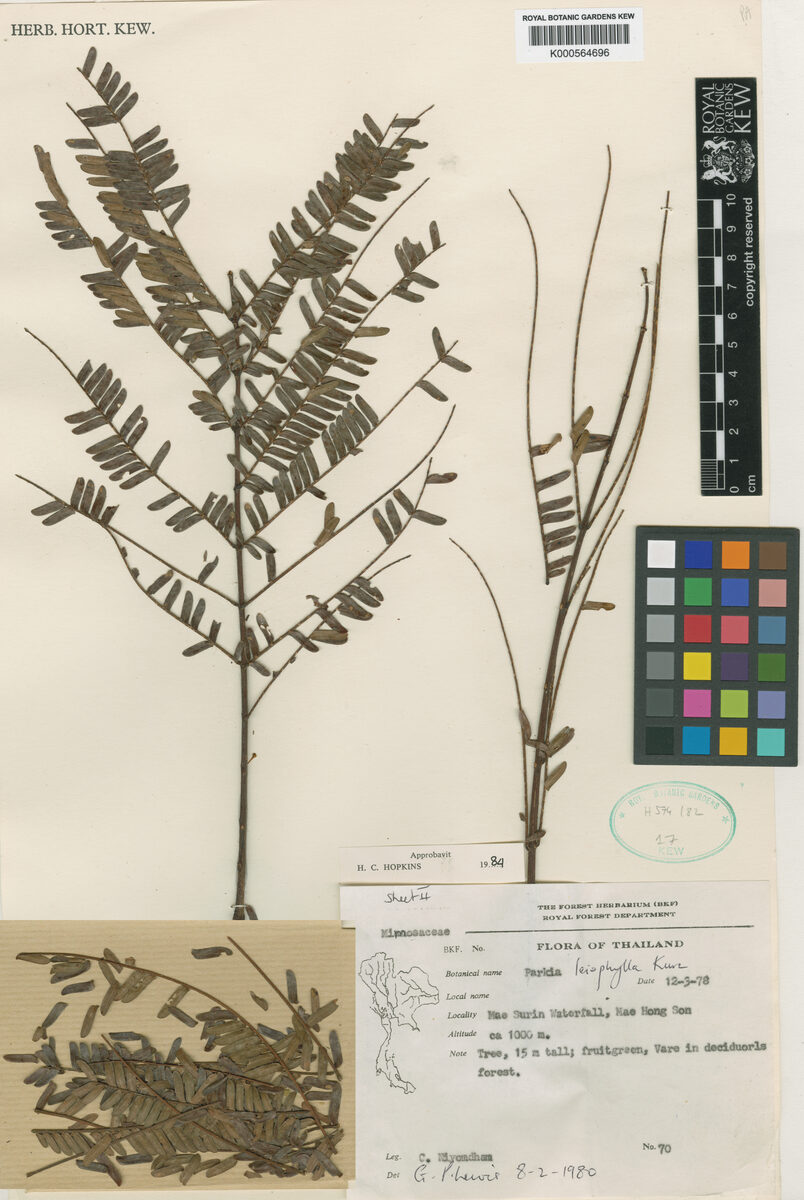
(c) rpmundo, some rights reserved (CC BY-NC)
Summary
Source: WikipediaSenegalia mellifera is a common thorn tree in Africa. The name mellifera refers to its sweet-smelling blossoms and honey. Its lumber turns pitch black when oiled. Common names of the tree include Blackthorn and Swarthaak (Afrikaans). It is listed as being not threatened.
Description
A shrub or tree. The small branches are flexible. There are prickles in pairs. They are up to 7 mm long and curved. The leaves have 2-3 pairs of pinnae with 1-2 pairs of leaflets. The flower spike is 2-3 cm long. The flowers are creamy white. They have a scent. The fruit is a pod up to 8 cm long and 2-3 cm wide.
Edible Uses
The roots are used for flavouring and to curdle milk. The gum is eaten as a snack, especially by children. The pods, leaves, nectar are also edible.
Traditional Uses
The roots are used for flavouring and to curdle milk. The gum is eaten as a snack.
This uses section is brief — help expand it
Medicinal Uses
The roots are used for flavouring milk, suggesting traditional culinary-medicinal use.
Known Hazards
Especially in times of drought, many Acacia species can concentrate high levels of the toxin Hydrogen cyanide in their foliage, making them dangerous for herbivores to eat.
Distribution
It is a tropical plant. In east Africa it grows up to 1,500 m above sea level. It grows on loamy soils. It grows in areas with annual rainfalls between 40-800 mm. It can grow in arid places. It is drought tolerant. It grows in the Sahel.
Where It Grows
Africa, Angola, Arabia, Australia, Botswana, Central Africa, Chad, Djibouti, East Africa, Egypt, Eritrea, Ethiopia, Iran, Iraq, Israel, Kenya, Mauritius, Mediterranean, Middle East, Mozambique, Namibia, North Africa, Oman, Pakistan, Sahel, Saudi Arabia, Somalia, South Africa, Southern Africa, Sudan, Syria, Tanzania, Uganda, Yemen, Zambia, Zimbabwe,
Cultivation
Plants can be grown from seeds. The seeds can be sown direct or put in a nursery. Seeds germinate in 2-14 days. The seeds should be soaked in cold water for 12 hours or scratched to break the hard seed coat. Plants can be cut back and will re-grow.
Propagation
Seed - pre-soak overnight in hot water that is allowed to cool. Commercially the seeds are scarified by soaking them in concentrated sulphuric acid for 5-15 min prior to sowing. Direct sowing of seeds is the common method of artificial propagation - the seeds usually germinating from the 5th day onwards. Seed storage behaviour is orthodox; viability can be maintained for several years in hermetic storage at 10°c with 4.5-9% mc.
Other Uses
A gum obtained from the trunk is a minor source of gum arabic, more commonly obtained from Senegalia senegal. It has a variety of uses, including adding lustre to crape and silk, thickening colours, calico printing, manufacturing ink and as a mucilage. When added to clay, the gum forms a hard substance that can be used as a flooring material. Baskets made of the roots serve for collecting gum arabic from the trees. The bast fibres are used for wickerwork. The twigs (with thorns removed!) are used as toothbrushes. The heartwood is a very dark brown, almost black; it is clearly demarcated from the yellowish sapwood. The wood is very tough, slightly elastic, does not split easily, and is very durable, being termite and borer-proof. It takes a high polish. Highly valued for axe and other tool handles, it also makes good fence posts. It is usually only available in fairly small sizes and so is only taken for small projects such as building huts and the branches for fencing. The wood makes an excellent firewood and can be used to make charcoal. The plant makes a good live fence and hedge. It has a shallow and aggressive root system, which limits its use in farms with crops. This root system, however, makes it potentially useful as a soil stabilizer and it has been used experimentally for stabilizing dunes. The flowering tree is an excellent bee fodder and is recommended for honey production in dry tropical areas. The flowers smell most strongly at night, when they attract moths for pollination.
Production
Plants are slow growing.
Other Information
The gum is eaten especially by children.
Notes
There are about 1,350 Acacia species. Over 1,000 occur in Australia. Also as Mimosaceae.
Synonyms
Also Known As
Bilcil, Ebenyo, Kiffir, Magokwe, Mongana, Tikir