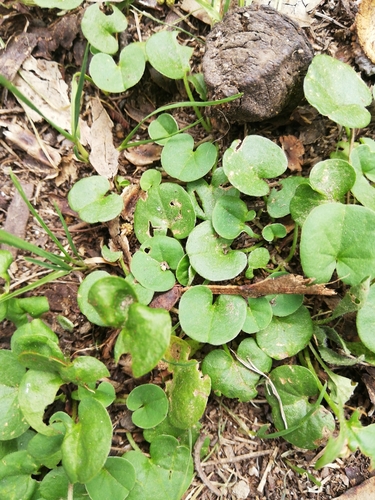
Ipomoea bolusiana
Schinz
Narrow-leaved pink ipomoea
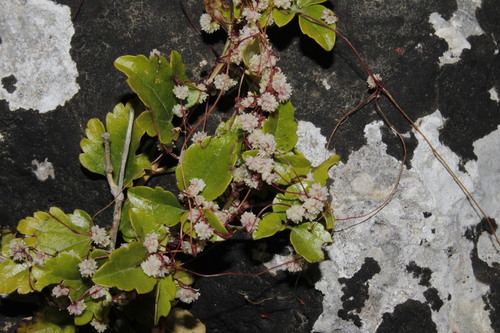
iNaturalist· cc-by-nd
(c) Derek de la Harpe, some rights reserved (CC BY-ND), uploaded by Derek de la Harpe
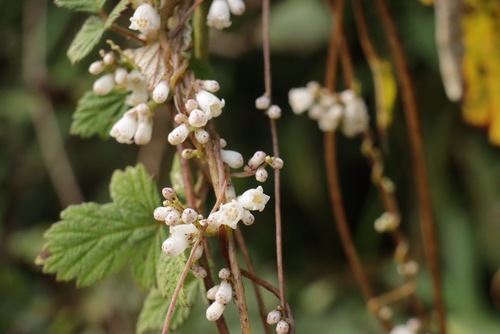
iNaturalist· cc-by-nc
(c) Richard Gill, some rights reserved (CC BY-NC)
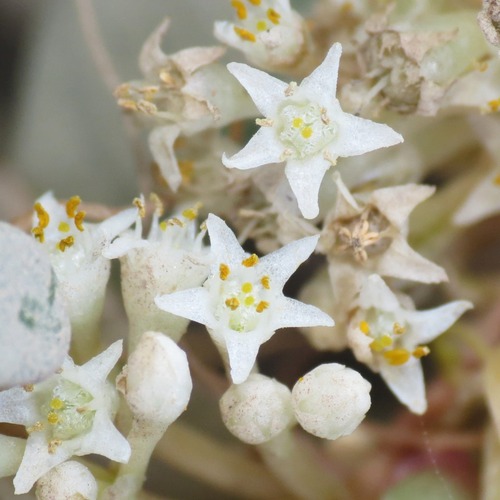
iNaturalist· cc-by-nc
(c) Richard Gill, some rights reserved (CC BY-NC)
Description
A herb. The branches are trailing. They have leaves spaced along them. These have erect flowering shoots along them. The leaf blade is divided into 3 narrow lobes up to 6 cm long by 3 cm wide. The central lobe is the longest. The flowers are erect. They are funnel shaped and 4 cm long and 4 cm wide at the mouth. The are pink or purple. It has a fattened tuber about 15 cm wide.
Edible Uses
The tuber and root are eaten.
Traditional Uses
Africa, Angola, Botswana, Central Africa, East Africa, Eswatini, Madagascar, Mozambique, Namibia, South Africa, Southern Africa, Swaziland, Tanzania, Zambia, Zimbabwe,
Medicinal Uses
Traditional uses documented across Angola, Botswana, Central Africa, East Africa, Eswatini, Madagascar, Mozambique, Namibia, South Africa, Tanzania, Zambia, and Zimbabwe.
Distribution
It is a subtropical plant. In Swaziland it is only in the low veld. It grows between sea level and 1,525 m above sea level. It grows in sandy and rocky soils. It can grow in arid places.
Synonyms
Also Known As
Etoni rombwa, Katungoloma, Otinakwi, Seakhoe
References (11)
- Fowler, D. G., 2007, Zambian Plants: Their Vernacular Names and Uses. Kew. p 21
- Guillarmod, J., 1971,
- Long, C., 2005, Swaziland's Flora - siSwati names and Uses http://www.sntc.org.sz/flora/
- Malan & Owen-Smith, 1974,
- Peters, C. R., O'Brien, E. M., and Drummond, R.B., 1992, Edible Wild plants of Sub-saharan Africa. Kew. p 94
Show all 11 references Hide references
- Roodt, V., 1998, Common Wild Flowers of the Okavango Delta. Medicinal Uses and Nutritional value. The Shell Field Guide Series: Part 2. Shell Botswana. p 63
- Royal Botanic Gardens, Kew (1999). Survey of Economic Plants for Arid and Semi-Arid Lands (SEPASAL) database. Published on the Internet; http://www.rbgkew.org.uk/ceb/sepasal/internet [Accessed 14th April 2011]
- Ruiters-Welcome, A. K., 2019, Food plants of southern Africa. Ph.D. thesis. Univ. of Johannesburg p 46
- Swaziland's Flora Database http://www.sntc.org.sz/flora
- Welcome, A. K. & Van Wyk, B.-E., 2019, An inventory and analysis of the food plants of southern Africa. South African Journal of Botany 122 (2019) 136–179
- World Checklist of Useful Plant Species 2020. Royal Botanic Gardens, Kew