Raphionacme splendens subsp. bingeri
(A. Chev.) Lebrun & Stork
iNaturalist· cc-by-nc
(c) Bart Wursten, some rights reserved (CC BY-NC), uploaded by Bart Wursten
iNaturalist· cc-by-nc
(c) Bart Wursten, some rights reserved (CC BY-NC), uploaded by Bart Wursten
iNaturalist· cc-by-nc
(c) AMADOU BAHLEMAN FARID, some rights reserved (CC BY-NC)
Description
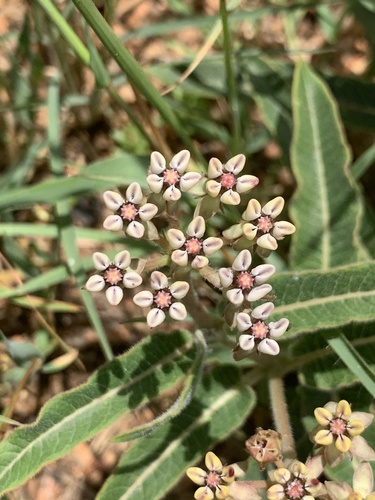
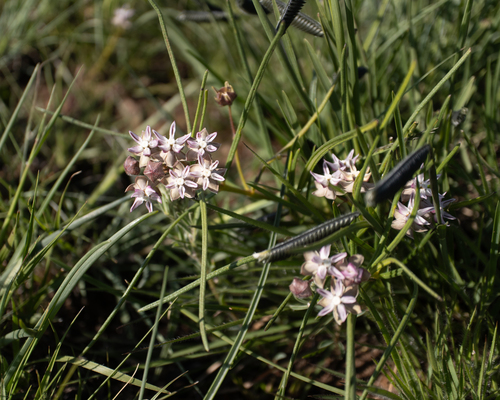
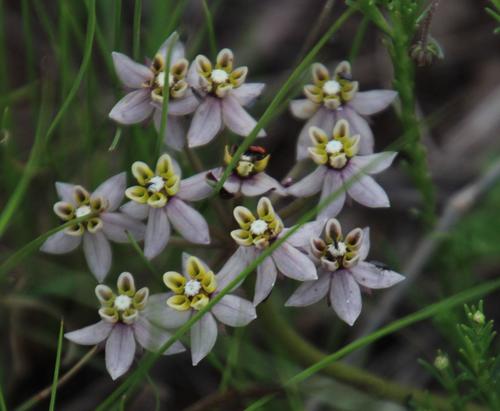
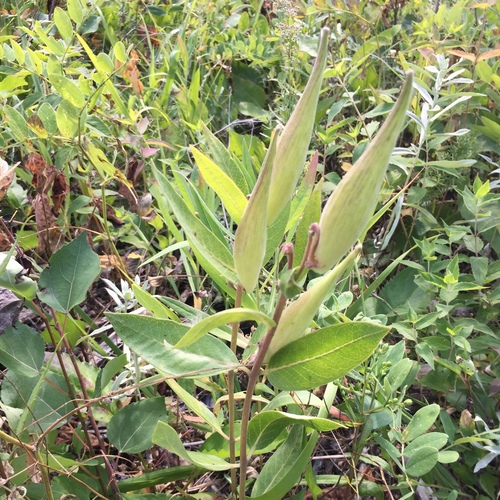
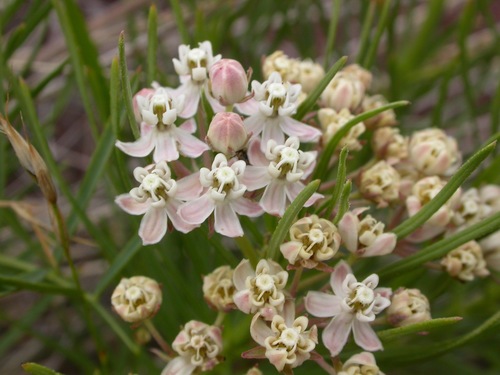
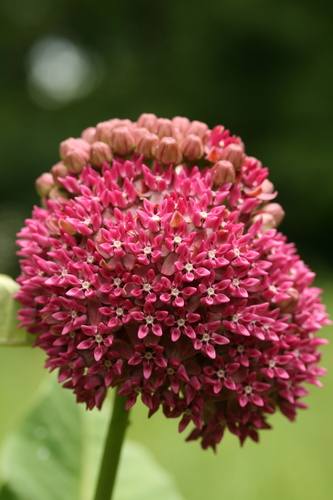
A vine. The tubers are 5-8 cm across. They can be 25 cm across. They have white flesh. It has white sap when cut. The stems are zigzag shaped and 20 cm tall. There are a few narrowly oval leaves. The flowers are pink to purple.
Edible Uses
The tubers are eaten raw after removing the hard outer layer, or boiled and eaten. The roots and fruit are also eaten by children during famine.
Traditional Uses
The tubers are eaten raw after removing the hard outer layer. They are also boiled and eaten.
This uses section is brief — help expand it
Distribution
A tropical plant. It grows in the stony savannah in West Africa. It grows from sea level to 1,500 m above sea level.
Where It Grows
Africa, Benin, Burkina Faso, Gambia, Guinea, Guinée, Mali, Niger, Senegal, Sudan, Uganda, West Africa,
Cultivation
Plants can be grown by seeds or using the tuber.
Other Information
The roots and fruit are eaten by children during famine.
Notes
There are about 100 Brachystelma species. The tubers of all Brachystelma species are probably edible.
Synonyms
Also Known As
a-Ndekap, Fie, Fie-gue, Figue, Fikongo, Gamkbuhrongal, Hiama, Lokotombo, M'pie, Nda-fegue
References (14)
- Belem, M., et al, 2017, Strategy of Conservation and Protection of Wild Edible Plants Diversity in Burkina Faso. ANADOLU 27 (2) 2017, 82- 90 (As Brachystelma bingeri)
- Bircher, A. G. & Bircher, W. H., 2000, Encyclopedia of Fruit Trees and Edible Flowering Plants in Egypt and the Subtropics. AUC Press. p 63 (As Brachystelma bingeri)
- Burkill, H. M., 1985, The useful plants of west tropical Africa, Vol. 1. Kew. (Also as Brachystelma bingeri)
- Dalziel, (As Brachystelma bingeri)
- Diarra, N. et al, 2016, Etude ethnobotanique des plantes alimentaires utilisées en période de soudure dans les régions Sud du Mali. Int. J. Biol. Chem. Sci. 10(1): 184-197
Show all 14 references Hide references
- Grivetti, L. E., 1980, Agricultural development: present and potential role of edible wild plants. Part 2: Sub-Saharan Africa, Report to the Department of State Agency for International Development. p 24 (As Brachystelma bingeri)
- Grubben, G. J. H. and Denton, O. A. (eds), 2004, Plant Resources of Tropical Africa 2. Vegetables. PROTA, Wageningen, Netherlands. p 564
- IRVINE, Also as (As Brachystelma bingeri)
- Lim, T. K., 2015, Edible Medicinal and Non Medicinal Plants. Volume 9, Modified Stems, Roots, Bulbs. Springer p 17 (As Raphionacme bingeri), 73
- Muller, J. & Almedon, A. M., 2008, What is "Famine Food"? Distinguishing between Traditional Vegetables and Special Foods for Times of Hunger/Scarcity (Boumba, Niger). Human Ecology 36:599-607
- Okigbo, B.N., Vegetables in Tropical Africa, in Opena, R.T. & Kyomo, M.L., 1990, Vegetable Research and development in SADCC countries. Asian Vegetable Research and development Centre. Taiwan. p 38
- Opena, R. T. and Kyomo, M. L., (Eds), 1990, Vegetable Research and Development in SADCC Countries. Workshop Proceedings Tanzania. p 36 (As Brachystelma bingeri)
- PERRY et al., (As Raphionacme daronii)
- UPHOF