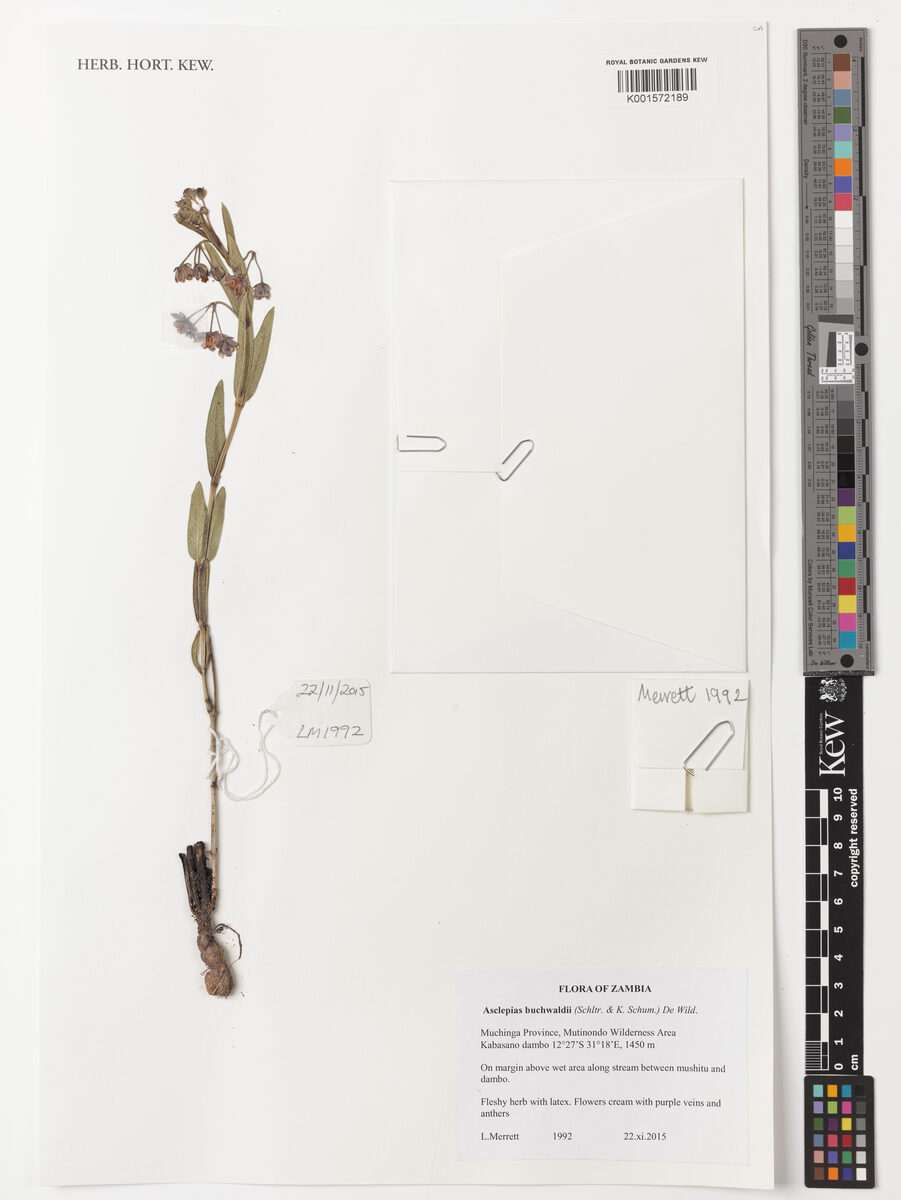
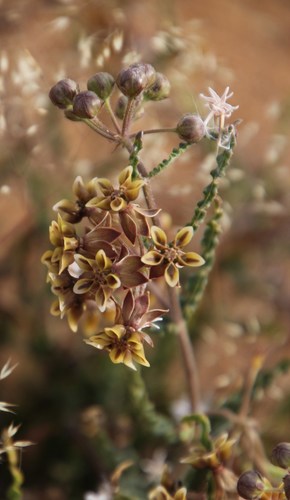
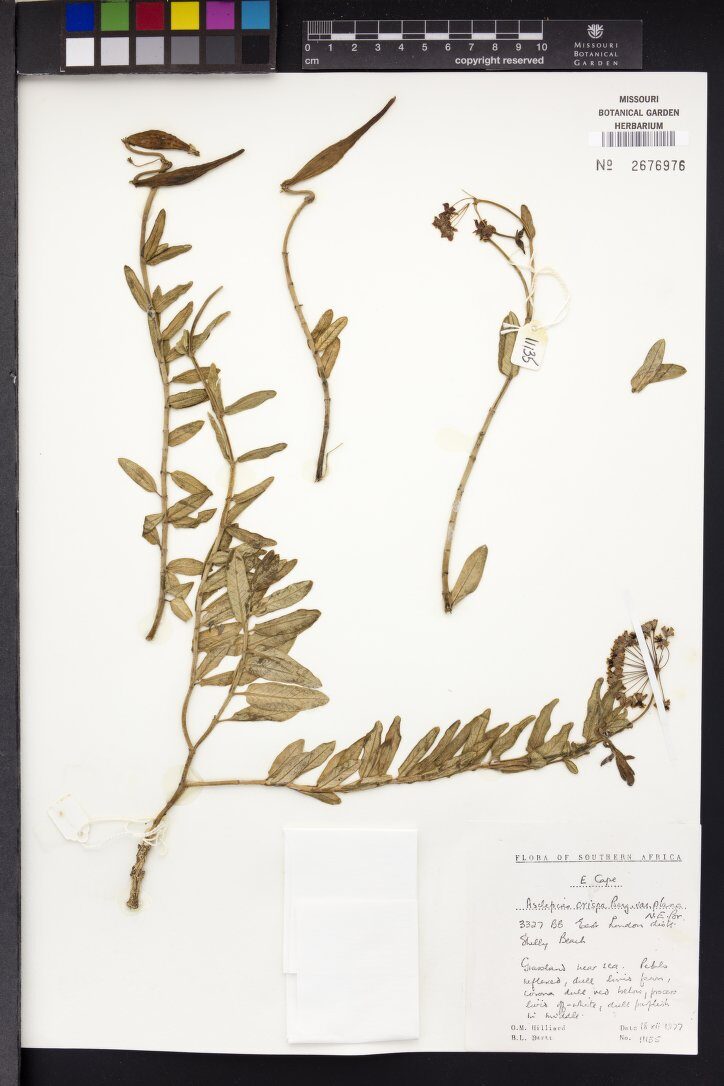
Brachystelma circinatum
E. Mey.
Bird-cage brachystelma
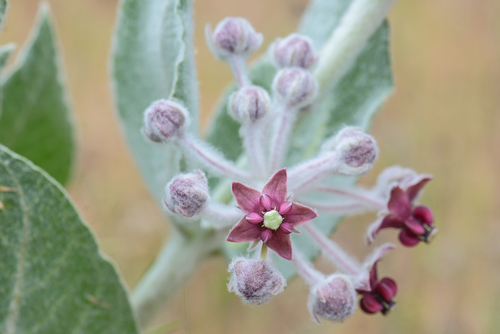
iNaturalist· cc-by-nc
(c) Richard Gill, some rights reserved (CC BY-NC), uploaded by Richard Gill
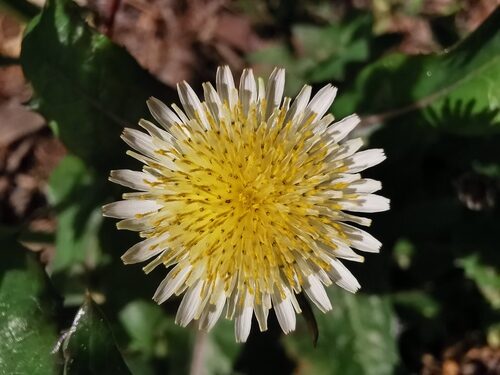
iNaturalist· cc-by-nc
(c) juddkirkel, some rights reserved (CC BY-NC)
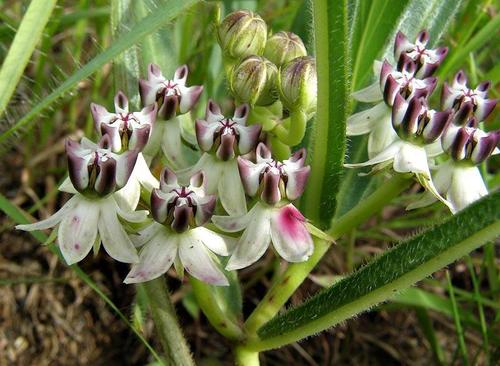
iNaturalist· cc-by-sa
(c) Andrew Hankey, some rights reserved (CC BY-SA), uploaded by Andrew Hankey
Description
A herb. It has underground stems or rhizomes. It is succulent and keeps growing from year to year. It grows 30 cm high. The leaves are narrow to oval. They are 5-15 mm long. They can be flat or folded upwards. The flowers occur as 2 or a few at the nodes. They are white to red. The tubers are 10 cm across.
Edible Uses
Root - raw or cooked. The skin is bitter and is usually removed before the tuber is eaten. The tuber can be up to 25cm in diameter.
Traditional Uses
The tubers are eaten raw or roasted in hot ash.
This uses section is brief — help expand it
Distribution
It is a subtropical plant that grows in hot arid places. It grows in areas with a marked dry season. In southern Africa it grows between 500-1,600 m above sea level. It can grow in arid places.
Where It Grows
Africa, Botswana, East Africa, Eswatini, Lesotho, Namibia, South Africa, Southern Africa, Swaziland, Zimbabwe,
Cultivation
A plant of semi-arid areas in the tropics and subtropics, where it can be found at elevations from 500 - 1,600 metres. Requires a sunny position. Prefers a moist but well-drained soil.
Nutrition
| Part | Moisture | kJ | kcal | Protein | Vit A | Vit C | Iron | Zinc |
|---|---|---|---|---|---|---|---|---|
| Tubers | 93.7 | 76 | 18 | 0.4 | — | 7.3 | 0.9 | 0.9 |
Synonyms
Also Known As
Otjipembati
References (9)
- Fox, F. W. & Young, M. E. N., 1982, Food from the Veld. Delta Books. p 107
- Long, C., 2005, Swaziland's Flora - siSwati names and Uses http://www.sntc.org.sz/flora/
- Mogg, 1975,
- Peters, C. R., O'Brien, E. M., and Drummond, R.B., 1992, Edible Wild plants of Sub-saharan Africa. Kew. p 62
- Royal Botanic Gardens, Kew (1999). Survey of Economic Plants for Arid and Semi-Arid Lands (SEPASAL) database. Published on the Internet; http://www.rbgkew.org.uk/ceb/sepasal/internet [Accessed 28th March 2011]
Show all 9 references Hide references
- Ruiters-Welcome, A. K., 2019, Food plants of southern Africa. Ph.D. thesis. Univ. of Johannesburg p 22
- Swaziland's Flora Database http://www.sntc.org.sz/flora
- Wehmeyer, A. S, 1986, Edible Wild Plants of Southern Africa. Data on the Nutrient Contents of over 300 species.
- Welcome, A. K. & Van Wyk, B.-E., 2019, An inventory and analysis of the food plants of southern Africa. South African Journal of Botany 122 (2019) 136–179