Aframomum albiflorum
Lock
iNaturalist· cc-by-nc
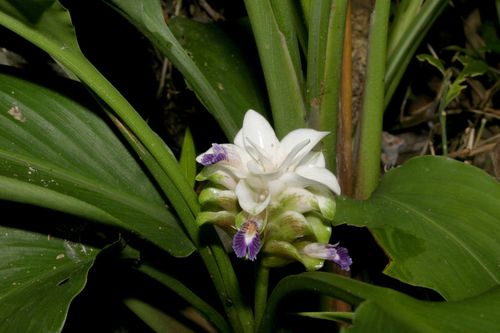
(c) Bart Wursten, some rights reserved (CC BY-NC), uploaded by Bart Wursten
iNaturalist· cc-by-nc
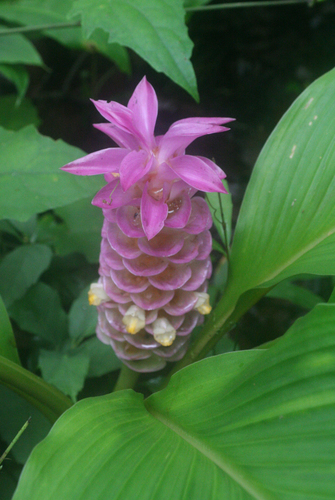
(c) Bart Wursten, some rights reserved (CC BY-NC), uploaded by Bart Wursten
iNaturalist· cc-by-nc
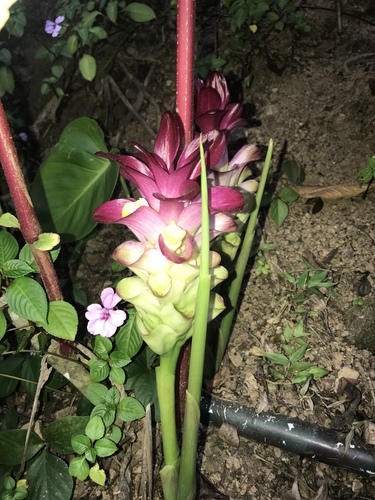
(c) Bart Wursten, some rights reserved (CC BY-NC), uploaded by Bart Wursten
Summary
Source: WikipediaAframomum albiflorum is a monocotyledonous plant species in the family Zingiberaceae.
Description
A ginger family herb. It grows 2-3 m high. It has large underground stems of rhizomes that produce leafy shoots. The leafy shoots are 2-3 m tall. The leaves are 30-45 cm long by 10 cm wide. There are 2-3 flowers together coming from the rhizome. They are white with a yellow patch in the centre. They are on stalks 2-4 cm long. The bracts are bronze coloured. The fruit are oval and 5 cm long. The seeds are smooth and shiny and narrowly oval. They are 5-6 cm long by 3 cm wide.
Edible Uses
The fruits are eaten raw. The seeds are surrounded by masses of white sweet-acid pulp inside 3 membranes. The sweet, sugary pulp is frequently eaten as a snack - it is particularly liked by children. The fruit is a round to oval, tough, orange-red-black berry 7 - 9cm long including the calyx beak. The seeds are crushed and used as a spice like pepper.
Traditional Uses
The pulp of the fruit is eaten raw.
This uses section is brief — help expand it
Medicinal Uses
The crushed seeds are boiled with the roots of Piper capensis and drunk as an aphrodisiac.
Distribution
It is a tropical plant. It grows in the understorey in forests. It occurs between 1,300-1,550 m above sea level.
Where It Grows
Africa, East Africa, Madagascar, Malawi, Mozambique, Sudan, Tanzania, Zimbabwe*,
Cultivation
The plant is adaptable to various soil types, but does especially well in sandy clay loams and sandy loams.
Other Uses
The dense stands formed by the plant are a favoured habitat for snakes, especially green mamba.
Notes
There are about 50 Aframomum species.
Also Known As
Msamaka, Mtunguru, Mtunguu, Tunguru
References (4)
- e-monocot.org/taxon/urn:kew.org:wcs:taxon:218346
- Flora of Zimbabwe,
- Peters, C. R., O'Brien, E. M., and Drummond, R.B., 1992, Edible Wild plants of Sub-saharan Africa. Kew. p 41
- Ruffo, C. K., Birnie, A. & Tengnas, B., 2002, Edible Wild Plants of Tanzania. RELMA p 114