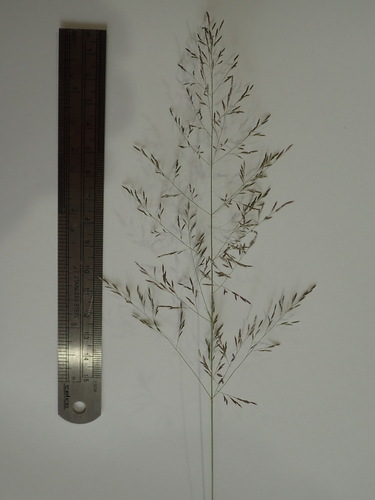
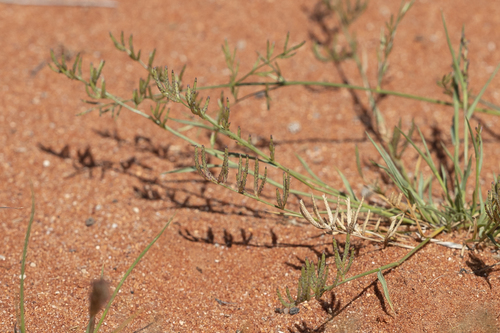
Leptochloa uniflora
A. Rich.
No photos yet for Leptochloa uniflora
Sign in to contribute a photoDescription
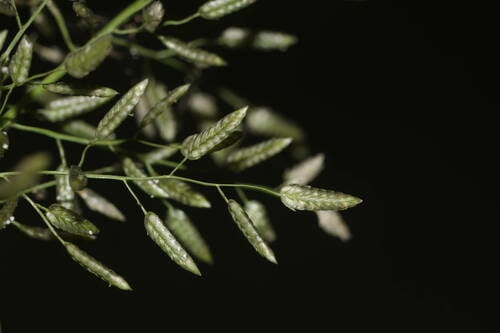
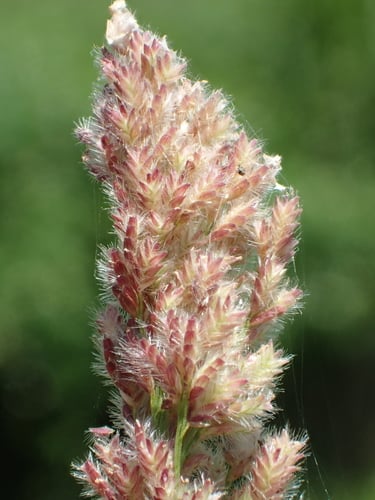
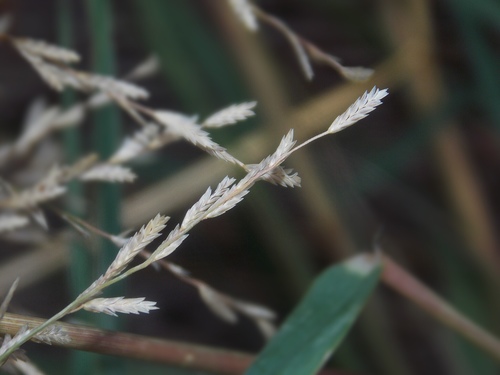
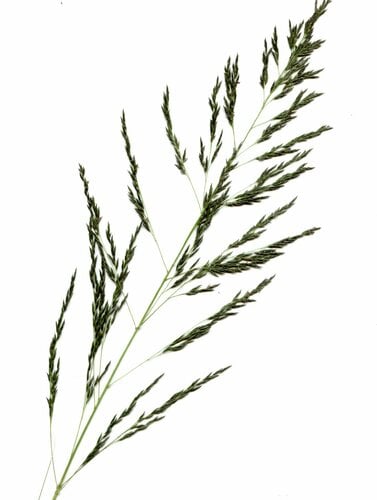
A delicate annual grass. It grows 75 cm tall. The leaf blade is 4-10 cm long by 7-15 mm wide. They are sword shaped, flat and thin. They are smooth on both sides. The flower shoots are 5-30 cm long. They are narrowly oblong.
Edible Uses
The seeds are used as a cereal grain.
Distribution
It is a tropical plant. It grows in shade along rivers. It is often in humus rich soils. It grows between 90-1,070 m altitude. It grows in hot arid places. It can grow in arid places.
Where It Grows
Africa, Angola, Arabia, Asia, Botswana, Central Africa, East Africa, Ethiopia, India, Malawi, Middle East, Mozambique, Namibia, Saudi Arabia, South Africa, Southern Africa, Sri Lanka, Tanzania, Uganda, Zambia, Zimbabwe,
Notes
It has a C4 pathway.
Synonyms
Also Known As
Cikalatongo
References (7)
- Dalziel, J. M., 1937, The Useful plants of west tropical Africa. Crown Agents for the Colonies London.
- Flora Zambesiaca. http://apps.kew.org/efloras
- Fowler, D. G., 2007, Zambian Plants: Their Vernacular Names and Uses. Kew. p 71
- Grivetti, L. E., 1980, Agricultural development: present and potential role of edible wild plants. Part 2: Sub-Saharan Africa, Report to the Department of State Agency for International Development. p 73 (As Craspedorhachis uniflora)
- Peters, C. R., O'Brien, E. M., and Drummond, R.B., 1992, Edible Wild plants of Sub-saharan Africa. Kew. p 23
Show all 7 references Hide references
- Royal Botanic Gardens, Kew (1999). Survey of Economic Plants for Arid and Semi-Arid Lands (SEPASAL) database. Published on the Internet; http://www.rbgkew.org.uk/ceb/sepasal/internet [Accessed 3rd June 2011]
- Scudder, 1962,