Ileodictyon cibarium
Tul. & C. Tul.
Basket fungus
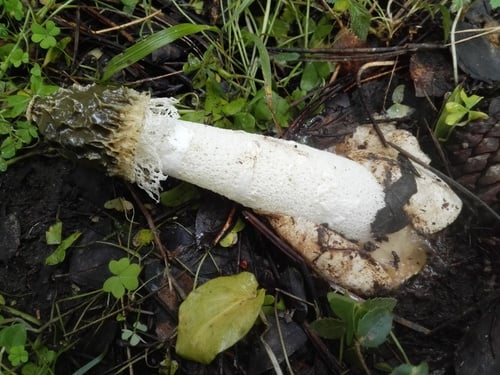
iNaturalist· cc-by-nc
(c) k_fordyce, some rights reserved (CC BY-NC)
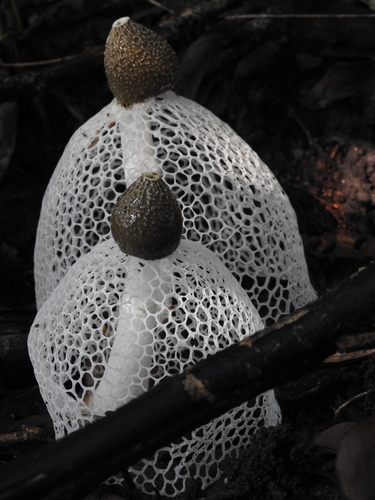
iNaturalist· cc-by-nc
(c) Christian Schwarz, some rights reserved (CC BY-NC), uploaded by Christian Schwarz
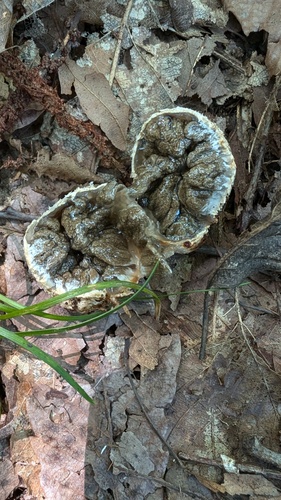
iNaturalist· cc-by-nc
(c) a_huenulefalonso, some rights reserved (CC BY-NC)
Summary
Source: WikipediaIleodictyon cibarium is a saprotrophic species of fungus in the family Phallaceae. It is native to Australia and New Zealand, where it is commonly known as the basket fungus or the white basket fungus, alluding to its fruit bodies, shaped like a round or oval ball with interlaced or latticed branches, resembling polyhedra similar to closed fullerenes. Although the immature spherical fruitbodies are reportedly edible, the mature fruit body is foul-smelling and partly covered with a slime layer containing spores (gleba) on the inner surfaces.
Description
A temperate mushroom of the Phallaceae family with round ball-like fruiting bodies.
This description is brief — help expand it
Edible Uses
The young fruiting bodies (volva) are edible.
Traditional Uses
The young fruiting bodies (volva) are edible.
This uses section is brief — help expand it
Distribution
It is a temperate plant.
Where It Grows
Asia, China, New Zealand*,
Also Known As
Paruwhatitiri, Wangdoujun
References (2)
- Crowe, A., 1997, A Field Guide to the Native Edible Plants of New Zealand. Penguin. p 120
- Hall, I. R., et al, 2003, Edible and Poisonous Mushrooms of the World. Timber Press. p 290, 214