Dictyophora indusiata
(Ventenat et Persoon) Fischer
Bamboo mushroom, Netted stinkhorn
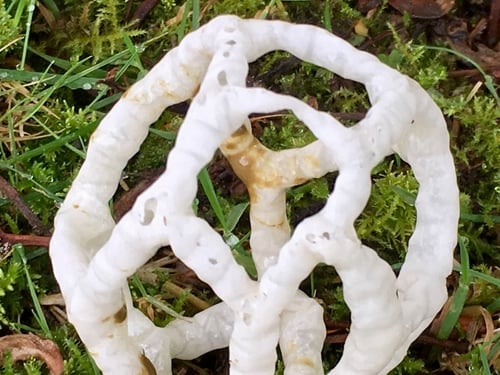
iNaturalist· cc-by-nc
(c) KARTHIKEYAN R, some rights reserved (CC BY-NC)
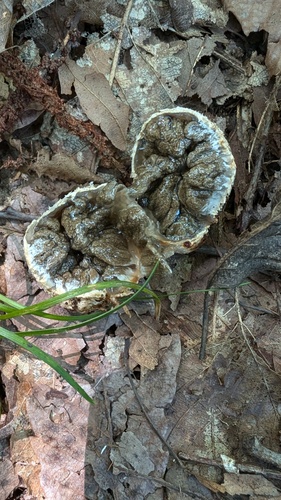
iNaturalist· cc-by-nc
(c) Linda Reinhold, some rights reserved (CC BY-NC)
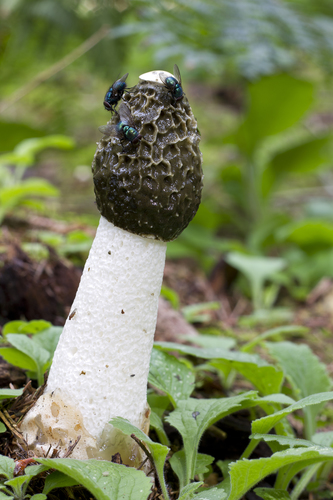
iNaturalist· cc-by-nc
(c) Linda Reinhold, some rights reserved (CC BY-NC)
Description
A mushroom. It grows 15-20 cm tall. This mushroom is enclosed in a white lacy veil.
This description is brief — help expand it
Edible Uses
In eastern Asia, P. indusiatus is considered a delicacy and an aphrodisiac. Previously only collected in the wild, where it is not abundant, it was difficult to procure. The mushroom's scarcity meant that it was usually reserved for special occasions. In the time of China's Qing dynasty, the species was collected in Yunnan Province and sent to the Imperial Palaces to satisfy the appetite of Empress Dowager Cixi, who particularly enjoyed meals containing edible fungi. It was one of the eight featured ingredients of the "Bird's Nest Eight Immortals Soup" served at a banquet to celebrate her 60th birthday. This dish, served by descendants of the Confucius family in celebrations and longevity banquets, contained ingredients that were "all precious food, delicacies from land and sea, fresh, tender, and crisp, appropriately sweet and salty". Another notable use was a state banquet held for American diplomat Henry Kissinger on his visit to China to reestablish diplomatic relations in the early 1970s. One source writes of the mushroom: "It has a fine and tender texture, fragrance and is attractive, beautiful in shape, fresh and crispy in taste." The dried fungus, commonly sold in Asian markets, is prepared by rehydrating and soaking or simmering in water until tender. Sometimes used in stir-frys, it is traditionally used as a component of rich chicken soups. The rehydrated mushroom can also be stuffed and cooked. Phallus indusiatus has been cultivated on a commercial scale in China since 1979. In the Fujian Province of China—known for a thriving mushroom industry that cultivates 45 species of edible fungi—P. indusiatus is produced in the counties of Fuan, Jianou, and Ningde. Advances in cultivation have made the fungus cheaper and more widely available; in 1998, about 1,100 metric tons (1,100 long tons; 1,200 short tons) were produced in China. The Hong Kong price for a kilogram of dried mushrooms reached around US $770 in 1982, but had dropped to US $100–200 by 1988. Additional advances led to it dropping further to US $10–20 by 2000. The fungus is grown on agricultural wastes—bamboo-trash sawdust covered with a thin layer of non-sterilised soil. The optimal temperature for the growth of mushroom spawn and fruit bodies is about 24 °C (75 °F), with a relative humidity of 90–95%. Other substrates that can be used for the cultivation of the fungus include bamboo leaves and small stems, soybean pods or stems, corn stems, and willow leaves.
Traditional Uses
The fungus is dried and then reconstituted in water and simmered until tender.
This uses section is brief — help expand it
Medicinal Uses
Traditional medicine properties have been ascribed to Phallus indusiatus in a Chinese Tang dynasty pharmacopoeia. The fungus was used to allegedly treat inflammatory, stomach, and neural diseases. Southern China's Miao people continue to use it traditionally for a number of afflictions. It has been prescribed as Traditional Chinese Medicine as a treatment for laryngitis, leucorrhea, fever, and oliguria (low urine output), diarrhea, hypertension, cough, hyperlipidemia, and in anticancer therapy.
Distribution
It is a tropical plant.
Where It Grows
Asia, Australia, China, Pacific, Samoa,
Other Information
It is reserved for banquet dishes. It is canned in China.
Also Known As
Zhusun
References (7)
- Facciola, S., 1998, Cornucopia 2: a Source Book of Edible Plants. Kampong Publications, p 253
- forests-366202-SI
- Hall, I. R., et al, 2003, Edible and Poisonous Mushrooms of the World. Timber Press. p 317
- Herklots,
- Hu, Shiu-ying, 2005, Food Plants of China. The Chinese University Press. p 267
Show all 7 references Hide references
- Parham, B. E. V., 1972, Plants of Samoa. New Zealand Department of Scientific and Industrial Research. Information Series. No. 85 p 126
- Uphof,