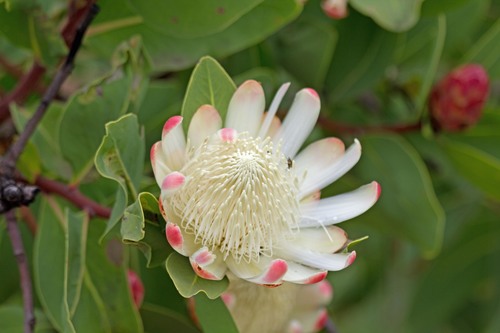
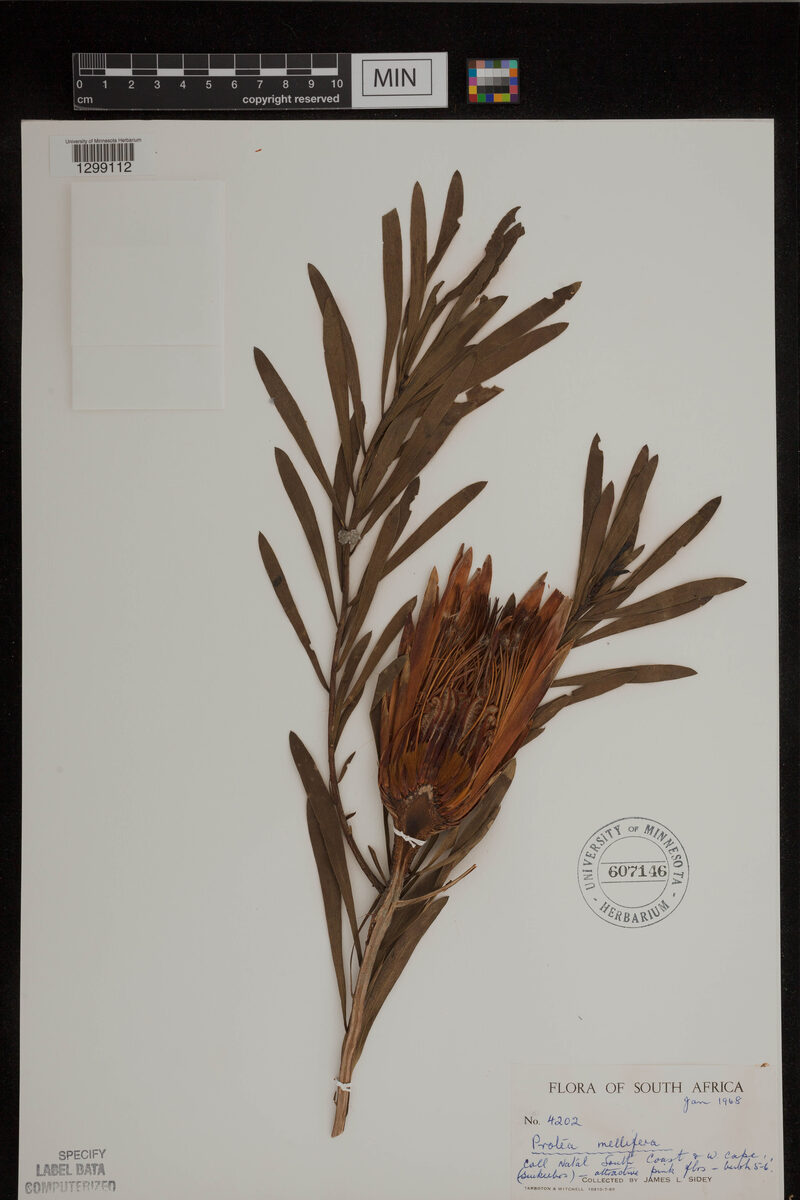
Brabejum stellatifolium
L.
Bitter almond, Hottentot's almond
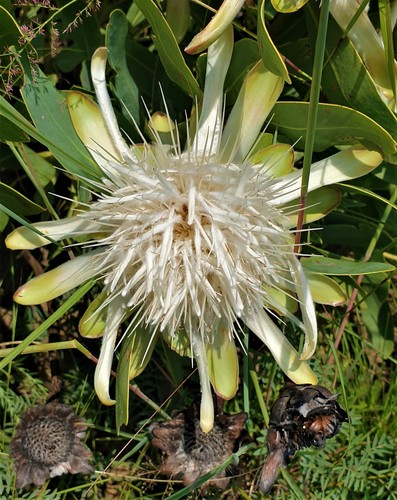
iNaturalist· cc-by
(c) Dave Richardson, some rights reserved (CC BY), uploaded by Dave Richardson
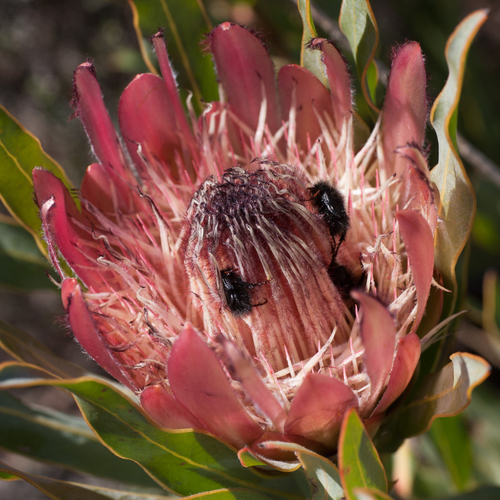
iNaturalist· cc-by-sa
(c) Tony Rebelo, some rights reserved (CC BY-SA), uploaded by Tony Rebelo
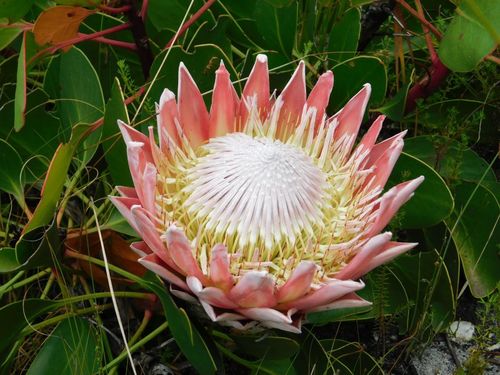
iNaturalist· cc-by-nc
(c) Craig Peter, some rights reserved (CC BY-NC), uploaded by Craig Peter
Description
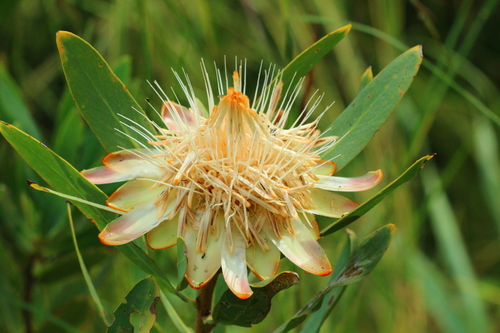
An evergreen tree or shrub. It grows to 7.5 m tall. It has a thick greyish brown bark. It has spreading branches. The leaves are long and sword shaped. They are 15 cm long by 2.5 cm wide. They are arranged in rings of six leaves. The leaves have irregular teeth along the edge and a prominent midrib. The young leaves are soft and golden. The flowers are white and hairy. They have a sweet scent. They occur in dense clusters in the axils of leaves. The fruit is 2-4 cm across and one seeded. The seed is enclosed in a golden velvety coat.
Edible Uses
The fruit is eaten. The seeds, after being well soaked to remove bitterness, are roasted and used in coffee.
Traditional Uses
The fruit of the tree is eaten. The seed were well soaked to remove the bitterness then roasted and used in coffee. CAUTION: The seeds are poisonous unless well treated.
Known Hazards
The seeds are poisonous unless well treated.
Distribution
It is a Mediterranean climate plant. Trees grow along streams. It needs moist, well drained soil. It suits hardiness zones 8-10.
Where It Grows
Africa, Australia, South Africa*, Southern Africa,
Cultivation
It can be grown from fresh seed or cuttings. The trees form a good hedge.
Production
The early growth is fast.
Notes
There is only one Brabejum species.
Also Known As
Wild almond, Wild chestnut
References (17)
- Bircher, A. G. & Bircher, W. H., 2000, Encyclopedia of Fruit Trees and Edible Flowering Plants in Egypt and the Subtropics. AUC Press. p 63
- Cundall, P., (ed.), 2004, Gardening Australia: flora: the gardener's bible. ABC Books. p 249
- Etherington, K., & Imwold, D., (Eds), 2001, Botanica's Trees & Shrubs. The illustrated A-Z of over 8500 trees and shrubs. Random House, Australia. p 138
- Facciola, S., 1998, Cornucopia 2: a Source Book of Edible Plants. Kampong Publications, p 188
- Fox, F. W. & Young, M. E. N., 1982, Food from the Veld. Delta Books. p 311
Show all 17 references Hide references
- Joffe, P., 2007, Creative Gardening with Indigenous Plants. A South African Guide. Briza. p 65
- Hedrick, U.P., 1919, (Ed.), Sturtevant's edible plants of the world. p 112
- Menninger, E.A., 1977, Edible Nuts of the World. Horticultural Books. Florida p 21
- Palgrave, K.C., 1996, Trees of Southern Africa. Struik Publishers. p 123
- Palmer, E and Pitman, N., 1972, Trees of Southern Africa. Vol. 1. A.A. Balkema, Cape Town p 491
- Plowes, N. J. & Taylor, F. W., 1997, The Processing of Indigenous Fruits and other Wildfoods of Southern Africa. in Smartt, L. & Haq. (Eds) Domestication, Production and Utilization of New Crops. ICUC p 186
- Ruiters-Welcome, A. K., 2019, Food plants of southern Africa. Ph.D. thesis. Univ. of Johannesburg p 91
- Sp. pl. 1:121. 1753
- van Wyk, Be, & Gericke, N., 2007, People's plants. A Guide to Useful Plants of Southern Africa. Briza. p 20
- Welcome, A. K. & Van Wyk, B.-E., 2019, An inventory and analysis of the food plants of southern Africa. South African Journal of Botany 122 (2019) 136–179
- Wickens, G.E., 1995, Edible Nuts. FAO Non-wood forest products. FAO, Rome. p146
- World Checklist of Useful Plant Species 2020. Royal Botanic Gardens, Kew