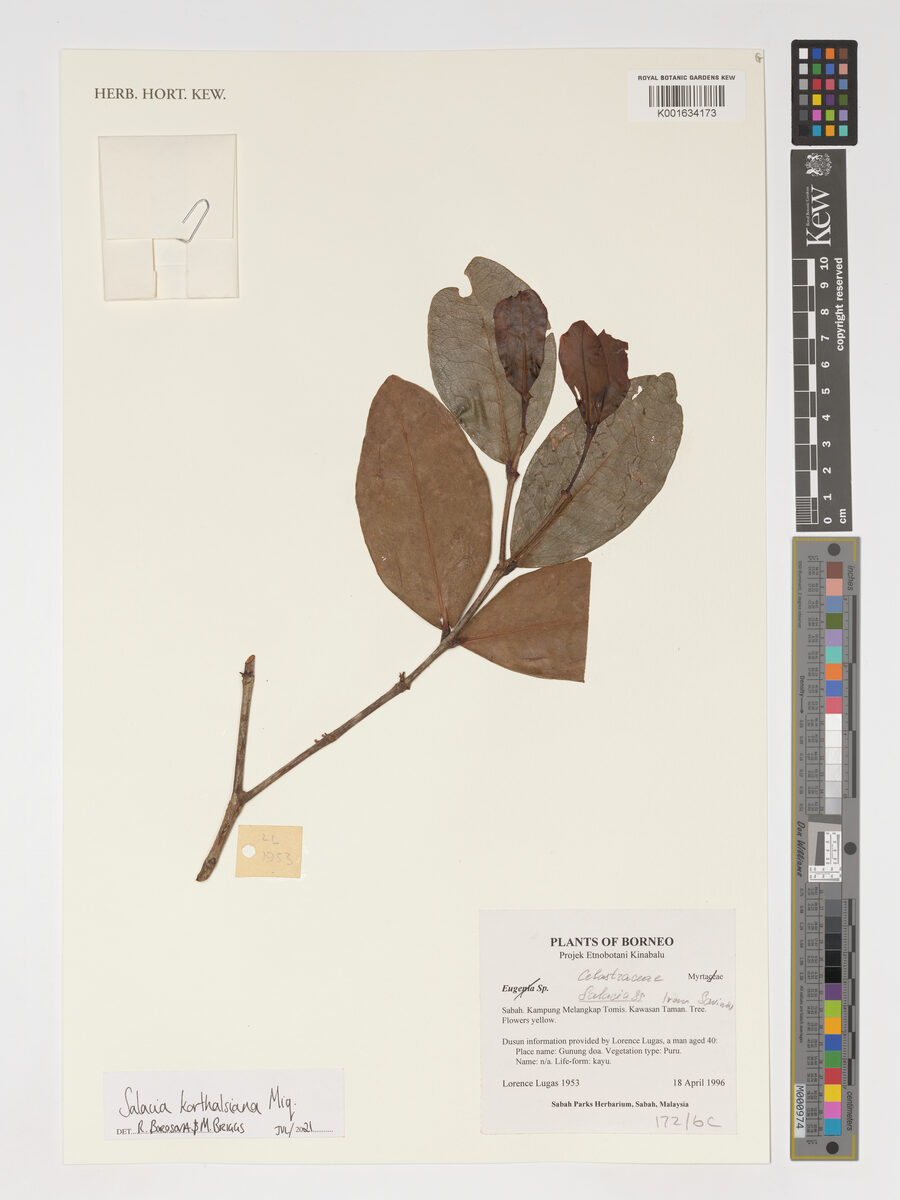
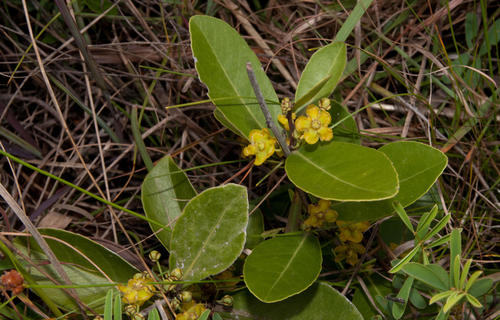
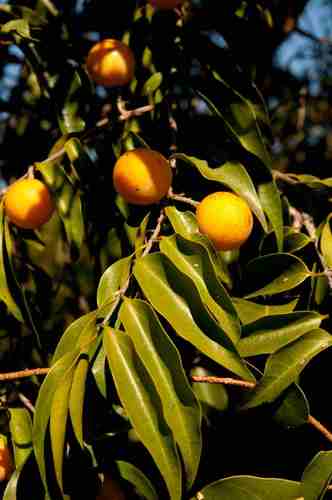
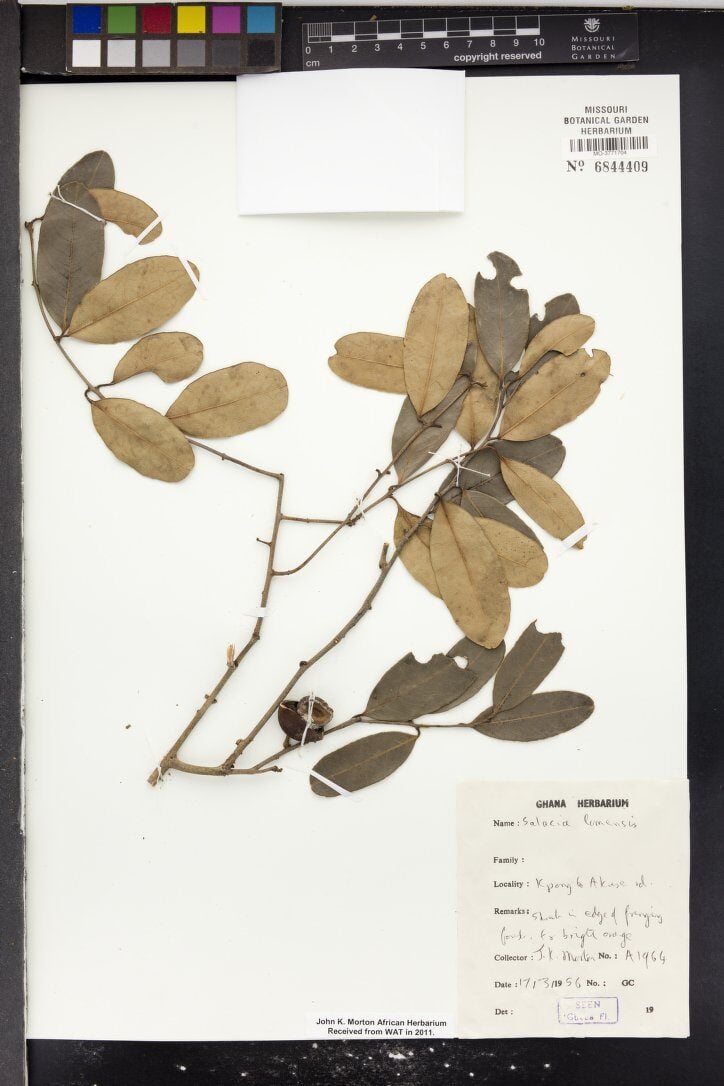
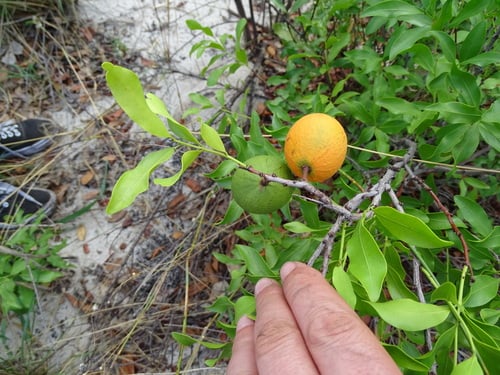
Hylenaea comosa
(Sw.) Miers
Karoshiri
gbif· cc-by-nc
Rapid Reference Collection (RRC) | Field Museum of Natural History - Keller Science Action Center
gbif· cc-by-nc
Field Museum of Natural History - Botany Department | GDI 2013-2015
gbif· cc-by-nc
Field Museum of Natural History - Botany Department | GDI 2013-2015
Description
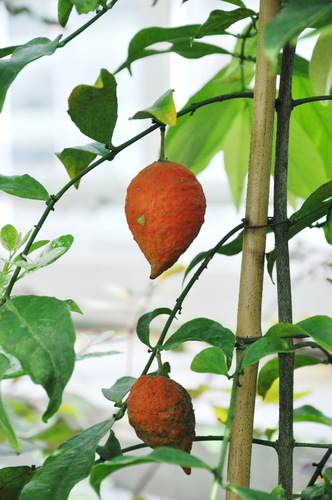
A liana or creeper. It can be a slender tree with climbing branches. The leaves are opposite. The flowers are often grouped into clusters of 3-8 in the axils of leaves and on the ends of small branches. These are 7-20 cm long. There are many flowers. The fruit is a capsule made up of capsules that spread out. These are attached to large swollen stalks. They are 8-10 cm long by 5-7 cm wide and 1-2 cm thick. They are green. There are 2-4 seeds. These are brown and oval. They are 4-7 cm long by 2.5 cm wide. They are edible.
Edible Uses
The seeds are edible and can be eaten.
Known Hazards
None mentioned.
Distribution
A tropical plant. It grows in forests near rivers.
Where It Grows
Caribbean, Central America, Dominican Republic, Guiana, Guianas, Guyana, Haiti*, South America, Suriname, Venezuela, West Indies*,
Synonyms
Also Known As
Fava-de-arara
References (6)
- Hedrick, U.P., 1919, (Ed.), Sturtevant's edible plants of the world. p 346 (As Hippocratea comosa)
- Kermath, B. M., et al, 2014, Food Plants in the Americas: A survey of the domesticated, cultivated and wild plants used for Human food in North, Central and South America and the Caribbean. On line draft. p 424
- Kew Plants of the World onLine
- Menninger, E.A., 1977, Edible Nuts of the World. Horticultural Books. Florida p 117 (As Hippocratea comosa)
- Plants of Haiti Smithsonian Institute http://botany.si.edu
Show all 6 references Hide references
- van Roosmalen, M.G.M., 1985, Fruits of the Guianan Flora. Utrecht Univ. & Wageningen Univ. p 78