Acnistus arborescens
(L.) Schltdl.
Wild tree tobacco
iNaturalist· cc0
no rights reserved
iNaturalist· cc-by-nc
(c) Gustavo Morejon Jaramillo, some rights reserved (CC BY-NC)
iNaturalist· cc-by-nc
(c) rhardb, some rights reserved (CC BY-NC)
Description
A shrub or small tree. It grows 5 m tall. There are prickles along the stem. The leaves are twice divided and there are 8-18 pairs of pinnae. There are up to 50 pairs of pinnules on each pinnae. The flowers are yellow. They are in large clusters at the ends of branches. The pods are flattened.
Edible Uses
The fruit can be eaten fresh or made into jelly.
Traditional Uses
The fruit can be eaten or made into jelly.
This uses section is brief — help expand it
Distribution
It is a tropical plant. In Costa Rica it grows between 600 and 1,500 m altitude.
Where It Grows
Brazil*, Central America, Colombia, Costa Rica, Cuba*, Dominican Republic, Ecuador, El Salvador, Guatemala, Haiti, Honduras, Lesser Antilles*, Mexico*, Nicaragua, North America, Panama, South America, West Indies*,
Other Information
It is cultivated.
Notes
There are about 50 Acnistus species. They grow in Central and South America. Most Acnistic are now included in this species.
Synonyms
Also Known As
Borrachero, Cerca chide, Cojojo, Fruta-de-saba, Guitite, Hojojo, Marianeira, Nacedero, Palo de gallina, Picopico, Sabaluco, Salvaluco, Tomaroquin
References (17)
- Brack, P., et al, 2020, Frutas nativas do Rio Grande do Sul, Brasil: riqueza e potencial alimentício. Native fruits of Rio Grande do Sul, Brazil: richness and potential as food. Rodriguésia 71: e03102018
- Chizmar Fernandez, C., et al, 2009, Plantas comestibles de Centroamerica. Instituto de Biodiversidad, Costa Rica. p 297
- Kermath, B. M., et al, 2014, Food Plants in the Americas: A survey of the domesticated, cultivated and wild plants used for Human food in North, Central and South America and the Caribbean. On line draft. p 19
- Kinupp, V. F., 2007, Plantas alimenticias nao-convencionais da regiao metropolitana de Porto Alegre, RS, Brazil p 100
- Linnaea 7:67. 1832
Show all 17 references Hide references
- Lopez-Diago, D. & Garcia, N., 2021, Wild edible fruits of Colombia. Biota ColomBiana 22 (2) p 52
- Plants of Haiti Smithsonian Institute http://botany.si.edu/antilles/West Indies
- Roa, J. A. G. & Boada, D. S. G., 2018, Fundación para el Fortalecimiento de la Fruticultura y Plantas Alimenticias no Convencionales en Colombia.
- Samuels, J., 2015, Biodiversity of Food Species of the Solonaceae Family: A Preliminary Taxonomic Inventory of Subfamily Solanoideae. Resources 2015, 4. 277-322
- Segura, S., et al, 2018, The edible fruit species in Mexico. Genet Resour Crop Evol (2018) 65:1767–1793
- Torre, de la, L., et al, 2008, Enciclopedia de las Plantas Útiles del Ecuador. Herbario QCA. Pontificia Universidad Católica del Ecuador. p 576
- Uphof,
- Usher, G., 1974, A Dictionary of Plants Used by Man. Constable. p 17
- Van den Eynden, V., et al, 2003, Wild Foods from South Ecuador. Economic Botany 57(4): 576-603
- Van den Eynden, V., 2004, Use and management of edible non-crop plants in southern Ecuador, Ph D dissertation. p 108
- Van den Eynden, V., et al, 2004, Regional and ecological variations of wild edible plants in southern Ecuador. Lyonia. 7(2)
- Zuchowski W., 2007, Tropical Plants of Costa Rica. A Zona Tropical Publication, Comstock Publishing. p 231
More from Solanaceae
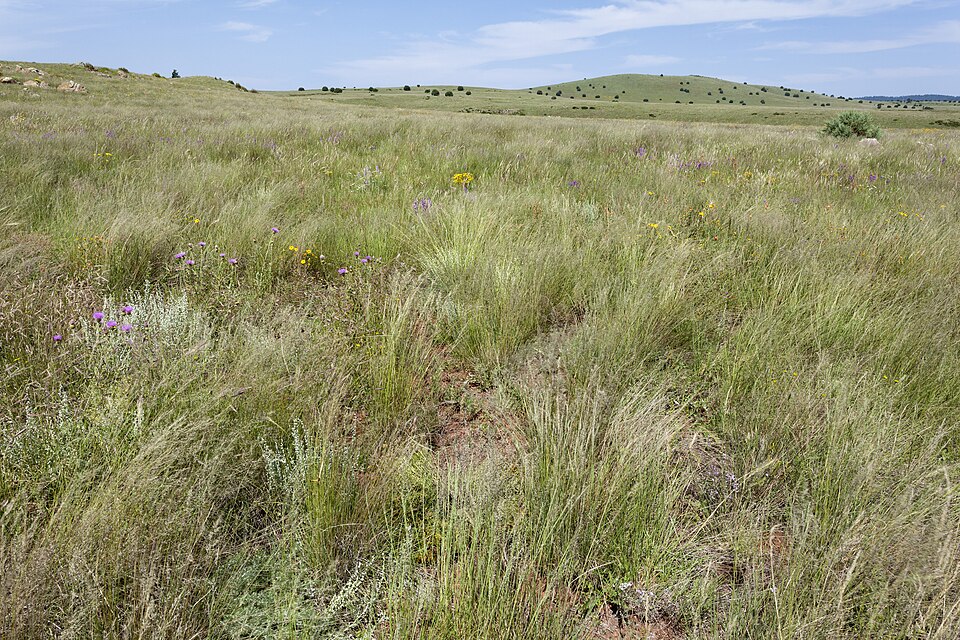
Physalis foetens var. neomexicana
New Mexican Groundcherry
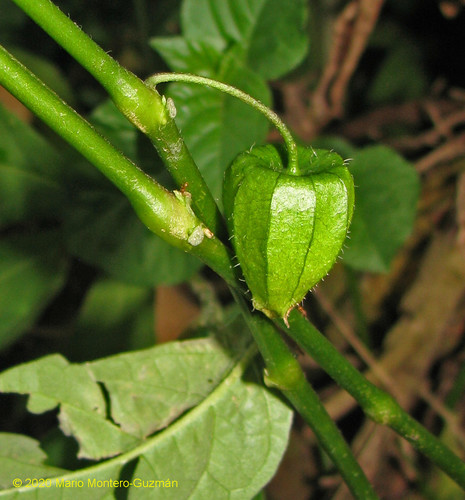
Physalis gracilis
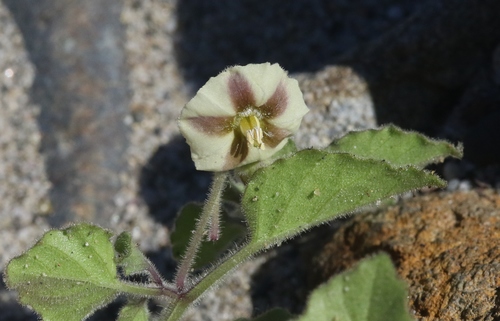
Physalis greenei
Yellow Nightshade Groundcherry
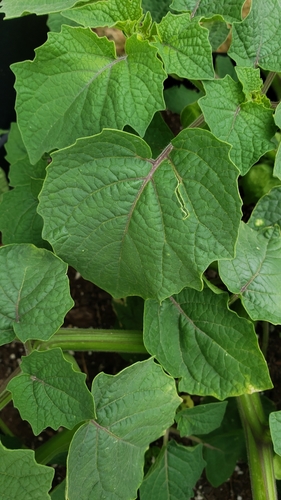
Physalis grisea
Dwarf Cape-gooseberry, Hairy ground-cherry, Strawberry-tomato
Physalis hederaefolia cordifolia - (A.Gray.)Waterf.
Ground Cherry
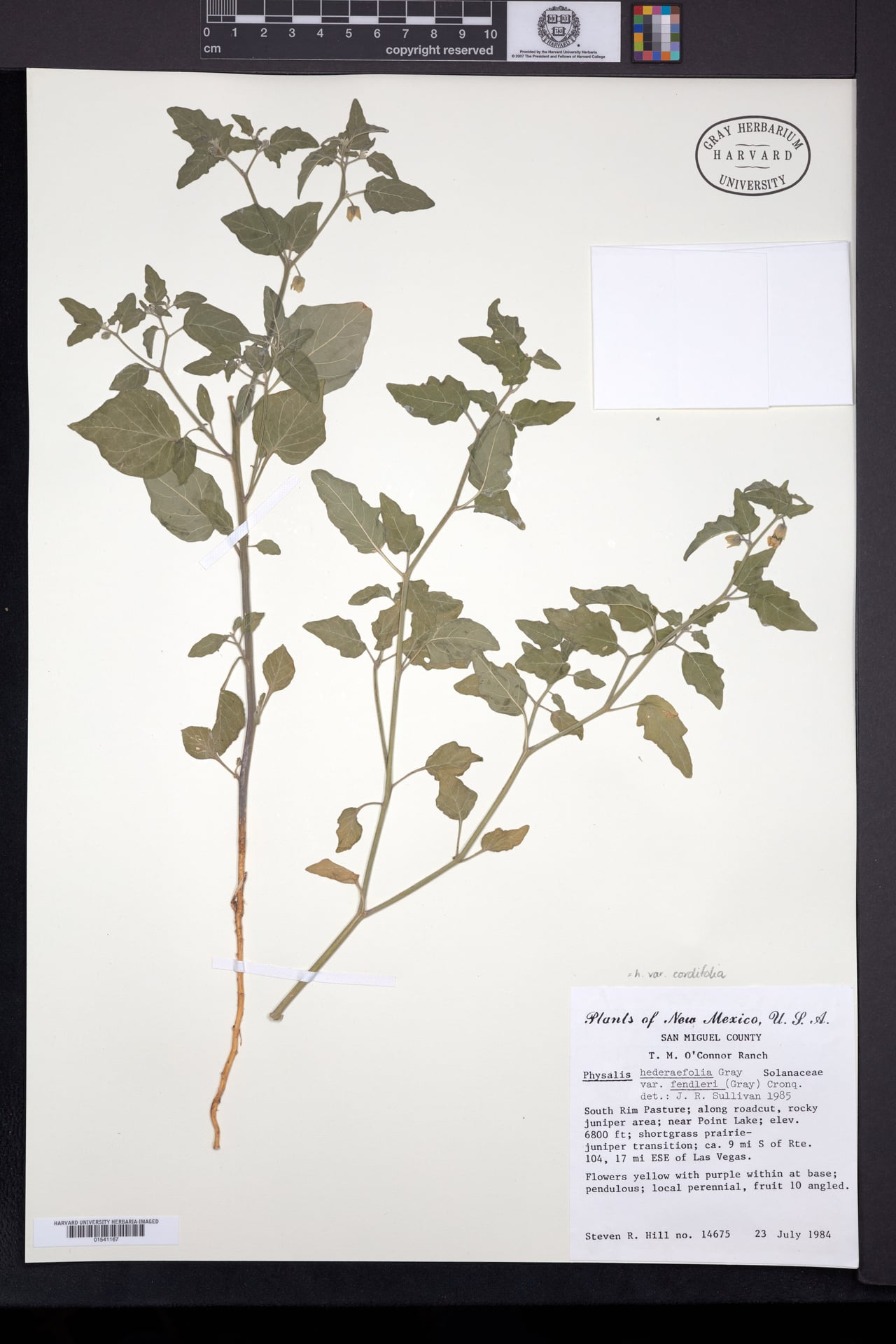
Physalis hederifolia var. cordifolia
Ground cherry, Fendler's Groundcherry