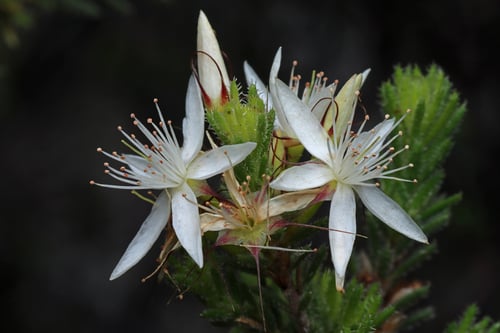
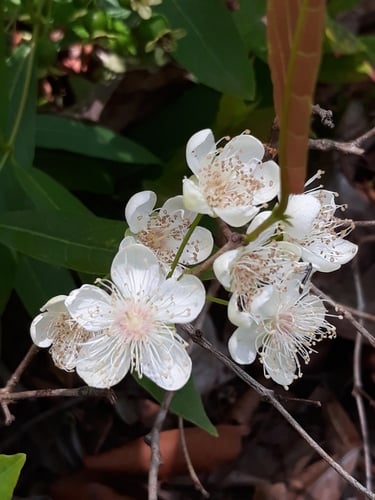
Myrciaria glazioviana
(Kiaersk.) G. Barroso ex Sobral
Cabeludinha, Cabeluda, Peludinha
iNaturalist· cc-by-nc
(c) Nelson Wisnik, some rights reserved (CC BY-NC)
iNaturalist· cc-by-nc
(c) Nelson Wisnik, some rights reserved (CC BY-NC)
iNaturalist· cc-by-nc
(c) Nelson Wisnik, some rights reserved (CC BY-NC)
Summary
Source: WikipediaMyrciaria glazioviana, the cabeluda, or yellow jaboticaba, is a species of plant in the family Myrtaceae.
Description
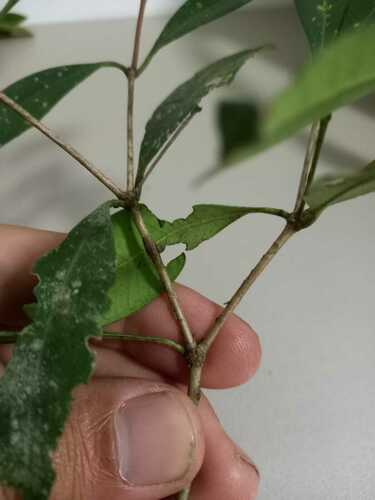
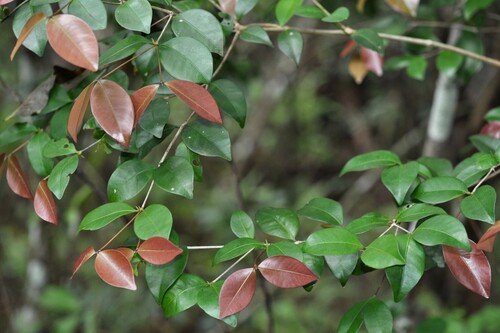
A large shrub. It grows 2-4 m tall. The crown is dense. The branches almost touch the ground. The leaves are papery. They have a white covering underneath. Leaves are 6-11 cm long and the edges curl under. The flowers are in clusters in the axils of leaves. The fruit are yellow when ripe and 2-3 cm across. They are sweet and have a juicy pulp.
Edible Uses
Fruit - raw. A translucent, succulent pulp with a very sweet flavour. The orange-yellow, globose berry is 22 - 28mm in diameter.
Traditional Uses
The fruit are eaten fresh.
This uses section is brief — help expand it
Distribution
It is a tropical plant.
Where It Grows
Brazil*, South America,
Cultivation
Plants are grown from seed. The seeds are collected from ripe fruit that have been allowed to partly decompose in plastic bags then the seeds are washed out under running water. The seeds need to be planted while fresh. Seedlings emerge in 80-100 days.
Propagation
Seed - it has a short viability and so is best sown as soon as it is ripe. Sow in a semi-shaded position in a nursery seedbed. Germination rates are quite low, with the seed sprouting within 80 - 100 days. The seedlings grow away quite slowly.
Other Uses
The wood is straight-grained, of average texture, moderately heavy, hard, slightly susceptible to wood eating organisms. Because of its small dimensions, it is only suitable for items such as agricultural tool handles. The wood is used for fuel and to make charcoal.
Production
Plants grow slowly.
Other Information
It is cultivated as a fruit tree. The fruit are popular.
Synonyms
Also Known As
Cabeluda
References (4)
- Leal, M. L. et al, 2018, Knowledge, use, and disuse of unconventional food plants. Journal of Ethnobiology and Ethnomedicine (2018) 14:6
- Lorenzi, H., Bacher, L., Lacerda, M. & Sartori, S., 2006, Brazilian Fruits & Cultivated Exotics. Sao Paulo, Instituto Plantarum de Estuados da Flora Ltda. p 224
- Lorenzi, H., 2009, Brazilian Trees. A Guide to the Identification and Cultivation of Brazilian Native Trees. Instituto Plantarum de Estuados da Flora Ltda. Vol. 3 p 266
- www.colecionandofrutas.org