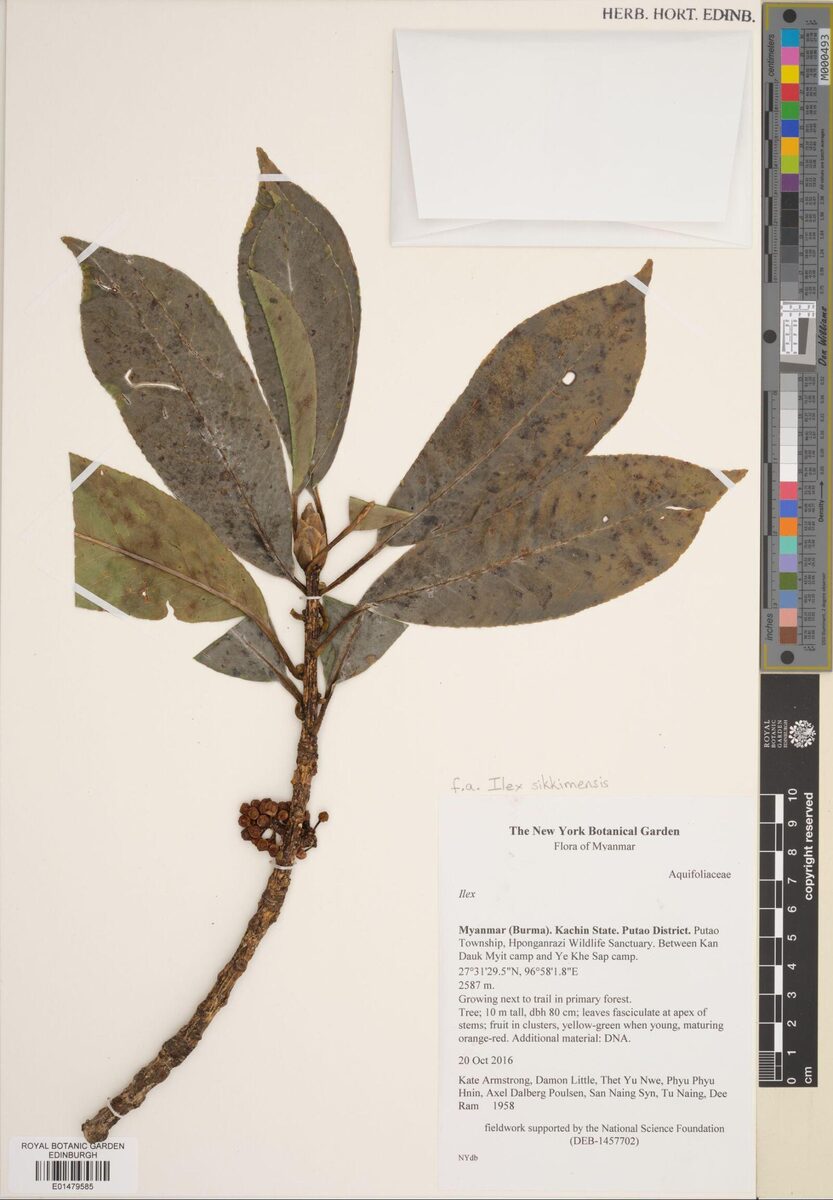
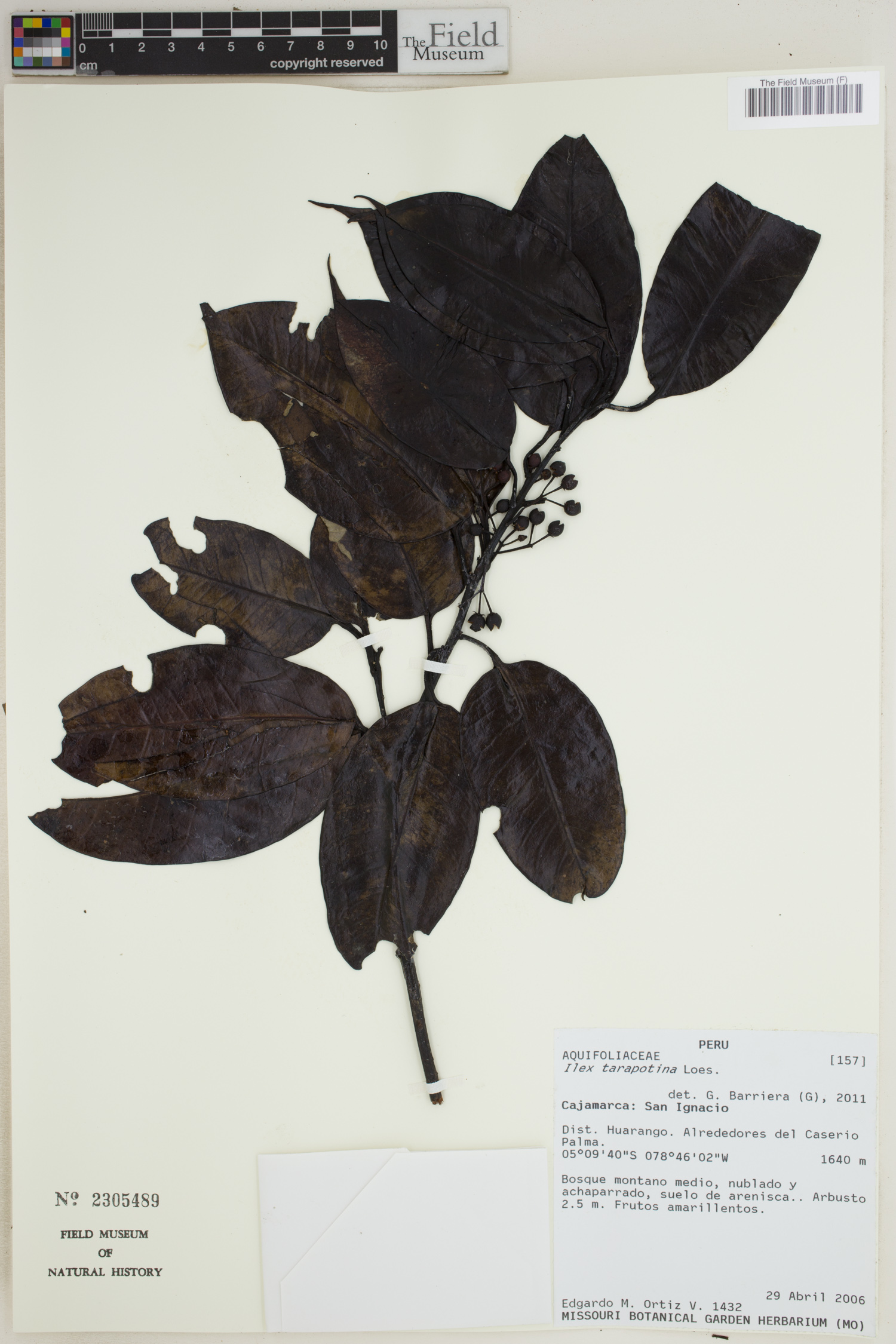
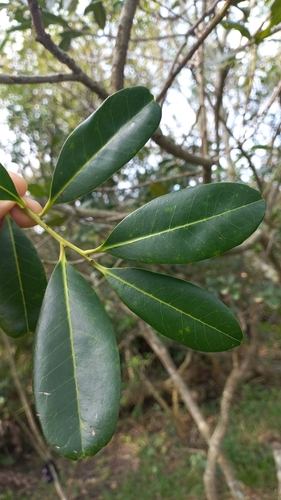
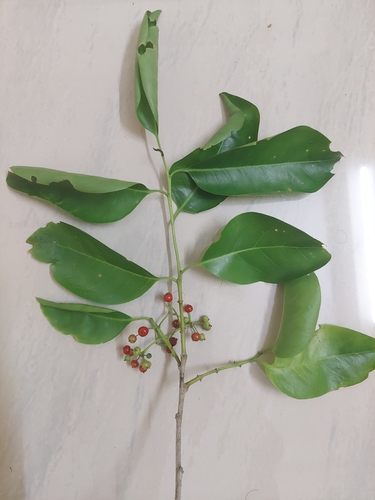
Ilex affinis
Gardner
Affine holly
iNaturalist· cc-by-nc-sa
(c) Frutos Atrativos do Cerrado, some rights reserved (CC BY-NC-SA)
iNaturalist· cc-by-nc
(c) Pedro Igor Monteiro, some rights reserved (CC BY-NC)
iNaturalist· cc-by-nc
(c) Pedro Igor Monteiro, some rights reserved (CC BY-NC)
Summary
Source: WikipediaIlex affinis is an evergreen tree in the holly family. It has dense, elongate crown and can it can grow 4–8 metres (13–26 ft) tall. The straight, more or less cylindrical bole can be 30–45 cm (12–18 in) in diameter. This small tree or shrub species occurs in Argentina, Bolivia, Brazil and Paraguay. It has an estimated extent of occurrence of 7,241,593 km2. It is used locally to make a tea, as a medicine and as a timber. The plant is classified as 'Least Concern' in the IUCN Red List of Threatened Species (2021).
Description
A shrub or small tree. It grows 4-8 m high. The crown is long and dense. The trunk is 30-45 cm across. The leaves are simple, alternate and papery. The leaves are slightly wavy along the edge. The leaves are 12 cm long and 3.5-5 cm wide. The flowers are in groups in the axils of leaves. The flowers are white and have a smell. The fruit are fleshy and dark blue. There is one seed with a small layer of pulp around it.
Edible Uses
The leaves are used to make a refreshing tea. They can be used as a substitute for Maté (Ilex paraguariensis) or as an adulterant for it.
Traditional Uses
The leaves are used as a substitute for mate tea.
This uses section is brief — help expand it
Medicinal Uses
The leaves are laxative. An infusion of the leaves is said to be very nourishing for the body, good for the stomach and digestion and also diuretic. In large doses it can cause vomiting. {As Ilex medica)
Known Hazards
Although no specific reports of toxicity have been seen for this species, Ilex species in general contain several potentially toxic compounds, particularly saponins, glycosides and triterpenoids. These compounds also often have a range of potential health benefits. The berries are usually the part of the plant most likely to be toxic, though the degree of toxicity is usually low. Their bitter flavour usually prevents a person eating more than one or two, but even a small handful of the fruit eaten by a healthy adult is unlikely to cause more than feelings of nausea that can lead on to vomiting and diarrhoea. The compounds in the leaves are particularly interesting. The leaves of many Ilex species around the world are commonly used to make health-promoting teas that, when drunk on a regular basis, help to regulate bodily functions and can reduce the risk of heart disease, lower blood-cholesterol levels etc (See Ilex paraguariensis or Ilex kaushue for examples). Even these teas, however, if taken in very concentrated doses, can act as a laxative or cause vomiting. Indeed, several species are used by traditional peoples to induce vomiting as a means of purifying the body (see Ilex guayusa or Ilex vomitoria for examples)
Distribution
A tropical plant. It grows in the Amazon in Brazil in semi-deciduous forest. In Argentina it grows between 100-1,500 m above sea level.
Where It Grows
Argentina, Bolivia, Brazil, Paraguay, South America,
Cultivation
Plants can be grown from seed. The ripe fruit are harvested and allowed to rot in a plastic bag to make it easy to remove the seed. The seeds are washed in running water. Fresh seed are planted and germinate in 3-5 months.
Propagation
Seed - it has a hard seedcoat and may benefit from scarification before sowing to speed up germination. This can usually be done by pouring a small amount of nearly boiling water on the seeds (being careful not to cook them!) and then soaking them for 12 - 24 hours in warm water. By this time they should have imbibed moisture and swollen - if they have not, then carefully make a nick in the seedcoat (being careful not to damage the embryo) and soak for a further 12 hours before sowing. Sow the seed in a partially shaded position in a nursery seedbed. A low germination rate can usually be expected, with the seed sprouting within 90 - 150 days. When the seedlings are 5 - 6cm tall, pot them up into individual containers.
Other Uses
The wood is fine-textured, straight-grained, moderately heavy, with moderate mechanical properties, not durable. It is only used locally, for purposes such as rural constructions, tool handles and simple furniture. The wood is used for fuel and to make charcoal.
Also Known As
Caa-chiri, Caa-chi, Congonha-de-goias, Congonha-do-campo, Mate-bastardo, Mate-espurio, Mate-falso
References (3)
- Grandtner, M. M. & Chevrette, J., 2013, Dictionary of Trees, Volume 2: South America: Nomenclature, Taxonomy and Ecology. Academic Press p 314
- Icon. Pl. 5: t. 465. 1842
- Lorenzi, H., 2002, Brazilian Trees. A Guide to the Identification and Cultivation of Brazilian Native Trees. Vol. 02 Nova Odessa, SP, Instituto Plantarum p 47